Emily Manzo is a pianist based in Brooklyn. She is active on the indie, classical, rock, and other DIY scenes of this very arts-friendly neighbourhood, very Montreal-like some would say (unless it’s the other way around), in New York. She has performed with indie collectives such as Julius Eastman Memorial Dinner, Bill T. Jones/Arnie Zane Company, Till by Turning, Arooj Aftab, etc.
Musical friendships
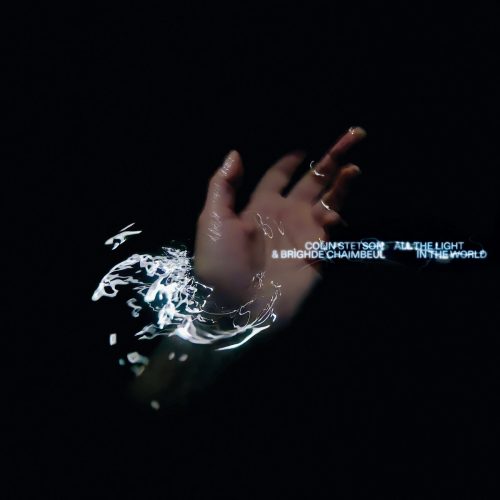
Time in Water is a testament to her personal connections with two artists from this scene, guitarist Mary Halvorson and percussionist Aaron Siegel. From Halvorson, two pieces from an early artistic iteration, that of her participation in the trio People, with Kevin Shea and Kyle Forester. Firepinks and Jewelweed reveal little of the astonishing colours and elusive harmonies of the experimental jazz style that is more commonly associated with Halvorson. Firepinks has something of a funeral procession, quite sombre, while Jewelweed swims in post-minimalist waters, with frequently interrupted repetition and some moods reminiscent of Arvo Pärt.
Connected to water
From Aaron Siegel comes the centrepiece of the album, and also the source of its title, Time in Water. It is a substantial work for solo piano of about 35 minutes, in four movements, all thematically connected to the general principle of water.
The River, despite its title, does not really evoke the regular flow of a river’s water. Repetitive arpeggios, slow and occasionally changing colours, give rather the impression of a relatively static body of water, or at least not very active. I would describe it as contemplative, but a bit long.
It is with the second movement, The Bridge, that the music comes to life. We are here in the midst of repetitive minimalism, with a propulsive, undulating, and rhapsodic unfolding in its sonic gestures. I would have gladly associated it with the previous piece, but who knows what the composer had in mind. That said, it’s very beautiful and exciting.
The third movement, The Pond, clings more intuitively to this suggested image thanks to its meditative character and the thoughtful use of Arvo Pärt’s tintinnabuli. The sometimes tight harmonies, though, leave a sense of strangeness hanging in the air.
The final movement, Boat Song, is constructed like a kind of loping barcarolle on which one seems to sail at the mercy of determined eddies.
A serious and approachable musical journey in contemporary post-minimalism.