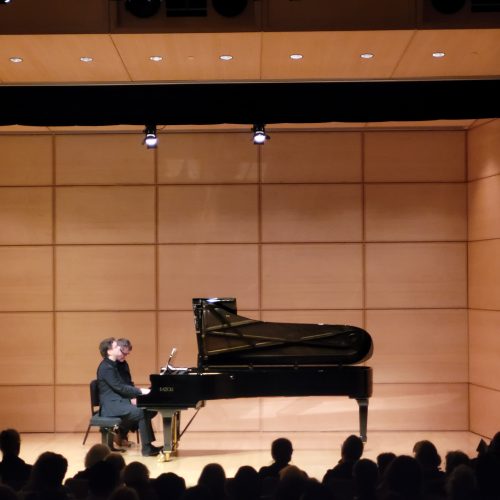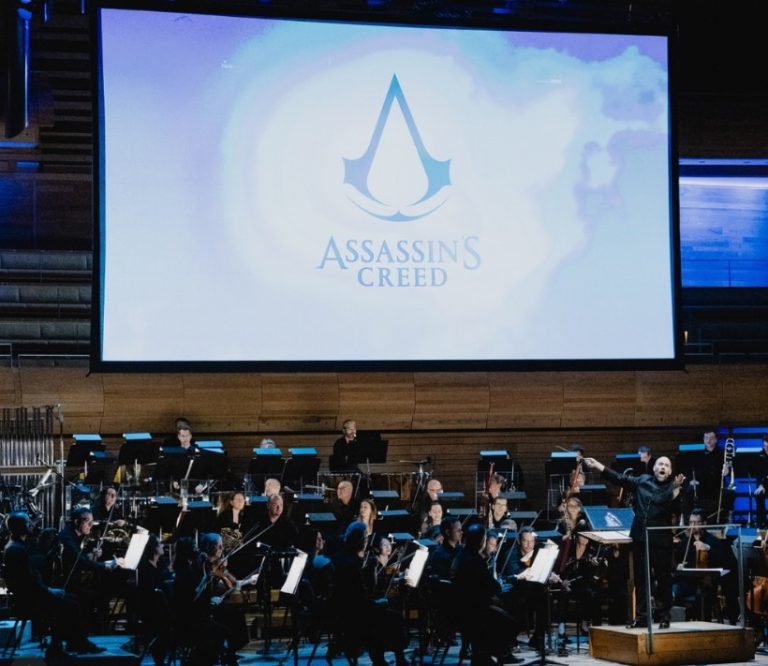
Big week for video game music in Montreal; after Final Fantasy: Distant World on Sunday by GFN Productions, the Montreal Symphony Orchestra (OSM) gave Heroes: Video Game Symphony on Wednesday evening, under the baton of the conductor of this touring production, Kevin Zakresky.
Everything was in place for an exceptional evening: a good selection of games and their soundtracks, a world-class orchestra that regularly performs music on screen, and a packed house. For a newcomer discovering the world of music, the evening was probably very enjoyable. But for those who know a little, or even a lot, about it, there were some major hiccups.
Presenting the concert as a “choose your own adventure” experience, interspersing each piece with chapters narrated by a voiceover summarizing each step a typical adventure game hero might take, wasn’t a bad idea on paper. The problem lies in the text itself, often meaningless, as if it were phrases pulled from a bowl of fortune cookies and strung together. A few such interludes during the concert would have sufficed, but not 14 or 15, especially when a technical glitch forces us to play the same chapter twice, or when they don’t quite mesh with the following cutscene.
The choir’s placement left much to be desired. Comprising 24 members and positioned stage left, they struggled to be heard from the back of the stalls. Even amplified, pitting such a small choir against a full orchestra makes no sense, especially for music where the choral part is an integral, even dominant, component of the instrumentation. It simply doesn’t make sense. This was particularly glaring in The Elder Scrolls: Skyrim Dragonborn Theme, a true hit with its guttural sound in video game music, where all one could hear were whispers.
Finally, Vancouver conductor Zakresky didn’t help the program’s cause. Working without a score, his eyes glued to his tablet, and offering only occasional cues, he conducted in a very similar fashion, resulting in everything sounding… pretty much the same, except when certain sections decided to go all out (trombones, solo violin), leaving the talented musicians to their own devices. He’s a good crowd-pleaser, speaking more than respectable French and appearing on stage wearing a Victoire de la Musique shirt for the second half, but this energy doesn’t translate when he turns to conduct. It’s a shame, because that’s the very essence of music on screen: supporting and being an integral part of the visual presentation, something the performers don’t see. For example, a transition between a calm moment and the instant when an enemy suddenly arrives must be accompanied by a real musical tension that goes beyond simply playing the notes, which was lacking too often yesterday and the only truly worthwhile moment was the encore, an excerpt from Final Fantasy VII, presented unfortunately without a projection.
Video game music has long since reached a point where it transcends mere background noise. The selection of tracks from the past was brimming with undisputed masterpieces: besides Skyrim, mentioned earlier, there were Bioshock, Assassin’s Creed, and Castlevenia, some pieces shining a spotlight on orchestral instruments less commonly known as soloists (piano, electric guitar, harp). This repertoire offers a wide array of colors that can be truly breathtaking, provided the necessary resources are invested.