Additional Information
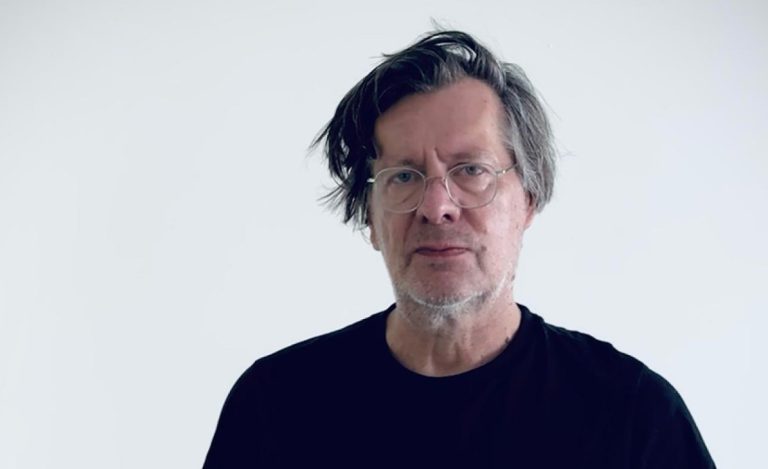
A master and visionary of experimental ambient music, Christian Fennesz will perform his famous album Endless Summer, which earned him international recognition in 2001. With its almost cinematic quality, this soundscape will naturally evolve into an immersive multimedia event, live at the Maison symphonique as part of the X/Visions series on Saturday, August 29.
Fennesz will be joined by his friend and colleague Lillevan, an internationally renowned multimedia artist. For 25 years, Fennesz’s “summer” has truly been endless; its magic and sensuality continue in Montreal through new forms, without straying from the very essence of this seminal recording.
Since the early 1990s, the Austrian musician has devoted himself to the guitar, drawing on a deep understanding of harmony and melody, combined with a wide range of effects pedals. Indeed, Fennesz has created a unique fusion between his guitar playing and electronic sound processing, whether analog or digital. He has explored far beyond ambient music as we typically imagine it; his soundscape has also been enriched with noise and drones, making it utterly unique.
Fennesz has reimagined the electric guitar through electronic processing, yet guitar-based melody and harmony have remained the foundation of his soundscape, surrounded by distortion, noise, and drones.
PAN M 360: So you’re going to present this reinterpretation of Endless Summer with Lillevan, who is a renowned director and videographer. And I’m sure you won’t be performing it the same way you did 25 years ago. Am I right?
Christian Fennesz: Yes, that’s correct. I did try to preserve the heart of the work, the very essence of the album. But the problem is that many elements of this work were no longer available—they had been lost, and some sessions had disappeared. So I had to recreate them in one way or another. Not everything, but certain parts. And as I was making the changes, I tried to preserve the original sound while adding something that sounds a bit more “2026,” without altering it, without changing the atmosphere or the overall style. And it simply sounded better on my new systems when I used modern tools, new plugins, and that sort of thing.
PAN M 360: Yes, it’s interesting to revisit an album that was such a huge success. Endless Summer brought you international recognition back then, and since then, you’ve been evolving across many musical scenes, all while building on the same foundation.
Christian Fennesz: Yes. Of course, things have changed. Back then, I started exploring computer-assisted music with my guitar, combining digital tools with my guitar and the effects pedals I use. Since then, hardware and equipment have evolved tremendously, and electronic music has evolved tremendously. There are so many possibilities today that it can even become a problem at times! So I have hundreds of plugins, but… sometimes I only use the same four or five, because there’s too much choice. It’s therefore very important to find a few tools that you feel completely comfortable with, and that can really help you develop your music. Otherwise, you end up getting lost. And I think that’s the main problem today. And of course, it was the same for me. I mean, I could have gone in so many different directions.
PAN M 360: More specifically, what has changed since Endless Summer?
Christian Fennesz: Ultimately, it’s stayed more or less the same—it’s just become more refined over time. There’s more bass, for example. And yes, for this reinterpretation, the new tools have been very useful to me. But deep down, it hasn’t really changed that much. Basically, we are who we are, and we try to improve.
PAN M 360: No artist can change the foundations of their artistic personality, that’s true. It comes from the unconscious; everyone has their own way of expressing that unique personality. That said, can you pinpoint certain elements of your evolution as an artist?
Christian Fennesz: I can also cite other examples. I’ve been using synthesizers a lot more lately, because I find them to be very interesting tools. Of course, there’s the modular synthesizer scene, but there’s also a lot going on in the world of digital synthesizers.
PAN M 360: So you’re not a purist—you explore both worlds of electronics, digital and analog, right?
Christian Fennesz: Yes, I use both. But I try to keep it simple—almost minimalist, in a way. You see, I always want to be able to travel with a studio, or at least some kind of studio, so I can produce music while on tour. That’s very important to me. I’ve scaled back my gear a lot over the years; I used to have so much stuff—I had a huge recording studio, a traditional one. Today, all I have left is a console with a few essential components, and I feel much more comfortable that way. Yes, for now, I’m mainly looking to pare down my equipment rather than expand it.
PAN M 360: It’s also a sign of maturity. As an artist gains age and experience, the next step is to try to give their work an air of simplicity.
Christian Fennesz: Yes, it seems simple, that’s true. I think I’ve developed a kind of musical language that’s unique to me. And what I do is make it more… I don’t know… in any case, for me, to make it more perfect, more… striking, more interesting to my eyes. And what I do is get rid of everything that isn’t necessary. I’ve been using synthesizers a lot more lately, because they’re very interesting tools. Of course, there’s the modular synthesizer scene, but there’s also a lot going on with digital synthesizers right now.
PAN M 360: So, what’s going to happen in Montreal? We know, of course, that it will be an immersive audiovisual experience at MUTEK. Tell us about the history of your collaboration with Lillevan and how it’s transforming Endless Summer.
Christian Fennesz: I’ve been working with Lillevan, on and off, for many years. But I received an offer from Bozar in Brussels to perform the entire Endless Summer score last June. We performed it there for the first time; this will be the second time in Montreal. Lillevan, who is based in Berlin, has a huge screen to work with. He’s prepared certain sections, but he’s also an excellent improviser. So the show won’t be exactly the same as the previous one. You have to imagine that Lillevan works like a musician with his visual material. And I think he offers us an excellent combination. He’s very flexible; he can react very quickly.
PAN M 360: Can you tell us a little about the visual aspects of this immersive concert? How do they fit into your work?
Christian Fennesz: Well, it often comes down to colors. He likes the same kinds of colors as I do for this music: there’s a lot of orange, a lot of green, for example. And what’s wonderful about Lillevan is that he can be incredibly rich in imagery and, at the same time, very minimalist. I love the shifts he’s able to create in a matter of seconds, which can radically transform the atmosphere. Just as music can do that, so can the visuals.
So it’s a kind of continuous collaborative interplay. It’s like playing with a musician.
PAN M 360: From the late Ryuichi Sakamoto to David Sylvian and Lillevan, to name just a few—from soothing ambient music to intense sounds—you’ve always engaged with a wide range of interpretations and approaches.
Christian Fennesz: Yes, it still interests me, because I find a kind of melancholy and beauty amid all that chaos and noise. And I always hear a melody or a sequence of melodies; I always hear the chords in one way or another within a piece of noise. And once I’ve grasped that, I can create a composition.
PAN M 360: Why does the guitar remain so important? Today, you could produce sounds comparable to yours without a guitar, without a pedalboard, but solely with synthesizers or other digital software. So why do you stick with the guitar?
Christian Fennesz: Because it’s my first instrument. And it’s the instrument I always feel most comfortable with—the one that gives me a sense of grounding, so to speak. It’s something in my hands that connects me to the earth! At least, that’s how I feel about it. But of course, I could do everything just as well with digital tools or synthesizers. But I sincerely believe that, in terms of sound, there’s always a slight difference with the guitar, because it isn’t as precise as electronics. At least, when I play the guitar, it’s never as precise as when you record a synthesizer. There’s always a slight gap between the notes. It’s not played in a very rigid way, nor is it super precise. It’s that little touch—I don’t know—almost punk-rock or blues; call it what you will.
PAN M 360: Of course, when you started playing guitar, you were interested in blues, rock, and jazz, weren’t you?
Christian Fennesz: Yes. And I’m still a guitarist. That’s the simplest answer to your question.
PAN M 360: What you’re saying is absolutely true: it’s still guitar playing. Even if you’re somewhere else, it’s still guitar.
Christian Fennesz: Yes, that’s true. At the same time, I’m very, very interested in electronic music. I continue to do what I’ve always done: try to bring these two worlds together—electronic music and the guitar.
PAN M 360: Are you still collaborating with Peter Rehberg and Jim O’Rourke on that amazing Van O’Berg project, which has resulted in the release of four albums?
Christian Fennesz: Well, recently, I hit the road again with Jim O’Rourke. Yes, we played in Belgium, then did a short tour in Italy, which was really nice—just the two of us. We also played two shows with his partner, Eiko Ishibashi. I don’t have any other collaborations planned at the moment.
PAN M 360: Would it be fair to say that you’re primarily a solo artist?
Christian Fennesz: Yes, but I do like to collaborate from time to time because I simply feel too lonely as a solo artist. I need to meet people and other musicians, and exchange ideas with them.
PAN M 360: A close friend saw you in concert in Venice last spring. You played through your album Venice (2014) again, as expected…
Christian Fennesz: Exactly. It was another invitation to play another album in its entirety. It was great.
PAN M 360: You’ve been one of the pioneers of this melodic approach blending ambient, drone, and noise, alongside artists like Richard Pinhas and Julien Desprez, for example.
Christian Fennesz: Probably… I don’t really think about it… I actually just saw Oren Ambarchi again after a long time; we played together. We shared the same bill in Italy. The whole ambient, noise, and drone music community crosses paths at various venues on the international circuit. More recently, I’ve been really impressed by Caterina Barbieri’s music; I run into her sometimes. I won’t list all the names of my esteemed colleagues—I’d surely forget some. Anyway… I’m always listening to my colleagues’ music when I’m on tour, and I try to meet up with them as much as possible.
PAN M 360: Do you listen to a lot of music in the same genre as yours?
Christian Fennesz: Not really, to be honest. I’d rather listen to a Miles Davis album or attend a Johann Sebastian Bach concert.
PAN M 360: That makes perfect sense, given that you live in Vienna, the true capital of classical music.
Christian Fennez: Exactly. You know, listening intensively to music in my own field makes me a little nervous, haha! So I try to avoid it as much as possible, unless I’m playing at a festival and someone I know is also performing; it’s always fascinating to see them on stage, you know. Because sometimes I think to myself, “Oh my God, this person has a much better grasp of this software than I do!”
PAN M 360: What’s also interesting about your music is that you always return to melodies and tonal/modal chords, and you incorporate them into atonal music, noise, or drone. So there’s a connection between your past and your present.
Christian Fennesz: Yes, because I love both of those worlds. Again, the answer is very simple!
PAN M 360: Your latest album, Mosaic, was released in 2024. So are you working on a new album?
Christian Fennesz: Yes. That’s why I’m not doing any collaborations right now—I really want to focus on my new music after this.
PAN M 360: When you compose, do you seek to reinvent yourself, or do you simply let things come to you, hoping that something will happen?
Christian Fennesz: I let things come naturally. I’m very happy when something happens. I haven’t thought about a concept beforehand, so I’m happy when a concept emerges. Then I can start building something. It’s more a matter of finding the rhythm, the “flow.” That’s what matters most.