Additional Information
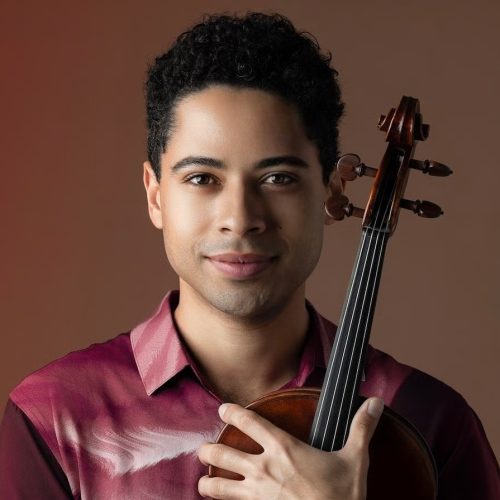
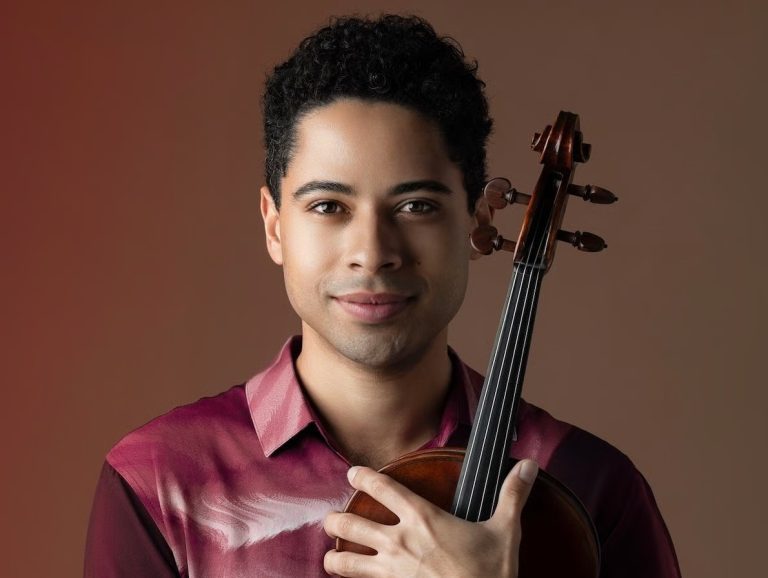
The violist Jordan Bak, who has received numerous accolades from the classical press in the United States and the United Kingdom, will be visiting Montreal for the first time, at the invitation of the Bourgie Hall, on Tuesday, November 10, 2026. The young man, still in his early thirties, will join the Catalyst Quartet, based in New York like him, for a concert dedicated to the music of Samuel Coleridge-Taylor and Anton Dvorak. Discoveries and sure hit, therefore. Coleridge-Taylor is little known, even though his music shows many melodic and romantic virtues, while Dvorak is no longer to be introduced, although his String Quintet No. 3, “American” is not as famous as the other “American“, the Quartet No. 12. I spoke to Jordan Bak.
PanM360 : Hello Jordan. You started music early, like three years old at the piano, right? The viola came later, of course. But do you remember at what moment you were hooked, to the point of knowing you would play music for the rest of your life?
Jordan Bak : It was apparent to me very, very early. My father has a very good musical ear, but didn’t really head down that direction. He was the first person that I distinctly remember. He has enough knowledge at the piano to be able to play with both hands, but not quite read. And so I remember we had this sort of Casio keyboard. And he played something. It must have been a tune from church or on the TV or something like that. And he played it with both hands. And then I promptly went up and played the same thing. I was soon enrolled in piano lessons on Long Island, at the Malvern School of Music. One of my earliest musical memories is that feeling of when you know this is what you want to do. That happened to me at my very first piano recital. I must have been maybe three or four years old at that point. I remember how it felt to be up there.
I had my teacher right beside me to sort of remind me where the tune goes and things like that. But I was always so tuned in to everybody watching. And to this day, I’m still in tune that way with everybody watching. I would physically look at the audience to make sure that we were really sharing this experience. That was the feeling of already having that connection between whoever is listening and me as the performer. I always think about that.
I have one sister. She went on a totally different path. She’s in medicine these days, but she didn’t really quite have the same sort of ‘’OK, yes, this is what I want to do’’ early moment.
But for me, there was absolutely no doubt.
PanM360 : What kind of youth did you have? Having this dream of being an artist early on isn’t what most young boys aspire to, generally. Did you ever feel like being an outsider?
Jordan Bak : A little bit. I mean, it can very easily feel that way when you’re on a path towards the arts, when sort of like other young boys your age are busy with football or busy with soccer or baseball or whatever… Within my public school upbringing, we had a very small music department. But it was very niche. We had extracurricular activities (going to a different school to pursue music lessons and getting to know the people in that community and being able to play recitals twice a year and kind of have these other sort of musical community), activities where you get to meet friends that are around your age, where they’re still taking private lessons. For me as a young person, it was super inspiring to be around those folks. But that was sort of where I got that other sense of community that I maybe didn’t get so much within public school and other boys there.
PanM360 : Let’s talk about the program. It’s very interesting because we don’t hear a lot of Samuel Coleridge-Taylor, which I really like. You will be playing an arrangement of the Clarinet quintet, where you take the part of the clarinet on the viola. What do you think about Coleridge-Taylor’s music? What do you feel about it?
Jordan Bak : Well, Samuel Coleridge-Taylor’s music is so soulful and it’s so romantic, it’s really accessible and from the heart. Very, very expressive. It’s not particularly complicated, although I wouldn’t dumb it down. It actually is of really great substance. And speaking beyond the program that we’re going to be playing on Tuesday, I mean, there’s such great chamber music also that he’s written. There are even more string quartet pieces that I believe Catalyst have recorded also. There’s the Nonet that I performed a couple months ago. There are also some amazing orchestral pieces like his Ballade and also his Violin concerto. It’s just terrific.
So this arrangement that we’re going to be playing, I’ll be playing the transcription of the clarinet part, of course. The string quartet part basically is untouched. But this was originally an arrangement by Catalysts for the violist Jennifer Arnold, who is a very good friend of mine.
They asked me if I would be interested in collaborating with them on this project. And I thought it was such a great musical adventure because I’ve never done transcriptions like this. And you know, that isn’t really quite as programmed as much as the Mozart’s quintets and the Brahms in terms of pinnacle pieces for that instrumentation. They brought the idea to me and I was just so excited. I mean, they’re such a great, great quartet and they’re great friends of mine.
PanM360 : How would you describe their playing and personality?
Jordan Bak : Oh, they’re such an engaging quartet. I think both within our culture as Black and Latinx people, and also this commitment to programming works by underrepresented composers and especially within those demographics, and delving deep into it, not just programming to look like you do this. They’re one of my favorite quartets to play with because it’s not just an intellectual thing.
PanM360 : Now the Dvořák. The American Quintet, not the Quartet! Not to be confused. How do you feel about it?
Jordan Bak : It’s interesting because Dvořák was in the United States when he wrote it, and he was actually in the state of Iowa when he wrote the piece. It goes along, actually, in terms of the sound palette with both the New World Symphony and the American String Quartet in the way of understanding and bringing to the surface the type of ‘’American’’ sound at that time, which a lot of it definitely came from Negro spirituals. It also came from folk songs.
It comes through right away at the beginning of the Quintet. I’ll be playing the viola solo that brings us into the Quintet. It feels like it’s just somebody singing a tune. Then it becomes much more, as we know with Dvořák’s music, so layered and so sophisticated and a lot of textural and rhythmic things going on. Each movement has kind of a very unique and very attention-grabbing theme that is very accessible to listen to.
The second movement is an amazing sort of a miniature. It’s very rhythmic, like clockwork feeling. And it has this beautiful slow section in the middle that’s gonna be played by Paul (Laraia, viola player in Catalyst).
And the third movement, I really love it. It gives me a feeling of not just appreciation and patriotism for one’s land and one’s country, but also a feeling of community and bringing people together. There is a dichotomy between minor and major and the tumultuous minor feeling that then gets transformed into this very, very pure major key before going into the fourth movement, which is just so spirited and so high energy and just full of many different things,
There’s a lot of stuff happening all throughout the piece, but actually the thematic material I find is so simple and so accessible.
PanM360 : Pure Dvořák. In terms of technical difficulties, is the Quintet quite similar to the Quartet or are there any important differences?
Jordan Bak :I think they’re quite similar. The main differences are obviously the musical material and the keys and how they make you feel and this and that, right? The American quartet is in F major and the American quintet is in E flat major. That’s the general key tonality that we’re living in within the piece. But I think both are similar in the emotional depth, the soul, the thematic material, the melodies. They feel like a perfect pairing because of the similarities, actually.
PanM360 : Do you feel you are mostly a soloist or would you like to be part of a permanent chamber group (like a quartet) someday?
Jordan Bak : I find myself being such a chameleon because I love taking on different adventures. I think this is a space that I’m going to stay in for a while, but I love getting the opportunities to collaborate with so many different people. Because I think the thing that really excites me the most in my performing season and my professional life as a musician is the variety and the versatility that I’m able to exhibit. So whether it’s soloing with a major orchestra one week and playing string quartets with a whole bunch of friends next week, and then my usual teaching in New York City at Manhattan School of Music and NYU, and then going to give guest master class somewhere else and record an album or something, play a whole bunch of sonatas in a recital, all of that, and especially being a violist with this instrument that is so collaborative in a number of different ways is something that’s really exciting.
I rarely get bored these days because there’s always something new.
PanM360 : You play and commission a lot of contemporary music. I’m sure you love them all, but is there anyway a piece that you are particularly fond of?
Jordan Bak : Well, I have two actually because I have one coming up, which will be the New York premiere of a viola concerto. It’s a concerto by Michael Frazier called Los Quetzales. A quetzale is a Guatemalan bird. I, being the soloist, am sort of the bird that is playing with the music. It’s the way that he’s written this that is so rhythmic and so groovy in a very sort of Latin American inspired way. I’m engaging with so much of the orchestra. It almost feels like I’m playing chamber music, but in a really extreme way because of how high up I’m on the register. There are these crazy jumps and shifts and articulations. It’s a very virtuosic showpiece.
Also, I just finished a really beautiful tour of string quartets. It was a full string quartet cycle by Eleanor Alberga, who is one of my favorite composers. She’s Jamaican British. On the same tour, we premiered her second piano quintet called Stark. And she played with us on the piano.
So it was really lovely to play these concerts with her, you know, to get to know her on a deep level besides just as a composer, because she is an excellent pianist. I find such genius of how she’s able to turn a theme on its head or remove something rhythmically and sort of switch it up to trick the audience or sometimes even trick the performers. She’s, you know, a brilliant, brilliant person. I think her music is amazingly inspiring and open and just excellent. I think she’s a great, great, great musician.
PanM360 : You have partly Jamaican origins. Would you be tempted to explore those roots through new music?
Jordan Bak : Yes, I would be very interested. There is so much of the people and the food and the agriculture and the land and the things that make that country so special. I’m still connected to that and I’d love to find a way to contribute a bit more. So yes, I would love to explore that in the near future.
PanM360 : So there is an idea for a composer reading… On a personal level, how do you feel when you play the viola on stage? And how do you want the public to feel?
Jordan Bak : Ideally, I’d love to feel free. But I think the word I’d love to use is excited. Because sometimes, you try to feel free and you just end up feeling totally nervous and like a ball of energy. But I usually am very energetic when I’m on stage. And that’s something that I also hope the audience will feel. I personally feel such warmth when sharing music with audience members. But that feeling of connectivity is very innate for me.
PanM360 : Thank you very much for those thoughts. All the best