Additional Information
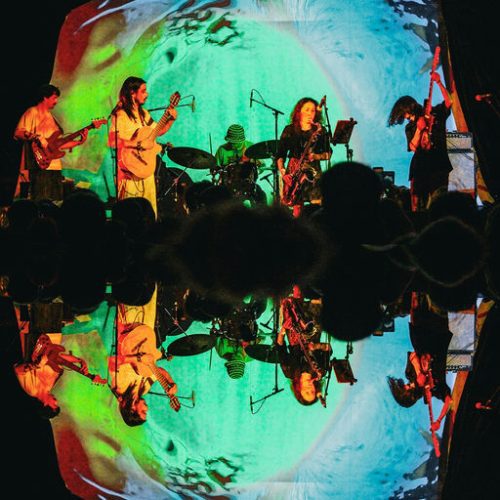
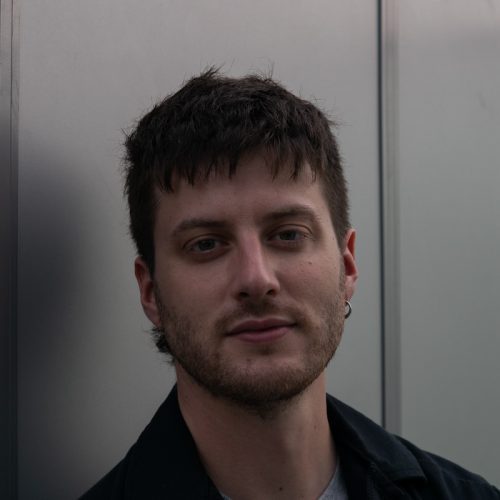
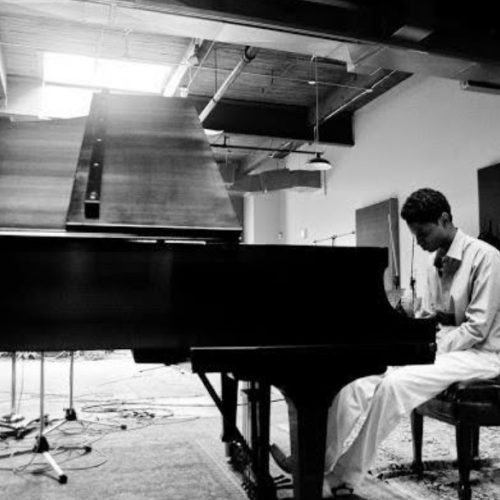
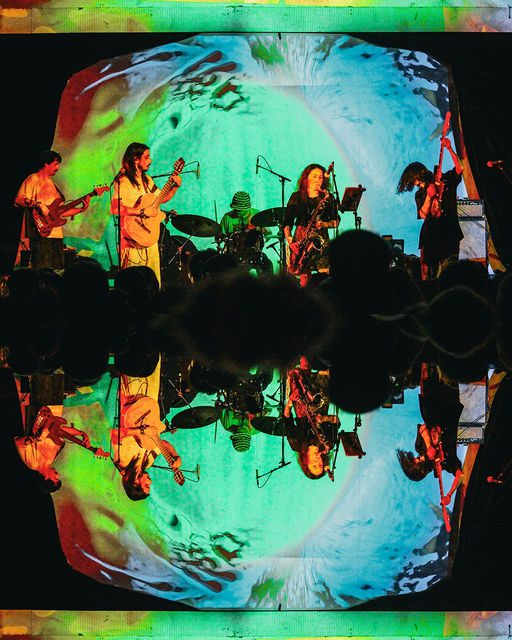
The 2026 edition of Mundial Montréal is about to take off on November 17th 2026 (and until the 21st). On the starting platform, numerous groups and artists from Quebec, Canada, and beyond will come to showcase what they are capable of and the type of music they practice. PanM360 is covering the event, of course, and has chosen to present in more detail some of the ensembles that will be present. Here, Orbital Ensemble, a multicultural group from Toronto, fans of vintage Brazilian sounds with contemporary jazz and psychedelic influences. I spoke with Felipe Sena, composer and sound designer of the band.
ORBITAL ENSEMBLE WILL BE ON STAGE ON NOVEMBER 19 AT 9 PM, AT LES FOUFOUNES ÉLECTRIQUES. INFO AND TICKETS HERE.
PanM360 : Hello Felipe. Tell me about Orbital Ensemble. What is it about? How did it start?
Felipe Sena (Orbital) : Orbital started as a live band. We played our first show in 2024. Before that, I also spent a few years composing music a lot on my own. The first record, I recorded most of the layers by myself and I hired two musicians to be a part of it. I played in bands for 15, 20 years with different people but I was always kind of a supporting musician. Orbital was me being like ‘’if I had a dream project with kind of a dream team of people, what would I put together?’’
And working as an audio engineer, I met many people. A lot of those people that I ended up inviting to the band came through that experience, including Lazar Miric, Jon Catanus, like Emily Steinwall, who played with us in the first live iteration. And then the following people, Mei Akanuma and Jakob Leeson, our woodwind sections. And so, it was really about me trying to write music that felt very real and made me dig back to my roots. But also, how can I put the best people, the best musicians I know in the city together and have this really amazing project and band?
PanM360 : There are many influences, stylistically, in the music. Are they all from you, or other band members also have a say?
Felipe Sena (Orbital) : Yeah, I think a lot of it, you know, nowadays everyone has so many influences and it makes sense. Personally, I love the 70s. I think that was the sweet spot, let’s say, for, you know, composition, production, even what the industry was looking like. Because, you know, back in the day, Pink Floyd was pop music. That was like the best selling music. Led Zeppelin was the best selling artist at the time. Progressive music, you know, King Crimson. Same thing in Brazil, like Milton Nascimento, you know, Caetano Veloso, Azymuth, Arthur Verocai. All those artists were like creating music at the top of their game. And that’s what the industry wanted.
The industry wanted challenging music. It wanted music that was progressive, that was exciting, that was, you know, at the forefront of technology at the time. I feel that’s the sweet spot. Because when you get into the 80s, things kind of went too far into the tech world. And then people got lost in the sauce with all the effects and everything. Then, the industry shifted. Pop music does not care anymore about, like, progressiveness. It cares about, like, you know, selling and 15-second hooks and all that. So, long answer. But all that said, that’s why my inspiration really digs heavily into that era.
It’s a really powerful and interesting pool of inspiration for us to keep digging in.
PanM360 : Nostalgia, but how much can you go for?
Felipe Sena (Orbital) : I think it’ll never be the same, right? Because we’re trying to create something 50 years later. So, as much as we can take inspiration from it, it will, you know, it’s going to be new to some extent.
With Dan (McLay) and Artu (Bastos), who both play in the band, we also record a lot under the Cajú Collective label. And Dan has his personal local dish label, whereas we also apply a lot of the analog recording process. And the records that we make are all, like, cut from tape straight to vinyl. All of those techniques, again, they’re going back to that era. And I feel recording that way, making albums that way, also shape the results that we get in our process. Because sometimes if you’re recording to a four-track, eight-track cassette tape, you only have so many options.
You don’t have limitless tracks, limitless effects, and all of that. With Orbital, I’ll say we do apply a bit of a hybrid system, where we can, depending on the session… Personally, I like the control of recording on a computer and mixing. But especially when we do the label side, we focus solely on getting stuff down to tape, live, minimal editing, minimal mixing. And I feel that also really helps shape how we create music, how we record music.
PanM360 : How much of what we hear on albums is what we will hear on stage?
Felipe Sena (Orbital) : It will be similar to some extent. I try to make it a very real and honest kind of capture of the band. But also, I like the idea that a recording can be augmented. Like in the most recent album, we had a participation of strings. And we also had harp played by Rachel Kitchlew in the UK. Beautiful additions, but it would be hard to bring that live unless it’s a huge festival with a big budget. Besides that, when we play live, most of it’s very directly as it sounds from the record.
That’s really why I wanted this new record to be captured off the floor. To really preserve and harness that raw energy that we have in a room playing together.
PanM360 : How many of you will be in the Montreal Showcase?
Felipe Sena (Orbital) : We’ll be six. That’s kind of our compact touring setup.
PanM360 : How do you perceive this performance at Mundial Montreal? What does it represent for you in your career?
Felipe Sena (Orbital) : I think it’s a big step. Mundial is a really amazing conference and event. I think, officially, this is our first show in Montreal. Although I’ve played with other people for this band, it will be the first. It’s a market that we definitely want to come back to more and grow. We do have some connections already. I’m really excited. We’re playing at a great venue, the Foufounes. A lot of bands that I’ve seen go through there. Hopefully, we’ll make a lot of good connections too.
PanM360 : How is the scene in Toronto?
Felipe Sena (Orbital) : It’s very diverse and dynamic. Lots of bands. However, the industry doesn’t make it easy to thrive.
PanM360 : What do you mean?
Felipe Sena (Orbital) : I think the sustainability is kind of what it comes down to. Because, you know, venues need space and budget to exist. Artists need time and space to create. And it’s hard. Venues are always kind of scraping by. Artists are getting paid as minimal as we can. Everyone’s a survivor, and trying to make the most that they can, and fight to keep creating music. But, yeah, as an industry, it’s pretty broken. We can see the cracks just growing.
PanM360 : I guess it’s the same story everywhere… Anyway, thanks for this conversation and all the best to the band.
Felipe Sena (Orbital) : Thank you.