Additional Information
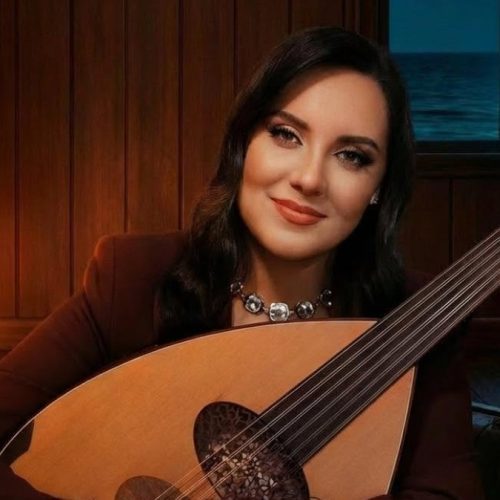
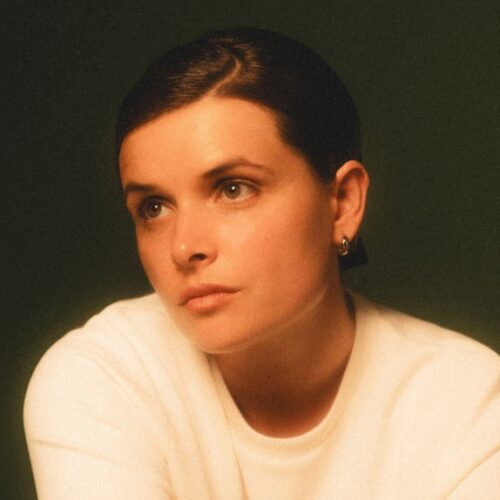
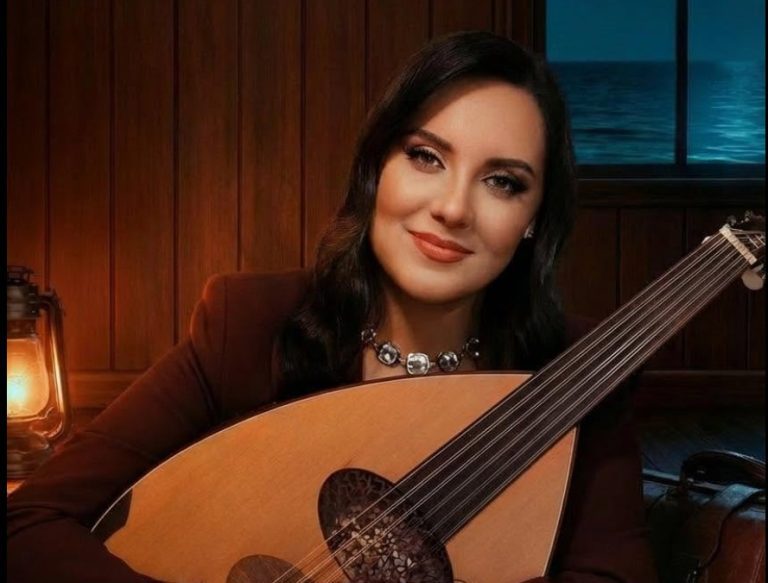
From Lebanon, Walaa Al Jundi’s voice is actually among the most beautiful of the Levantine modern culture. Through her exceptional talent, Arabic great songwriting is in good health ! All the arabic nuances and richness are present in her refined craft, all this fantastic tradition is there, from the masters of tarab and classical arabic forms to highly creative and visceral pop of our actual era.
Walaa Al Jundi is most definitely a must at the FMA 2026, everyone who wish te do a very special musical journey in the beautiful Middle-East culture has to witness her concert on Saturday November 7th at the Place des Arts Cinquième salle. And this is exactly why we’ve had this conversation with her.
PAN M 360: How did you start singing?
Walaa Al Jundi: I was six years old when I sang my first song, almost by accident, while welcoming my father home from work. He was surprised by my voice and by the way I sang. I was naturally following the melody correctly, and my family noticed that there was something beautiful in my voice.
From there, things unfolded naturally. My family encouraged me to keep singing. They would introduce me to different songs, ask me to listen to them and memorize them, and then I would sing them. That is how my journey with singing began.
PAN M 360: What was your musical education like?
Walaa Al Jundi: I grew up in a home that loved music. Music was part of our everyday life; hardly a day went by without music playing, whether on the radio, on cassette tapes, or in the car. We had a small radio at home, and my mother would play songs on it almost every day. That is how my love for music grew.
My grandfather was a Qur’an reciter and was also deeply interested in music and maqamat, or Arabic melodic modes. This later helped me develop my musical identity in a very natural way. I eventually chose to sing in Classical Arabic in many of my own works because I see it as a language that can unite Arab audiences across countries, beyond the differences between dialects.
At the age of fourteen, I also began studying the oud and learning the foundations of singing.
PAN M 360: Who were your teachers?
Walaa Al Jundi: I had a private teacher who taught me the oud at home, as well as the fundamentals of singing. He played a major role in developing my musical awareness and in teaching me how to choose songs that suited my voice.
Later, I participated in The Voice, and that experience was incredibly enriching. It gave me the opportunity to work in the same environment as established vocal coaches and artists, who helped me further develop my voice and discover the musical colors that suited me best.
PAN M 360: Who are your musical role models?
Walaa Al Jundi: I admire anyone who sings sincerely and truly understands what they are singing. I have a great love for the legendary singer Souad Mohammed. To me, she had a voice shaped by both emotion and technique, while still possessing tremendous strength.
I also look up to the great artists of the “Golden Age.” Fairuz, for example, has always accompanied our mornings in Lebanon. She is deeply embedded in our Lebanese memory and culture. In her songs, you can find reflections of our everyday lives and of so many human emotions — love, separation, longing, and even the deepest expressions of love for one’s homeland.
I am also deeply inspired by the composer Mohammed Abdel Wahab, by his career and by the extraordinary contribution he made to Arab music. His melodies brought even the most challenging poems to life and made them more accessible and fluid.
And of course, there is Umm Kulthum — an immortal voice that continues to resonate, move and captivate generations.
PAN M 360: How would you describe your relationship with classical Arabic music, tarab, sacred Arabic music, traditional music and contemporary music?
Walaa Al Jundi: I have tremendous love and respect for tarab and for the classical Arabic tradition. I see it as the foundation — something that cannot simply disappear or lose its value with the passing of time.
We grew up loving tarab, especially because it is one of the most demanding forms of Arabic music. In my own artistic journey, I try to preserve something of that authenticity and tradition.
At the same time, one of the most difficult questions I constantly ask myself when developing a new project or song is: How can we bring contemporary music and classical Arabic music together without leaning too heavily toward either side?
The answer is usually about finding a balanced blend between the different elements of a musical work.
Sometimes the lyrics can be challenging, so we may simplify the melody or the arrangement to bring the song closer to the listener. We try to create a sense of empathy between the audience and the music — a feeling of belonging to the artistic experience, whether through the melody, the words, or the vocal performance itself.
PAN M 360: How do the different dimensions of Levantine musical culture find their way into your music?
Walaa Al Jundi : Levantine music may not necessarily be the closest description of what I present as a whole. I often aim to create music in Classical Arabic that can bring Arab listeners, and even international audiences, together under the umbrella of the Arabic language, without relying on dialects that can sometimes create barriers between people.
As for the melodies themselves, they are naturally influenced by the nationality and musical background of the composer. So sometimes a melody may lean more toward the Levant or the wider Mashreq, while at other times it may resonate more with audiences in the Maghreb. Ultimately, it depends entirely on the nature of the composition itself.
PAN M 360: Which producers have you worked with in Lebanon?
Walaa Al Jundi: I am an independent artist and I produce my own work. I consider this both a blessing and a challenge.
It is a blessing because no one imposes a particular style or project on me. I am very careful when choosing my work and my team for every project or song, which gives me complete creative freedom.
At the same time, I am fortunate to have many composer, arranger and lyricist friends who offer me their support and guidance when it comes to choosing the right artistic direction for each song.
The challenge, however, lies in the cost of production. Producing music independently can be extremely expensive, especially because I do not necessarily make music that falls under what is currently considered “mainstream” or follows trends. As a result, the financial return from my work is often modest and, in many cases, does not even cover the cost of production. That is probably one of the greatest challenges I face in my artistic career.
I have had the opportunity to work with many composers from across the Arab world, from different nationalities and musical backgrounds, and I am grateful to all of them for their sincerity, dedication and commitment to bringing each project to life in the best possible way.
I also had a collaborative project with the Abdulaziz Saud Al-Babtain Cultural Foundation in Kuwait, which played a major role in my artistic journey and was one of my first major steps in the world of music. Together, we produced a collection of artistic works that received a very warm response from Arab audiences.
PAN M 360: How do you present your music on stage? Which instruments and performers do you work with?
Walaa Al Jundi: It varies from one performance to another. Some concerts have a more intimate atmosphere, so I choose a smaller number of musicians to match that intimacy. In Arabic music, this is what we often call the takht sharqi, or traditional Arabic ensemble.
I have also performed with large Eastern orchestras of more than 40 musicians, in opera houses and prestigious theatres across the Arab world, including in Saudi Arabia, Tunisia, Kuwait and Bahrain, as well as Syria.
PAN M 360. What music do you personally enjoy listening to these days?
Walaa Al Jundi: I love any music that is performed with sincerity and emotion. I am also very fond of Turkish music. I find that it carries a particular kind of melancholy and emotional depth that is very distinctive.
PAN M 360 . Where are you based today?
Walaa Al Jundi: I live in Lebanon, and I feel a very strong sense of belonging to my country, my home and the village where I come from. I carry Lebanon in my heart wherever I go, and I feel a deep sense of longing whenever I am away, even for a short time.
That feeling is one of the reasons I have never seriously considered moving to another country, even if doing so might make certain aspects of my career and professional life easier.
PAN M 360 : Where do you find the courage to face the extremely difficult circumstances in Lebanon, especially in light of the Israeli aggression? What are your plans in this regard?
Walaa Al Jundi: Lebanon teaches you resilience from a very young age. It is a country that teaches you to love life, whatever the circumstances may be, and its people are not easily defeated, no matter how severe the challenges become.
I believe this is one of the most beautiful qualities we have as Lebanese people. We are a people shaped by love, and we deserve happiness and life.
As artists, I believe our role is deeply connected to sharing culture and spreading a message of love, peace and hope — a reminder that life continues despite suffering.