Additional Information
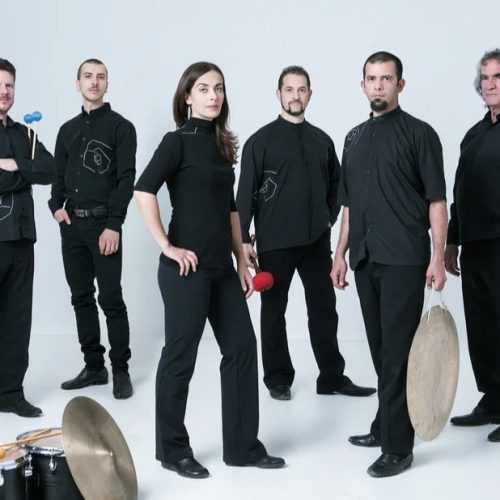
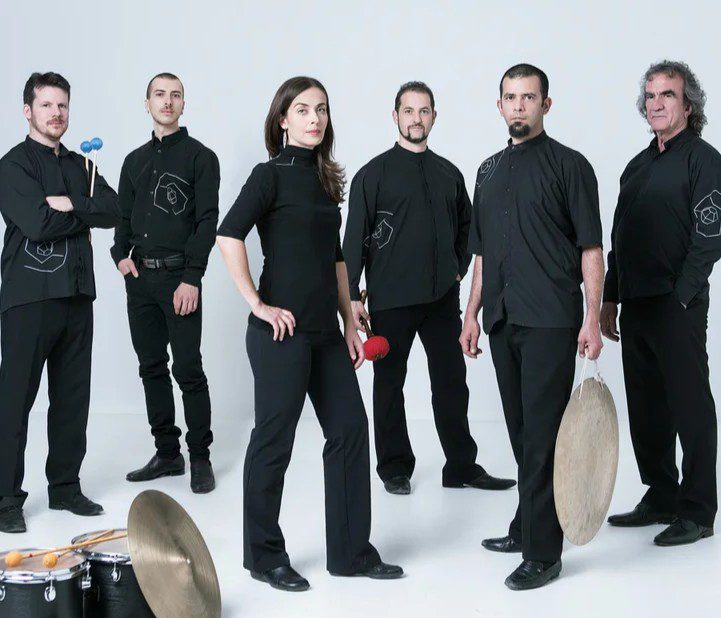
In the first concert of a series exploring percussion music from around the world (each time, a different country or city), the Sixtrum percussion ensemble, in collaboration with Le Vivier, presents Dutch Resonances on Friday, November 20, and Saturday, November 21, 2026, at the Wilder’s Espace Orange, in Montreal. For the occasion, a fairly broad overview of the percussive personality of this country. One discovers a rich and talented eclecticism driven by a predominance of rhythm and especially pulse, more or less explicit. The opportunity will also be a good one to present composers who cross the fence, such as the Dutchman Edward Top, who is based in Vancouver, or the Canadian Trevor Grahl, based in The Hague. I spoke with Fabrice Marandola from Sixtrum about this concert and the music that will be played.
PanM360: Hello Fabrice. Why the Netherlands?
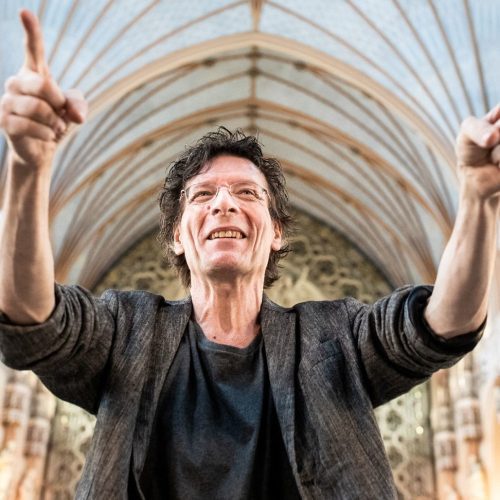
Fabrice Marandola (Sixtrum): Simply because we want to highlight the excellence of the percussion ensemble from The Hague, which is now called Hiiit (like Heat, in English – Ed.), which is one of the great European percussion ensembles. They were officially formed in ’77. So, it has a very long history and, of course, many commissioned works. Then, it’s a repertoire that we practically never play around here, I don’t know exactly why, but in North America, we hear very little of this music. We thought we would highlight the music of our colleagues, that’s it.
This is the first reason why we are focusing on Dutch music. The other reason is that with Sixtrum, we have a multi-year perspective to do this kind of focus on a country or a city. We are planning one with Argentina later, another with Brazil, and we are also planning one with New York in a few years.
The idea is to introduce the music that is made in these countries or cities, and at the same time, to highlight the connections between Canada and these countries.
For example, we have a piece by Trevor Grahl, a Canadian who has been living in The Hague for years and is a professor at the conservatory there. We have another piece by Edward Top, who is originally Dutch and has been living in British Columbia for about fifteen years.
PanM360: Does percussion music from the Netherlands have a particular personality, in your opinion?
Fabrice Marandola (Sixtrum): There is a lot of diversity. In addition, we are tracing a panorama that goes back in time to 1965, with a piece by Simeon Ten Holt.
PanM360: Ten Holt is the composer of the famous Canto Ostinato, a piece of repetitive Minimalism that can last up to an entire day…
Fabrice Marandola (Sixtrum): Exactly. But here, for this piece, we are in the 1960s, so in his serial period, before the minimalist phase. It was in the 1970s that he changed his way of doing things. So, we are presenting a piece of his that is played less frequently, Tripticon. On the other hand, we have a recent piece by Sarah Neutkens, called Redshift, which is truly in the spirit of the Minimalism of Canto Ostinato.
Neutkens, a very refined minimalist, who works with really very few things, but with a slight rhythmic tension that moves forward. There are very simple things, but they remind one of Simeon Ten Holt that everyone knows. We also have, for example, Arnold Marinissen, who is one of the great figures in the Netherlands, a great percussionist, composer, and composition professor for many years, and who has written several works for percussion, of course, and notably for ensemble.
We are playing two pieces by him, one that only uses snare drums, for example. We also have a piece by Celia Swart, a young composer who also uses snare drums a lot in her work. So we make responses like that within the program, between established figures and composers, in this case younger ones who extend, in their own way, types of writing that already exist.
Besides that, we have ties with Canada. Trevor Grahl was trained in Canada, but he has been in the Netherlands for a very long time. The way he writes for the upper percussion, marimba, vibraphone, is very, very original in harmonic language and rhythmic language. Then Edward Top, a Dutchman based in British Columbia, wrote a piece for solo Glockenspiel, something very rare!
PanM360: Listening, one can detect a rather Anglo-Saxon character in the general aesthetics of the Netherlands, right? More pulse, for example. Less pure abstraction.
Fabrice Marandola (Sixtrum): Yes, there’s that. There is also the fact that, for example, we are not in spectralism, which is a typically French movement. We’re not into that at all. We have forms that are quite complex as well, even rhythmically. For example, Simeon Ten Holt layers different speeds. We are six, and they are never the same, but it is written in such a way that it works, it fits perfectly.
PanM360: Yes, it sounds very pulsatile to the ear, unlike the more French aesthetic, which is much less attracted to this kind of “linearity.”
Fabrice Marandola (Sixtrum): Yes, we are more “grounded,” for lack of a better word.
PanM360: Are there pieces that are more demanding, technically speaking?
Fabrice Marandola (Sixtrum): Yes, the piece by Simeon Ten Holt. There are some sections that are quite virtuosic, and then, it’s the ensemble performance that is virtuosic. We play, for example, with the score, meaning we all follow each other’s parts, precisely because there are so many things interlocking with each other, and the references change. We had started by doing it as usual, by taking markers for example. “Okay, you do this here, etc.” After two pages, we said to ourselves, it’s not possible, we’re going to spend ten hours taking notes and not remember anything. So, that’s a major overall difficulty, but it’s super interesting to play from a group perspective.
Then, from a personal technical point of view, there is a section in one of Arnold Marinissen’s pieces where I play the timpani, but it’s almost a moment of electric bass! I pedal all the time to change the notes, and it’s doubled on the marimba.
There is the marimba-vibraphone duo, from Grahl, which pushed us a bit into the dark. Honestly, I have to say, it’s great music, but it’s really difficult.
PanM360: Ah well, you chose this profession, you have to assume what comes with it! Haha
Fabrice Marandola (Sixtrum): Absolutely, we chose to do it, we have to deliver. Lol
PanM360: I saw that one of the concerts (Friday afternoon at 2 PM) is “adapted”?
Fabrice Marandola (Sixtrum): Yes, it’s an initiative from Le Vivier, which takes the time to ask artists to do a second concert, in the afternoon, a day before or a day after. It’s to allow groups with special needs to participate. For example, people who have access needs. Let’s say, if we end up with 20 wheelchairs, we need to prepare the audience to accommodate all these people.
If we have people who are, for example, more sensitive to noise, lights, etc., we need to ensure that we provide an appropriate welcome. It allows us to properly welcome all kinds of audiences. For us, it’s really pleasant because it allows us to reach these audiences, to offer this music to everyone, and to remove barriers to concert entry.
Finally, it allows us to play even more. It’s always really enjoyable to spend so much time working on these pieces and to be able to play them multiple times, because they improve over time.
PanM360: Thank you!
Program
Arnold Marinissen: Sechs Trommeln (six ‘re drumming), 2008. 5′ (Canadian premiere)
Edward Top: Oneliner, 2021. 7’
Trevor Grahl: Σκουληκομυρμη- γκότρυπα (Skoulikomirmigotripa – worm-ant-hole), 2013). 12’ Simeon Ten Holt (1923-2012): Tripticon, 1965. 11’
Celia Swart: Drawing Waves, 2023, 10’
Sarah Neutkens: Redshift, 2020. 8’
Arnold Marinissen: Iron Velvet, 2017. 11’