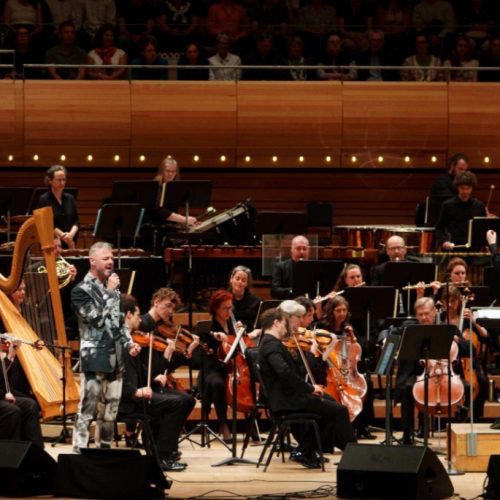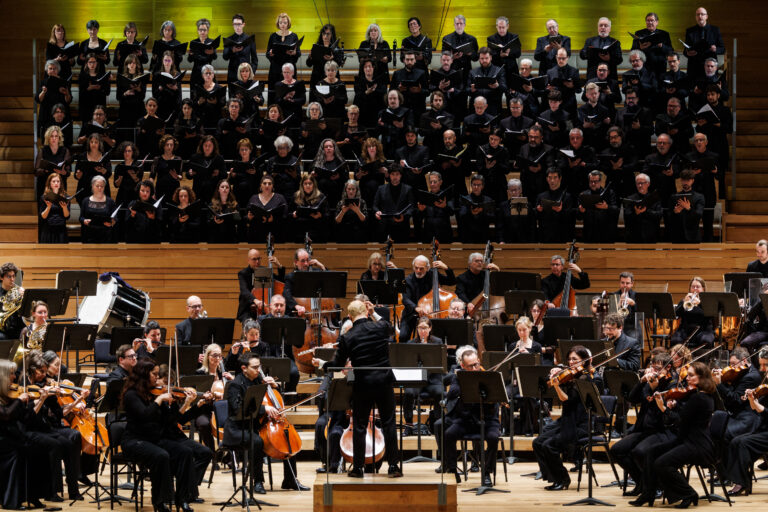
It’s a Saturday afternoon at the Maison Symphonique de Montréal: the hall is packed, and the average age of the audience is much younger than we’re often led to believe when it comes to classical music. What’s more, this audience is enthusiastic and attentive to a program of three works that are relatively unknown to the general public. There’s no denying it, classical music is alive and well in Montreal.
Perhaps it’s Yannick Nézet-Séguin, at the helm of his Orchestre métropolitain, who stimulates this interest. But let’s not deny ourselves the pleasure of witnessing a state of affairs that must make many other cities on the continent green with envy.
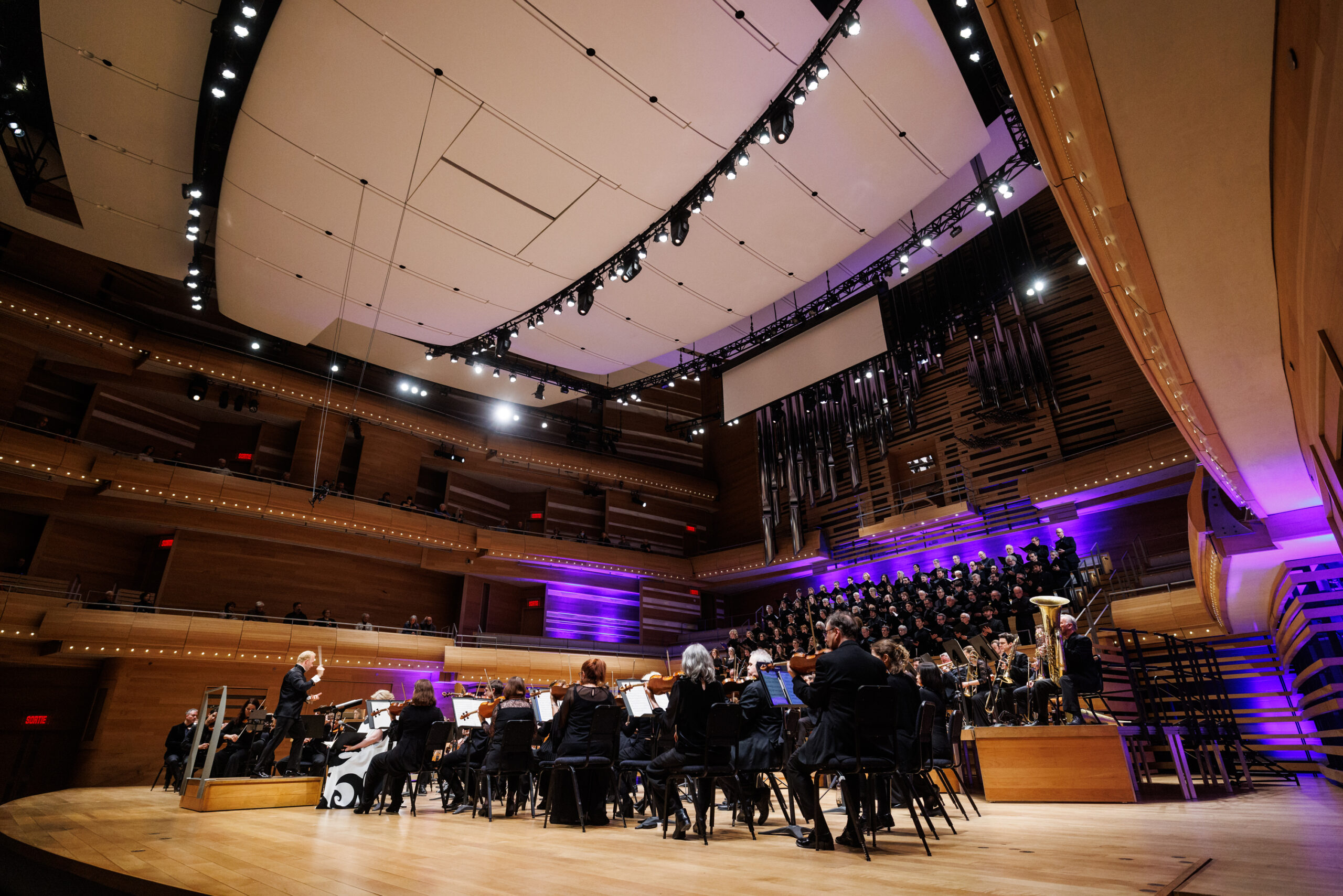
A program of little-known works, as I was saying, with the exception of Poulenc’s Gloria, and even then. The concept on the poster was entitled De l’abîme aux étoiles, or, if you like, from the depths to the stars. It was mainly in the second half of the concert that this musical and symbolic journey was felt, with Lili Boulanger’s Psalm 130 “Du fond de l’abîme” (From the depths of the abyss), a dark, anguished work in which a small flame of hope nevertheless manages to impose itself, followed by Francis Poulenc’s scintillating Gloria, in which the essential balance of forces is reversed: a luminous journey through which a few clouds pass but never gather. I’ll come back to this.
The first half was taken up by an unsuspected gem: the Gaelic Symphony by American Amy Beach, which premiered in Boston in 1896 and thus becoming the very first symphony written and published by a woman, and played by a major orchestra in the United States.
It’s a relatively sunny piece, but the first movement contains references to a traditional Celtic tune, Dark Is The Night. Is this what links it with the program concept? Whatever it is, it remains rather tenuous, musically speaking. The symphony as a whole is not really steeped in darkness. It’s far from the initial abyss suggested by the concert’s title. As I said, it’s in the second half that this really takes shape.
But never mind, it doesn’t spoil anything other than the purist obsessions of semantics doctors. The Gaelic Symphony is carried by an orchestra that has muscle but never becomes excessively heavy. The orchestra is finely detailed and often transparent. Beach integrates many elements from traditional Celtic music, that of her ancestors from Ireland and Scotland. That said, she never turns it into a “folkloristic” caricature. The melodies are straightforward and appealing, and in the context of a beautifully coloured orchestration, one thinks of a sound world reminiscent of Russian or especially Eastern European music. Dvorak is an avowed model. One might even add that the Gaelic Symphony is what the Czech might have written had he taken a trip to the British Isles rather than the USA.
Impressions of dancing here and dramatic outbursts against an inspiring panorama elsewhere made this symphony a wonderful discovery for the visibly satisfied audience. I’d like to highlight the superb solo by Yukari Cousineau, the orchestra’s first violin, in the third movement. A powerfully expressive, richly enveloped sound, almost as if it had come from a viola. Magnificent!
As mentioned, it was in the second half that the upward journey into the light took place. Those who didn’t know that Lili Boulanger’s Psaume 130 for contralto, tenor, choir and orchestra is a masterpiece, perhaps one of the great works of classical modernity (yesterday sung only by mezzo Karen Cargill), surely left the concert having definitively swept all doubt from their minds.
Du fond de l’abîme (that’s the title) is taken from the Latin De profundis translated into French and portrays with probably the finest acuity the state of mind in which Lili Boulanger found herself at the time of completed writing, in 1916. The young woman died in 1918 at the age of 24, of Crohn’s disease (unknown at the time). Throughout her short life, she endured the torments of her illness and fought as hard as she could. This Psalm, in which she sets down on paper her distress, but also the faint but resilient glimmer of hope that inhabited her, is a remarkable creation, in which writing techniques interweave brilliantly to create a poignant dramatic discourse. Phrygian mode, octatonic scale, tonal scales, chromaticism and harmony interweave in a visionary canvas. If this sounds hermetic, rest assured: it’s wonderfully beautiful and touching, despite the ambient darkness. Therein lies the great genius of this composer, who could have revolutionized modern music even more profoundly had fate let her live. Cargill, despite her beautiful voice, seemed a little discreet. It was the chorus and orchestra that left their mark, in marvellous chiaroscuro nuances subtly woven by Yannick. A few hesitantly precise attacks in the opening bars prevent me from speaking of a divine moment. But it’s a very little caveat, and the emotional power generated by this exceptional piece remains intact. Bravo, Yannick!
The contrast could hardly be greater with Poulenc’s Gloria. One immediately recognizes the Frenchman’s touch, with its slightly irreverent good humour, even in the context of sacred music. Those who love his opera Dialogues des carmélites will find themselves on familiar ground, melodically and harmonically, when the Agnus dei arrives. Smiles of pleasure but with a few gentle shivers of spleen, this is the Gloria of this atypical and original composer.
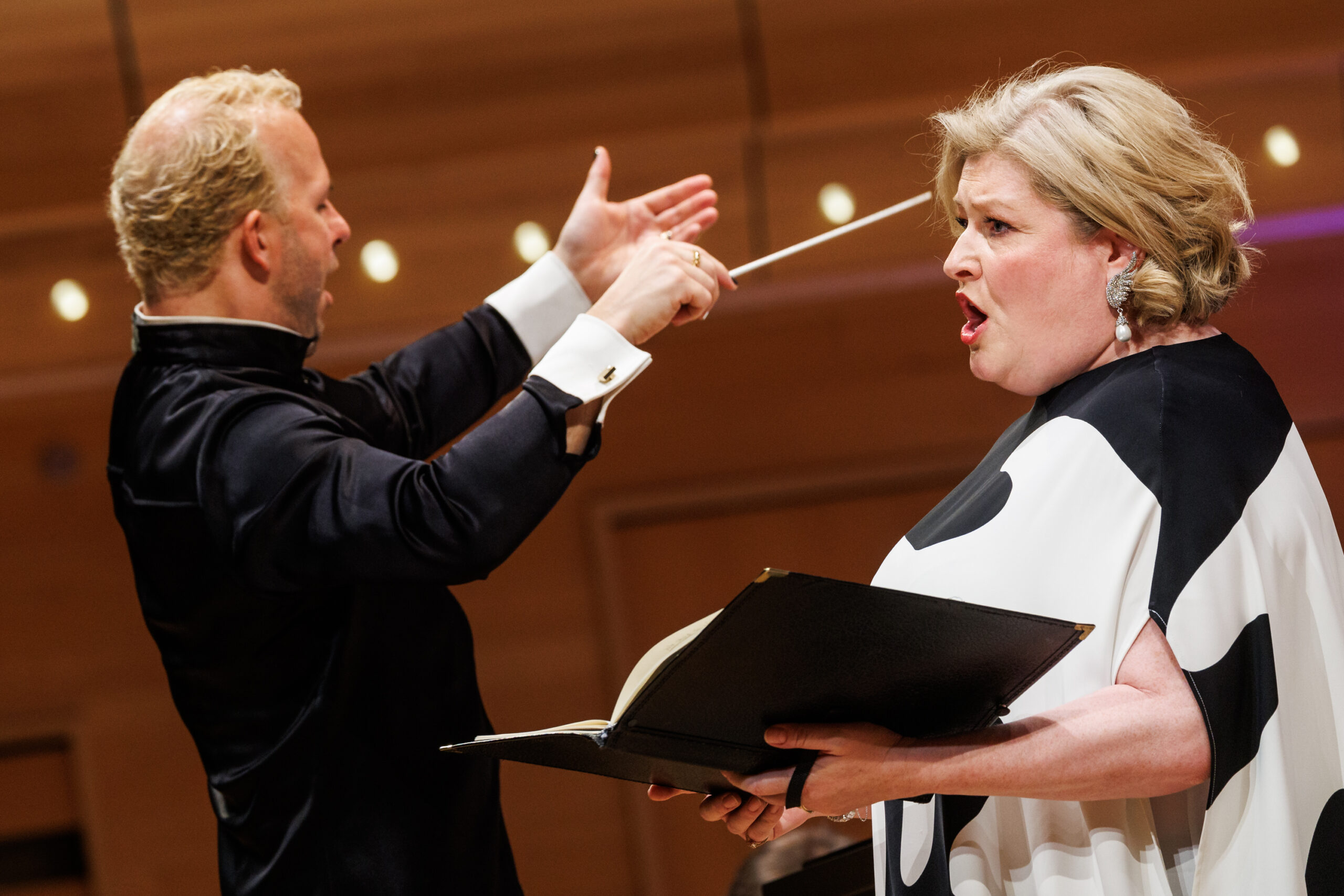
Yannick Nézet-Séguin, unsurprisingly, was immersed in the music and conveyed its emotional essence to his musicians with brio. Soprano Janai Brugger installed not on stage but next to the choir, made a very fine impression, with a voice projecting fluidly a beautiful light, particularly appropriate, and all this without exaggerated operatic emphasis.
A program and a concert that can unhesitatingly be described as a great success.