Shifting and healing with Beatrice Deer

Interview by Stephan Boissonneault
Genres and styles : Indie Folk / Indie Pop / Indie Rock / Inuit

Additional Information

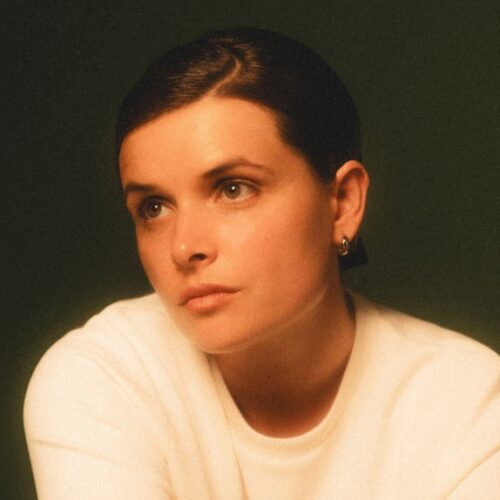
Beatrice Deer is a self-proclaimed, award-winning “Inuindie” artist hailing from a small town in Northern Quebec called Quaqtaq. She has been based in Montreal for the past 16 years and sings in English, French, and Inuktitut, to share themes of hope, personal growth, and mystical folklore from her childhood. Her latest album SHIFTING dropped last December and features members of Land of Talk, Stars, Bell Orchestre, the Besnard Lakes, and Suuns.

PAN M 360 quickly spoke to Beatrice Deer as she was performing at the 32nd Presence Autochtone (The Montreal First Peoples’ Festival).

PAN M 360: I know the 2018 album, My All To You, was the first time you actually wrote all of the music (as well the lyrics of course). Have you been continuing this way of working with SHIFTING and the newest single “MOTHER“?

Beatrice Deer: Yes, I wrote SHIFTING the same way as I did My All to You. I asked my friend Kathia Rock to write the French version of MOTHER as I wrote it originally in Inuktitut. The songs were arranged by Christopher McCarron and Mark Wheaton. 

PAN M 360: You’ve been in Montreal for quite some time, but you’re from Quaqtaq originally. Does Montreal always feel like your true home nowadays?

Beatrice Deer: It now feels like home finally after 16 years, since my boyfriend and I bought a house for our family. 

PAN M 360: You sing in Inuktitut which is classified as an endangered language, but I’ve seen in the last 10 years kind of a rebirth of the language in music from The Jerry Cans, PIQSIQ, Tanya Tagaq, you, and other artists. Could you speak about that act of preserving the language through music?

Beatrice Deer: I write and sing in Inuktitut because it’s my mother tongue and I’m most comfortable expressing myself. It’s a way of preserving the language and storytelling. 

PAN M 360: Going off of that, how do you decide which lyrics will be in English, French, or Inuktitut? Are they written in one language first or is it always a hybrid from the beginning?

Beatrice Deer: I write the music first and then feel it out and the language that comes forth is the language I use for the song.

PAN M 360: Are these Inuit folk tales that you use as inspiration ones you remember from growing up or do you still actively seek them out now as an adult?

Beatrice Deer: The folk tales are from my childhood that I further research as an adult. 

PAN M 360: Your music is very trance-like, spiritual, and I’d say “healing.” Do you believe it’s kind of an artist’s responsibility to have a message within their music and platform? 

Beatrice Deer: Yes. An artist chooses what message they want to relay with their art form. I chose to speak healing and hope.

PAN M 360: Is “MOTHER” about your mother or rather, the strong resilience of Indigenous women?

Beatrice Deer: The Inuktitut version is very personal to my mother but the French version is for our Indigenous matriarchs in general.
Latest 360 Content

Le Vivier 2026 | Sixtrum hits the music, the Dutch way

Le Vivier 2026 | Sixtrum hits the music, the Dutch way

Le Vivier 2026 | André Pappathomas’ Babel Choir

Le Vivier 2026 | André Pappathomas’ Babel Choir

EkaySounds & Roudy H: Five Chapters, One Story, Two Cultures

EkaySounds & Roudy H: Five Chapters, One Story, Two Cultures

Mundial MTL 2026 | Melafrique: Africa for Everyone and by Everyone

Mundial MTL 2026 | Melafrique: Africa for Everyone and by Everyone

Mundial MTL 2026 | Orbital Ensemble : steeped into vintage, but with an ear in the present

Mundial MTL 2026 | Orbital Ensemble : steeped into vintage, but with an ear in the present

FMA 2026 | Al Qahwa: The Coffee of Cultures, The Rhythm of Encounters

FMA 2026 | Al Qahwa: The Coffee of Cultures, The Rhythm of Encounters

Mundial MTL 2026 | Where We Come From, Who We Become: An Interview with Tara Moneka

Mundial MTL 2026 | Where We Come From, Who We Become: An Interview with Tara Moneka

Caprice Ensemble at the 9th Floor : Hallelujah or the Jewish Colours of Baroque Music

Caprice Ensemble at the 9th Floor : Hallelujah or the Jewish Colours of Baroque Music

FMA 2026 | Le Livre des Reines : Dialogues between Inspiring Women from Europe and Persia, from Yesterday till Today

FMA 2026 | Le Livre des Reines : Dialogues between Inspiring Women from Europe and Persia, from Yesterday till Today

Salle Bourgie | Mike Bruzzese, inspired by his grandfather’s poetry

Salle Bourgie | Mike Bruzzese, inspired by his grandfather’s poetry

Salle Bourgie | Jordan Bak : ”I wish to be excited on stage and with the audience”

Salle Bourgie | Jordan Bak : ”I wish to be excited on stage and with the audience”

FMA 2026 | Walaa Al Jundi’s Beautiful Voice, Craft And Refinement… Despite Deep Suffering In Her Region

FMA 2026 | Walaa Al Jundi’s Beautiful Voice, Craft And Refinement… Despite Deep Suffering In Her Region

Palais Montcalm | Harry Manx about “Falling Upwards”, contemplation, humility, wisdom

Palais Montcalm | Harry Manx about “Falling Upwards”, contemplation, humility, wisdom

Voces Boreales | Tempus Fugit, “to experience time differently”

Voces Boreales | Tempus Fugit, “to experience time differently”

Trio Helios and the aesthetics of ugliness

Trio Helios and the aesthetics of ugliness

Festival du Monde Arabe 2026 | MaqaMorphose, or the dream of an oriental chamber music

Festival du Monde Arabe 2026 | MaqaMorphose, or the dream of an oriental chamber music

FMA 2026 | Amin Reihani: Making Music a Language of Peace

FMA 2026 | Amin Reihani: Making Music a Language of Peace

Can You Hear the Birds ? The art of the trio according to Gentiane MG

Can You Hear the Birds ? The art of the trio according to Gentiane MG

Judith Fliedl, invited by Le Vivier: I love producing sounds that are not “normal.”

Judith Fliedl, invited by Le Vivier: I love producing sounds that are not “normal.”

Guillaume Côté’s A Midsummer Night’s Dreams: the choreographer talks about his intimate relationship with music

Guillaume Côté’s A Midsummer Night’s Dreams: the choreographer talks about his intimate relationship with music

Akousma| Felix Deufel introduces us to the uncharted sonic richness of the Arctic

Akousma| Felix Deufel introduces us to the uncharted sonic richness of the Arctic

Akousma | Les Artefacts sonores de Roxanne Turcotte

Akousma | Les Artefacts sonores de Roxanne Turcotte

Akousma | The Audréanne Filion and Myriam Bleau Duo: Where Reality and the Virtual Merge

Akousma | The Audréanne Filion and Myriam Bleau Duo: Where Reality and the Virtual Merge

Akousma | Exzald S, la violence du calme

Akousma | Exzald S, la violence du calme

Subscribe to our newsletter

Inscription
Infolettre

"*" indicates required fields

Type of Suscribers