Additional Information
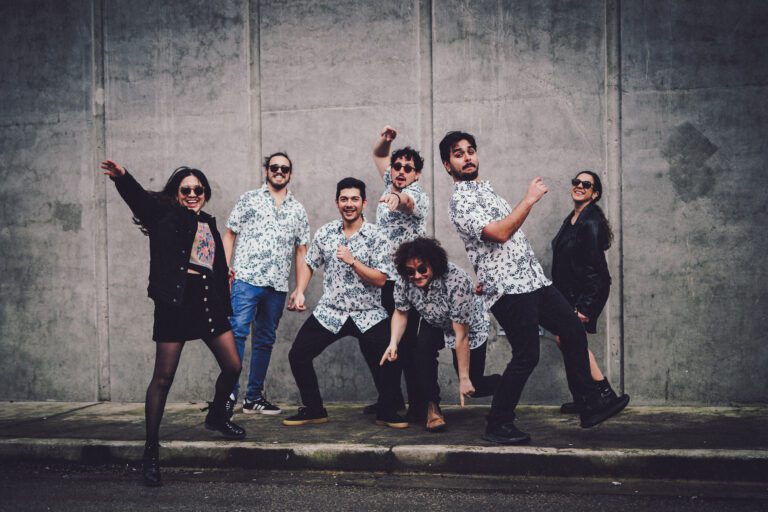
Amid the sea of polished jazz acts and seasoned crooners at this year’s Montreal Jazz Festival, one band that brings a jolt of raw, insurgent energy is Empanadas Illegales. With their fusion of cumbia, punk, and political protest, the Vancouver-based group will turn their outdoor set into a sweaty, dance-fueled call to action. Before their explosive performance, we sat down with the band to talk about their roots, their message, and why making noise—musically and socially—matters more than ever. Fresh off the release of their new album Sancocho Trifásico, the band has sharpened both their sound and their political voice, doubling down on themes of migration, identity, and grassroots defiance. We caught up with the group to talk about the new record, their musical roots, and what it means to be “illegal” in 2025, before they play Jazzfest on July 2.
PAN M 360: What inspired the title Sancocho Trifiasco? Is there a story behind the name?
Daniel Hernandez: Sancocho is a traditional Latin American stew that has many ingredients and flavours, and in Colombia, there is a particular kind that is called Sancocho Trifiásco, which contains three different kinds of meats. Our album uses references to this, as the album was recorded in three different sessions and also has a myriad of sounds and flavours, which resembles the sancocho soup.
PAN M 360: Yes, this album feels like a sonic stew—chaotic, flavorful, and layered. How did you approach blending so many genres (cumbia, psych, etc) and textures?
Daniel Hernandez: Our goal is to honour our Latin American folkloric roots, and we also embrace all the new modern sounds and musical styles. When we create our music, we want to explore with different sounds while keeping true to our roots. This kind of experimentation led us to incorporate synths, effects and ambient techniques into our songs, which usually are guided by rhythm and groove. We want to make people feel like they are dancing to something familiar, while feeling the surprise of the experimentation in our sound.
PAN M 360: There’s the opening vocal track “Suto Ta Kandá (de las 4 a las 12),” why did you decide to add vocals and not throughout the album?
Daniel Hernandez: “Suto Ta Kandá” marks a pivotal moment for Empanadas Ilegales, as it is the first track where vocals take center stage in our music. It also introduces our new musical collaborator, drummer and producer Daniel Ruiz, merging his solo project Druiz with contributions from Canadian multi-instrumentalist Myles Bigelow and Colombian Jerlin Torres Salgado from San Basilio de Palenque. At the heart of this song is Palenquero, a rare and historically significant Afro-Colombian language that traces its roots back to the first free African town in the Americas. This track may be one of the first-ever releases in Canada featuring Palenquero, making it a truly unique musical and cultural moment. Suto Ta Kandá fuses traditional Colombian folk music with experimental sounds, bridging past and future while amplifying a language and legacy that deserve global recognition
PAN M 360: There’s a strong sense of both celebration and resistance in the music. What themes were you most passionate about expressing?
Daniel Hernandez: Our goal is to remind our audience of the connection we all have with music. Music is something that is ingrained in our DNA as humans, and when we get to share a musical experience, it brings connection within us. We aim to create a connection from our audience to the music, to dancing and having fun while letting all worries disappear for a moment. Music can be a source for connection, community building and freedom. It is liberating and can help us find a stronger connection as living beings, so when we play our music, we aim to help create a stronger human bond within all of us, while having a really good time dancing and enjoying the music.
PAN M 360: How do food, folklore, and community play into your creative process? Your name alone suggests something both tasty and radical.
Daniel Hernandez: We all love food in the band and we definitely use food references a lot, haha. We also use folklore tales for our song names and we use some of these names to remind ourselves of things that are important for our cultures and food is usually a good place to start. For example, empanadas have versions all over different countries in latin america and the world (think of Perogies or Dumplings) and we think that this is a resemblance of the cultural diversities all over the world that should be embraced. We are all empanadas, but have different fillings and we all can live together in harmony with our own little differences.
PAN M 360: Were empanadas actually illegal at one point in Colombia or is that bullshit?
Daniel Hernandez: Haha yes they were. In Bogotá there was a time when street vendors were banned, therefore some people started selling their empanada still in the street and they were calling them illegal empanadas.
PAN M 360: Your live shows must be wild and immersive. What’s the ideal audience reaction you’re hoping for?
Daniel Hernandez: Our goal is to create such a carefree and joyous environment, that people that come to the show forget about all their problems and let themselves be free on the dancefloor, by dancing and being part of the music with us.
PAN M 360: Have you collaborated with any other artists or collectives that pushed your sound further? What’s the weirdest venue or gig you’ve ever played?
Daniel Hernandez: We have done some really fun collaborations with other artists. For example, one time for Halloween, we performed a Spice Girls song with our homies in NADUH and it was a very spicy and fun performance and we joked on calling ourselves EmapaNADUHs. Hahaha we might actually go back and try to record the song together, we shall see. As for weird places we have played, a few come to mind… A mall parking lot, an old bank vault/warehouse, on a stage with a big tree growing in the middle of it. We love playing in weird places and hope to continue doing so
PAN M 360: If your music were a dish, other than empanadas, what would it be and why?
Daniel Hernandez: Gotta say that a Sancocho would be a good option. Full of flavour, lots of ingredients, hearty, filling, delicious and nurturing for the body and soul.
PAN M 360: What do you hope someone who’s never heard you before takes away from this album?
Daniel Hernandez: We hope they let themselves get driven by the melodies and grooves and it makes them want to come see us live and have the whole in person Empanadas Ilegales experience. Our music is designed to be experienced on the dance floor.