Additional Information
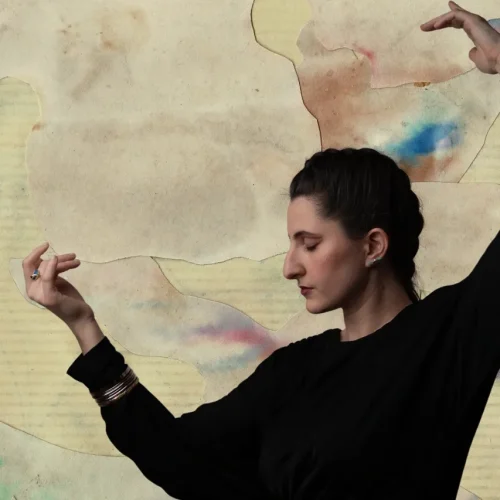
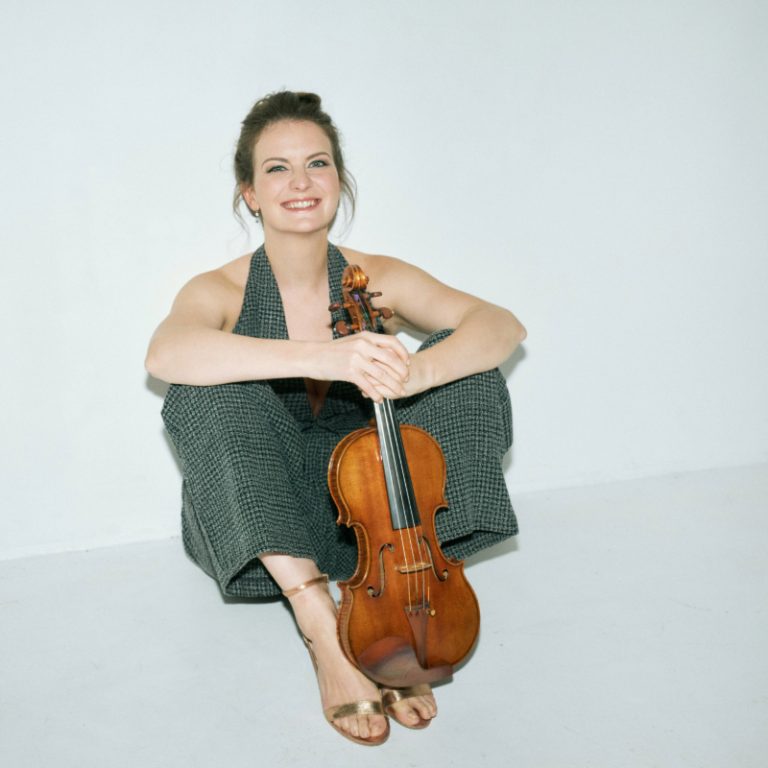
Recognized by many of the world’s finest orchestras, venues, and festivals for the poise and maturity of her musicianship, German violinist Veronika Eberle will be performing at the Festival de Lanaudière for a concert on July 26th with the Orchestre Métropolitain, conducted by Yannick Nézet-Séguin. In this concert, two different versions of the musical era will collide, notably with Tchaikovsky’s Symphony No. 5 and with the Violin Concerto in D Major of Beethoven, which is the piece that Veronika Eberle will be playing on the stage of the Amphithéâtre Fernand Lindsay. PAN M 360 contributor Alexandre Villemaire had a chance to talk with Veronika Eberle about this iconic piece ahead of her performance.
PAN M 360: Welcome back, Veronika! It is your second time in Quebec for the Festival de Lanaudière, is it not?
Veronika Eberle: Absolutely, yes. I was there last year, and I’m very happy to be there again this year.
PAN M 360: Can you tell us a bit more about the story of this Beethoven concerto? How is it musically structured, and why is it considered an iconic and staple piece for violinists?
Veronika Eberle: As you say, it’s iconic. It’s for us violinists, probably the Olympus of violin concertos. There is this raw beauty and pure simplicity in this piece that takes me every time by surprise. It’s just astonishing what he wrote down there. It’s really fascinating in a way that he refrains from this tempestuous and rebellious side that he puts into his symphonies, and here, he creates a world with very little and constructs with these few elements the biggest universe of sound.
It’s also very chamber music-like. The orchestra and violin parts are very interwoven together. The violin often even accompanies the orchestra, but it still maintains a strict structure, and the orchestra gives a lot of power to it. The violin also kind of takes some freedom and soars. The register he uses is very high, as if he were ascending into other universes and other heights.
There is also, for example, one place in the second movement where he writes “perdendosi,” which he’s never using anywhere else. Everything in that passage is kind of fading away, dissolving into silence. I find it so beautiful, and everybody can start to listen and experience how much silence tells us, actually. I’m especially happy to bring it to Lanaudière because this place is in such a beautiful nature. It’s so idyllic, in the same way that Beethoven often writes about pastoral and idyllic scenes. In the last movement, after the cadenza, you really are taken into this world of calm and peace and quiet and dance. So, I think it will be a very, very special moment.
PAN M 360: What is your personal relationship with this concerto?
Veronika Eberle: I started to study it a little bit before I was 16, because I played it for the first time at that age. It took me a year to really get into it, learn it, and discover this world of raw beauty.
I then performed it quite often in my teenage years with important orchestras and conductors. It was really a milestone for me in my career as a musician. I then took a break from it for quite a long time and came back to it just before Covid, actually.
I think the older I get, the more I understand this world that Beethoven’s creating there with its simplicity.
PAN M 360: We often associate Beethoven with the Romantic era when, in fact, the majority of his work is rooted in the Classical period. Is there a correct way, or a more historically informed way, to play this piece? Where do you find balance in the way that you perform it?
Veronika Eberle: I think in our times, we all know about everything in a way. We know about the historic way of performing, and we know about the Romantic way of performing it. We went through so many different worlds with this repertoire, especially. I think at the end, what matters is your own view on it and your own connection to the music and telling this as a story to the audience. And that’s what I’m trying to do.
It’s like really going into this musical world with everything I know, everything I studied, and everything I took from listening and from trying out on gut strings, etc, and then bringing everything together and finding the story that I see behind every single note.
PAN M 360: How does the musical language in Beethoven differ from the one present in Tchaikovsky’s music?
Veronika Eberle: If you look at the Tchaikovsky concerto, it’s very virtuosic, and he uses fast fingering and explosions of violin playing. For Beethoven, he goes back to the absolute pure. It’s not about the violin; it’s not about showing off or showing how virtuosic you can play. It takes you to the absolute essence.
PAN M 360: This will not be the first time that you’ll be performing with Yannick, right?
Veronika Eberle: No, it’s not the first time, and I’m very, very much looking forward to playing with him again. I admire him, and I love to work with him, especially for these pieces, which are again so chamber music-like. He’s just the perfect partner, and I can’t wait to be on stage with him and bring this music to life, especially with his Orchestre Métropolitain. I’m very, very much looking forward to that.