Additional Information
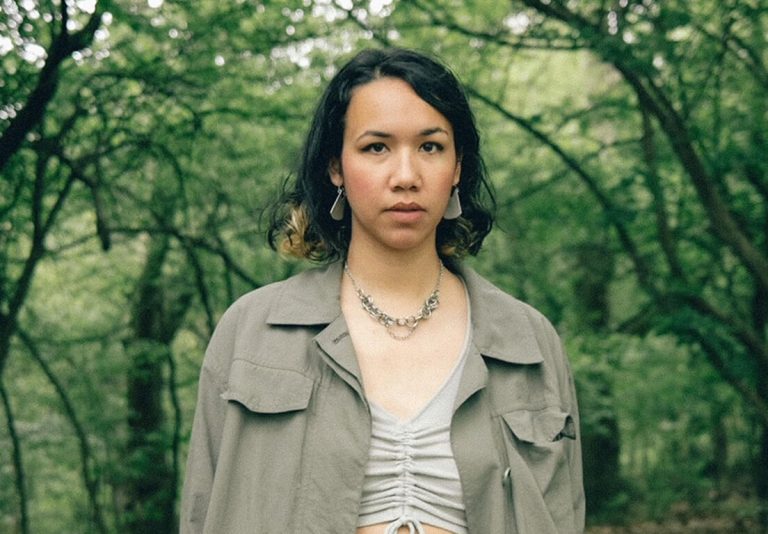
Kalia Vandever is a trombonist. This is their first performance at the Montreal International Jazz Festival. We took the opportunity to talk with the artist, a Grammy Award winner and recipient of rave reviews since their first album released in 2019.
PanM360: For those who don’t know you, tell us about your musical journey.
Kalia Vandever: I started playing the trombone when I was 8 years old. My father listened to a lot of jazz music at home. Among other things, a CD by the Marsalis family. I loved Delfeayo, the trombonist of the bunch, you guessed it. I had also played the piano before that. But when I heard the trombone, I told my father that I wanted to play that instrument, without knowing what it looked like. My parents bought me a trombone, and I couldn’t even reach the last playing position because my arms were too short! I started my studies with the classical trombone to thoroughly learn the fundamentals of playing and technique. Fairly quickly, I started improvising. I went to a school in Los Angeles and studied with Walter Smith III.
PanM360: What influences you the most in your writing?
Kalia Vandever: Straight out improvisation, certainly. But I am also very influenced by melody and by voice. I have always listened to a lot of female singers since I was young, especially Ella Fitzgerald, Sarah Vaughan, to name a few. My approach to the trombone is very lyrical and vocal.
PanM360: I also perceive this deployment of the trombone’s voice in your music. The instrument holds an important place, given its singing quality.
Kalia Vandever: I like that the music is made of a single coherent sound. Maybe that’s what gives that impression. I also want everyone in the group to feel free by supporting each other, even if someone is playing solo. In general, I don’t want to have a standard approach for a quartet, where it’s melody, solo, melody. Some pieces have this format, but in general, I want there to be a collective sound.
PanM360: You are leading two projects simultaneously, the solo and the quartet…
Kalia Vandever: I have always been interested in solo performance, but it’s something I learned later, I believe because I might have been afraid to use electronics for a while. I think for the first solo album (We Fell In Turn), I had only been playing solo for about a year before doing it. People from AKP in Los Angeles heard me doing a live gig during the pandemic. I was mainly improvising with pedals, layering myself, and exploring this sound world. They heard me and asked if I had thought about recording this material (no, I hadn’t thought about it). They supported me in doing that, so I went to a friend’s house in New York, he is a very good engineer, his name is Liam Edmond, and we set up microphones, and I recorded the album. It’s a rather meditative sound space. I think people find it very relaxing. I also evoke my Hawaiian heritage in my solo music. Much of the work I’ve done in recent years has been solo, and that’s also what led me to record the album that has just been released, called Mana, which is in quartet. It’s nice to see how the solo and the quartet influence each other in this one.
PanM360: You like long, melodic, patient lines. Is this related to a trait of your character?
Kalia Vandever: Yes, I focus more on intention and patience. I think I feel the most “grounded” when I play this way. I generally think about the arc of a solo or an ensemble and less about the short duration of a solo. That said, the patience with which I play is mainly related to the focus on the tonality and the intention behind the melody rather than playing very slowly for the sake of it.
PanM360: It is indeed a very chill album, very relaxing, almost ambient. Who are your role models?
Kalia Vandever: My favourite trombonist is J.J. Johnson. He is the first trombonist I transcribed when I was in school. I was influenced by him, but also by Melba Liston and Slide Hampton. I listened to them a lot, and I still listen to them today, even if what I am doing is different.
PanM360: Tell me about the contribution of your partners, particularly Mary Halvorson. She creates such original sounds! I read a review that talked about her “elastic” playing. An appropriate term.
Kalia Vandever: Before asking her to play with me, I had known Mary’s reputation and music for quite some time. I went with her to a program I did years ago called Next Jazz Legacy. I was able to play her music with her and we played a few concerts together. When I started writing the music for Another View, I had her in mind and I didn’t know if she would be available because she was very busy. I asked her and she was excited to be a part of it. It’s natural that she was part of this project because I could hear her while writing the music.
PanM360: Thank you