Additional Information
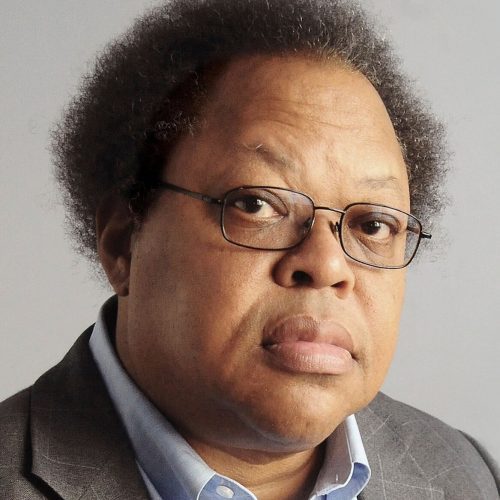
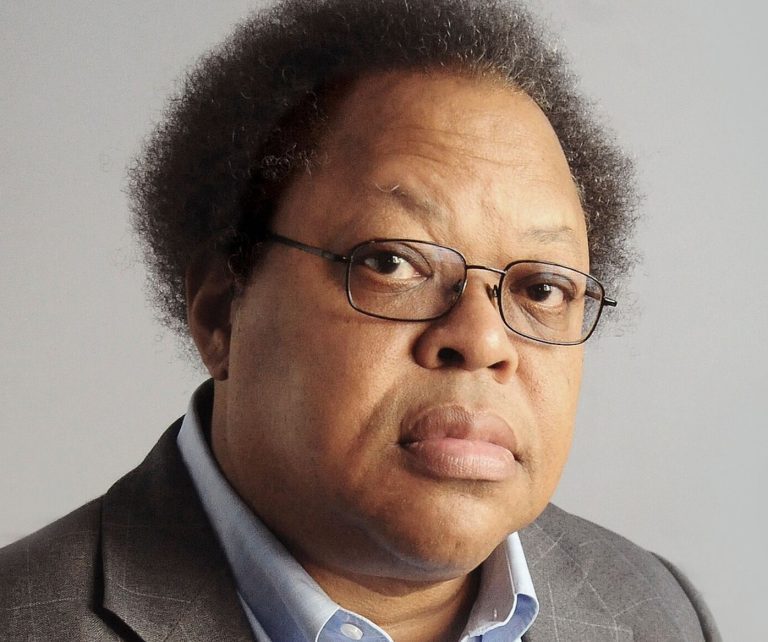
Montreal welcomed composer George Lewis last week, on the occasion of the Quebec Musiques Parallèles festival. The Bozzini Quartet invited us to listen actively (as no other way of listening is possible in the case of George Lewis) to two of the string quartets by the 74-year-old Afro-American. Exciting as well as demanding music, and which my report might interest you, here:
READ MY REVIEW OF THE CONCERT DEDICATED TO GEORGE LEWIS’S QUARTETS
For the occasion, I had the pleasure of conversing with George Lewis, specifically on the subject of his quartets. Here is the summarised content of this interview.
PanM360 : You have written a work in 1988, Signifying Riffs, for string quartet and percussion. But yo don’t consider it your first quartet, thus the ‘’0.5’’ numbering, and the following ones who bear decimal numbers (1.5, 2.5, etc.). Why don’t you consider this first attempt, even if it has accompanying percussion, not a ‘’full’’ quartet?
George Lewis : Well, it’s not a real quartet, it’s a quartet plus. So I didn’t think about it as being ‘’half a quartet’’, although that’s the joke really, but when I wrote the first proper string quartet, which was about 17 years later, that was the 1.5. So I thought, well, maybe this would be a string quartet plus, so I started calling them 1.5. And then just the nomenclatures continued.
PanM360 : You’ve written 1.5, 2.5 and then 4.5, but no 3.5. This one came afterwards. The reason?
George Lewis : Pandemic. As simple as that. It delayed it for a few years. I started working on it before the 4.5, so….
PanM360 : The quartets are all written-through. No improvisation…
George Lewis : Yes, well, most of my compositions are written out. That’s it. The vast majority of them, the ones for orchestra, the ones for chamber music, the ones for different forces, solo forces, they’re just written. You don’t have improvisation on everything. So I mean, it just happened that way. I wasn’t trying to, because Quartet 3.5 (recently premiered) does have improvisation, but that’s because they asked for it.
Normally these days when someone asks me to write a piece, I generally think of it as being a non-improvised piece, unless they specifically request it. But for the most part, nobody seems to be that concerned whether it’s improvised or not.
PanM360 : All the quartets have titles. Are these titles related to the structure of the pieces in some way?
George Lewis : People who know me a little bit, they know that I’m kind of a philosophy fanboy. I spend a lot of my time thinking about it, I am particularly influenced by the phenomenological tradition, continental philosophy, and so on.
So Experiments in Living, the title of Quartet no 1.5, that’s a John Stuart Mill reference. But I don’t really relate to this influencing the form or the structure of the piece. Sometimes it’s just intuitive. Maybe 2.5 is more related to the structure. It is called Playing with Seeds and that does have a reference to improvisation, although there isn’t improvising in the piece.
PanM360 : What does it link to?
George Lewis : It’s about farmers in Sierra Leone, improvising seed crossing every season, to enhance results. There were people thinking about improvisation in literature, improvisation in neuroscience, improvisation in business management, all kinds of ways of thinking about it. In fact, I co-edited with Benjamin Pickett, the Oxford Handbook of Critical Improvisation Studies. One of the interesting things about it for me was that it was improvisation, quote, in the world and not just the musical part.
But the thing about improvisation is that outside of music, no one really cares about the composition/improvisation binary. They just don’t think of it that way. Musicians are quite surprised to realize that no one is thinking about that but them. Anyway, which is one of the articles of the book which I was most fond of, is by the anthropologist Paul Richards. And it concerns those rice farmers in Sierra Leone. They sort of manage this long form improvisation. So it has nothing to do with cliches like being in the moment or spontaneity or all of that. What ends up happening with these people is that it’s a real-time, real-world improvisation.
That is to say, risk is real and not simulated, as in music. So the risk could be, you know, death if the varietals don’t work out. No one gets fed and you starve.
So that sense of being on the edge is what I think animates 2.5.
PanM360 : So does it structurally impact the music?
George Lewis : You could say that, but that would be much too literal. It seems a little naive for me. I mean you go where the music goes and you don’t try to tie it in some fixed way to some set of references. It doesn’t work that way for me. In the quartets I let the music flow, I think more about features of the music, like ruptures or incommensurabilities or non-linear structures or things that suddenly jump out at you from nowhere, like the kids call them jump scares I guess. Also things that flow and repeat. There is a lot of repetition in these pieces, repetition being a signal aspect, if not a universal one, for certain music making. So those kinds of things go beyond the titles and the specific piece. They end up being elements. What I’m looking for is in all the pieces really, not just the string quartets, but overall, is I want to get people to refuse complacency. I don’t want them to get too comfortable.
I want people to be wary, be on their toes, to think about what’s going to happen next about the future. And if they’re thinking about the future, maybe they’re thinking about the future of the music, maybe that migrates into conceptually into thinking about other kinds of futures, like the future of ourselves on this planet and how we are doing things that we could change. And that relates also to the general notion of these pieces that I metaphorically search for the sound of decolonization.
PanM360 : Making people uncomfortable. There is this anecdote about Anthony Braxton (whom you played with) going ot Newport Jazz Fest and playing this fully notated 50-page piece. And, elsewhere, playing totally improvised music in a more classical festival. Was that to force people to expand their minds? Make them uncomfortable?
George Lewis : Personally, I don’t know what Anthony was thinking. Myself, I wasn’t really too concerned with whether these people would expand or not. But we were very concerned about being free to do what we wanted.
And so an assertion of freedom is thet music should establish new spaces of intelligibility and new spaces of freedom. And if you’re not doing that, maybe you should be doing it. At least I feel I should be doing it.
So I felt that we were doing that more than trying to get people to expand their consciousness or any of that. And that once we can be free, maybe they can be free, too.
They say the music can set you free. I believe that.
PanM360 : How do you view this today with social media and the Internet and AI coming up?
George Lewis : Well, you know, I’ve been doing AI for about 45 years now. So I made my first AI piece in 1979. There have been some pretty important ones like Rainbow Family and the ongoing Voyager work. I’ve been working a lot at IRCAM once again. And we have a new system called SoVo that’s a combination of rule-based and machine learning work. But in concert, the machines are free to do what they like.
You can’t even tell them what to do. The idea is they’re built to sort of try to figure out what you’re doing. You know, I thought that was what intelligence was supposed to be about.
At least that’s what the original gangsters of the 50s, like Marvin Minsky and those people, said. They said, well, we’re trying to get a machine to do things that if humans did, it would be considered intelligent. Well, one of the things that humans do is freedom.
And if they’re not doing freedom, those structures you talked about, social media and all that, maybe those structures should be able to enhance our sense of striving at freedom. I mean, it’s not true freedom sounds like a No True Scotsman fallacy, but logical fallacy. The idea that if there is achievement, but no attainment, you don’t get there.
It’s not like I can say ‘’oh, I’m free now’’. No, you have to continually question that. And it’s a matter of being wary and being vigilant.
And I think that’s what I like, in all my music, particularly in the quartets. I like asking people to be vigilant and think about their situation and how they could change. I want people to walk out of the concert and say, well, wow, that was really different. And then maybe at the middle of the night, they wake up and they say, maybe that’s not the only thing that could be different around here.
PanM360 : Music can change the world, as you said.
George Lewis : Music has already changed the world. It continues to do so.
PanM360 : How has your view of AI evolved from what you were doing in the beginning?
George Lewis : I’m looking for alternatives to the overall mode of thinking, which is to reject it, or to totally control it. I don’t learn anything if I’m telling the AI music improviser what to do. I’m only learning if I can build enough into it so that it can figure out on its own what’s going to happen and then it becomes a dialogue between free beings or people who are in a free space. The free space for me is being simply one that I can’t control, one that I can dialogue with and learn from.
PanM360 : Right now, AI is accelerating. What we will hear, is it going to be AI or human? Is that going to enhance the interest for live art making?
George Lewis : You know, that came up in a very interesting way lately. There was this writer, Thélison Orélien, who has written a novel that was shortlisted for many big prizes. They looked at it and said that AI had written a lot of it. That’s a very interesting thing, because until that time, the guy was up for the prize. And so who was reading who couldn’t tell the difference between AI and the human stuff? See, what AI is going to do is it’s going to create new forms of expertise.
The old forms of expertise hasn’t worked out. When the Association for the Advancement of Creative Musicians began, I was one of the founders, but I was one of the earlier members. The idea of Afro-diasporic people, African Americans, doing music that was creative, that was considered crazy. The idea of a Black composer, that was like an oxymoron. So a lot of it comes down to how societies look at certain kinds of creativity.
Suddenly AI becomes creative. And then you say, well, what happens? Is it going to be man versus machine again, like the 50s? Or is it going to be a situation in which we recognize various forms of creativity? My feeling is that creativity, you can only add to it, or you can try to suppress it. Because AI is doing something on Spotify, it doesn’t mean I have to stop doing music.
That’s their business, not mine. I mean, I’m going to continue to do what I do. And whether it’s authentic or not, well, I mean, like the death of the author has been around for 75 years…
I did this thing at the Banff Center many years ago, I demonstrated a little machine-made drummer that I created, a jazz drummer. It could swing and do all these things, and I just made it. And I played it for them. And some people were offended because they said, well, you know, this thing, it’s just imitating us.
I said, that’s right. That’s exactly what it’s doing. So the way for you to get better is to not be an imitator.
PanM360 : Speaking of not imitating anyone, are you planning on writing other quartets in the near future?
George Lewis : There’s a fifth one that’s being written right now for the Marlborough Festival in 2027.
PanM360 : Thank you so much