Additional Information
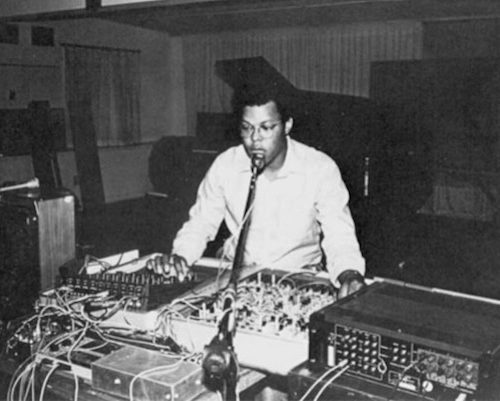
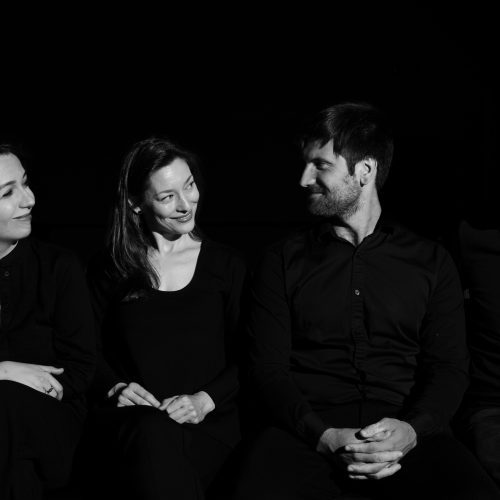
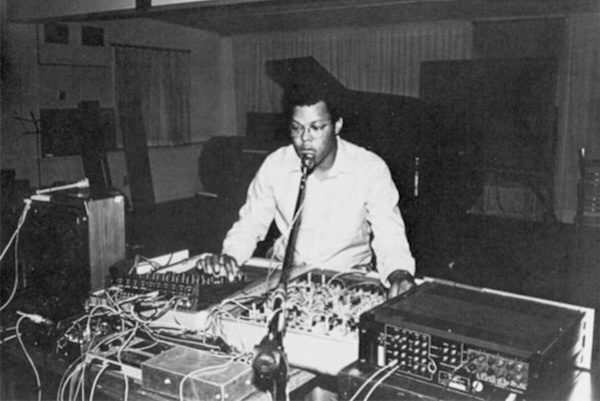
On the occasion of the Flux 2026 festival (dedicated to experimental music), and in collaboration with Québec Musiques Parallèles, the Bozzini Quartet will perform three string quartets by the Afro-American iconoclast George Lewis. We have known and especially heard the gentleman alongside other iconic figures of avant-garde jazz, such as Anthony Braxton, Steve Lacy, Roscoe Mitchell, Wadada Leo Smith, Muhal Richard Abrams, and many others. Trombonist as a performer, he is also a composer who easily crosses the boundary between improvisation and contemporary classical music (written). On the occasion of this concert, which will take place on October 2 in the presence of Lewis himself, I spoke about this music with Alissa Cheung from the Bozzini Quartet.
PanM360: Why did you choose to put on a full concert featuring George Lewis’s music for string quartet?
Alissa Cheung: We have always wanted to work with him. In the United States, we met in Brooklyn. He came to our concert about Eliane Radigue. Then we met again in Witten, Germany. We were playing at the same festival. We became closer and closer over time. And soon, we will be recording his quartets in a portrait album. For all these reasons, the concert presented on October 2nd seems perfectly appropriate to us.
PanM360: His quartets are numbered in decimals (1.5, 2.5, etc.). Why?
Alissa Cheung: He considers his first attempt in the field, Signifying Riffs (1998), as a “half quartet.” As a result, the next ones must continue with a decimal…
PanM360: What does his music sound like? How would you describe it?
Alissa Cheung: I would say very experimental and avant-garde. There are a lot of textures, there are a lot of materials that are shattered. The materials come back in cycles. There is a memory of this material and these textures. George says that for the listener, it’s like an improvisational work, because they have to reconstruct the narrative. Just in the way of listening, it’s very active. There are passages that might be unusual for someone who usually listens to more traditional classical music. There are a lot of textures, ricochets, scratches, and quite a few extended techniques (techniques that are unusual on the instrument). There are also a lot of glissandos. George is often inspired by the theremin. Finally, he is also very inspired by Korean folk music. George is so intelligent and so curious that his music is incredibly colourful.
For example, it reminds me of his String Quartet No. 2.5, titled Playing With Seeds. George was inspired by farmers in Sierra Leone who experiment with cross-pollination of seeds for their harvests. It is this crossbreeding of species that is at the heart of his composition.
PanM360: It’s music that demands the listener’s full attention. But what about the performers? I imagine that it also requires a lot of concentration from you?
Alissa Cheung: Yes, you have to work very hard to set everything up, all the details. But it’s really exciting to play it because there are constant tempo changes, there are material changes, and lots of exciting elements. I hope the audience will feel this energy, this imagination of George. Additionally, after the concert, we will have a talk hosted by Julie Richard.
It will be a golden opportunity to hear George Lewis talk about his music and perhaps even ask him questions. We must take advantage of it. It’s rare to have a living creator of this calibre in front of us.