Additional Information
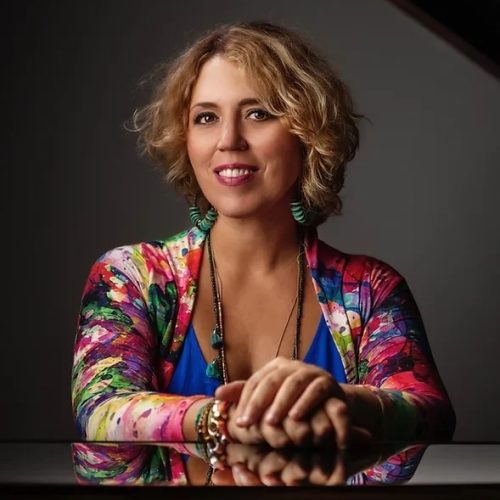
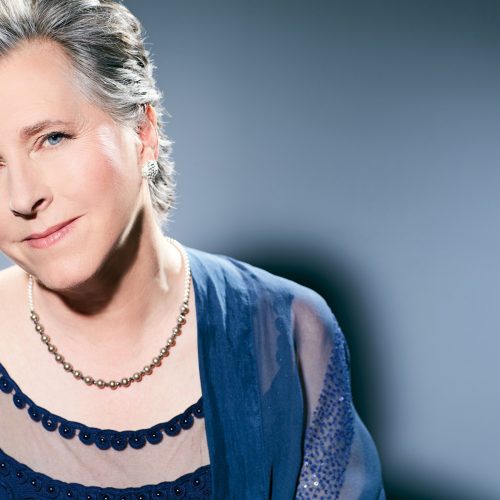
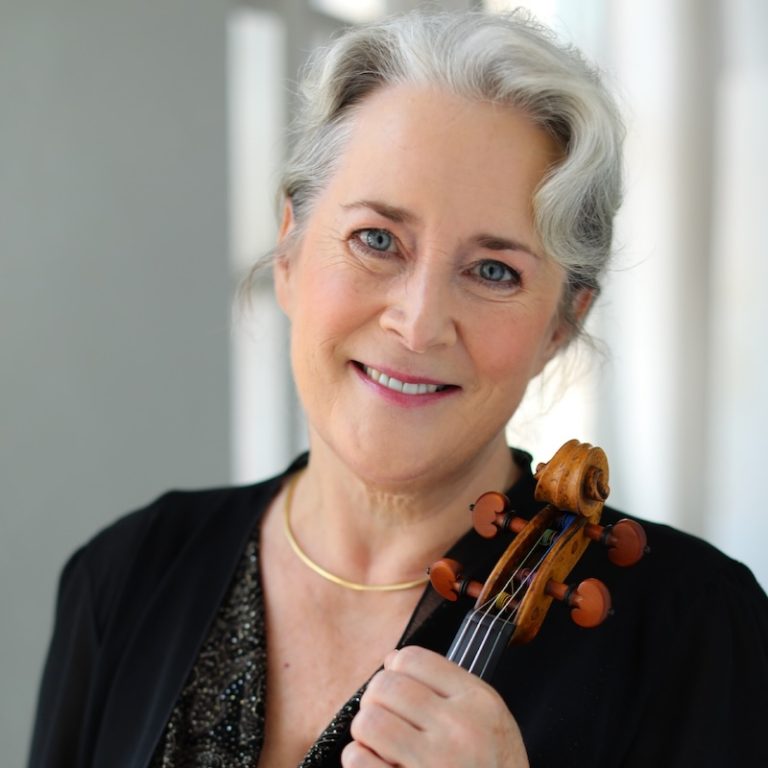
With the Montreal International Music Competition just around the corner, some twenty young violinists will converge on the metropolis to showcase their talent and musicality to the Montreal public. As in any competition, an international jury will have the difficult task of selecting each of these young musicians from the new generation to help them progress. Composed of leading figures in the violin world—Ju-Young Baek, Glenn Dicterow, Simin Ganatra, Yuzuko Horigome, Régis Pasquier, Barry Shiffman, and Pavel Vernikov—the jury for this 2026 edition is chaired by Montreal-born violinist Lucie Robert.
Praised by critics for her expressive lyricism and impeccable playing, she is also a highly sought-after teacher, a professor at the Manhattan School of Music since 1988, where in 2023 she received the institution’s highest honor, the President’s Medal for Distinguished Service, and is a member of numerous international violin competitions worldwide. On the eve of the competition, PAN M 360 contributor Alexandre Villemaire spoke with her about her role as jury president and what awaits the competitors over the next two weeks.
PAN M 360: The last time you came to Montreal as a jury member for the Montreal International Music Competition was in 2023. You’re returning this year for the 2026 Competition – Violin Edition, but as president of the jury this time. How are you approaching this new task, this new role that falls to you?
Lucie Robert : It’s a great responsibility, and I was so happy and honored to be asked to do it two years ago now. As president of the jury, there’s a tremendous amount of work that goes into the competition. I do want to emphasize the importance of the team, though. And when you have a team like Shira Gilbert and Chantal Poulin, it’s a job that’s a real pleasure.
PAN M 360: What does your role as president of the jury consist of?
Lucie Robert : When I was asked to be president, I made a few decisions and implemented some changes in collaboration with the Competition’s management. The first concerned the pre-selection stage for candidates. This is a very important stage because, naturally, it’s not the same jury as the final jury. Applications for international violin competitions are very numerous, and Montreal, along with the Indianapolis competition, is among the most prestigious and renowned music competitions. This year, with the number of applications received—approximately 250—you can imagine that narrowing it down to twenty-four competitors is an enormous task. I therefore suggested holding two rounds of pre-selection. Three international judges listened to all the candidates’ recordings. They selected 72: then, three other judges listened to this first selection to arrive at 24, in addition to a selection of some young people who will be placed on a waiting list.
Another element was very important to me: I didn’t want the selection panel to see the young people’s names or their country. They would only see the person’s age. We also made changes to the scoring system. In international competitions, some use a 1-to-9 scale, with a few variations. I’ve seen all sorts of ways to judge. For international competitions, the current trend is more towards an evaluation using “Yes,” “Maybe,” and “No” responses. In Montreal, we eliminated points altogether. This is how the international panel will evaluate the 24 competitors to select only 10 semi-finalists, each with a limited number of “Yes” and “Maybe” ratings. My results will be final and will only be used as a tiebreaker if necessary.
One of the major roles of the presidency is also to choose the international jury. I wanted leading figures, obviously from several different countries, but also people who have represented, or currently represent, different aspects of the violin world. Ultimately, I suggested splitting the Final into two parts. Generally, we always have six finalists. Three who play on the first evening and the other three the following day. After discussions with Shira Gilbert, we decided this year that five finalists will be selected: they will have to perform a Mozart concerto from among Nos. 1, 2, 3, and 4. In addition to the Mozart concerto, which isn’t very long, these five finalists must be ready, in case they are one of the three finalists selected for the Grand Final the following day, to present a major violin concerto of their choice, again with the Montreal Symphony Orchestra, the Competition’s official orchestra. That’s real professional life! Throughout all stages of the competition, seeing how the competitors decide to build their program will be really interesting: the jury will observe how they think and how they can promote themselves with what they feel they play best.
PAN M 360: What elements will you and your colleagues analyze and look for in the young male and female competitors who will parade before you?
Lucie Robert : If I can speak for myself, what’s most important is the interpretation, the character, the persona of the violinist, their musical personality, their individual voice. I have to be transported! I’d like the young people who come to Montreal and read our interview to see that the competition isn’t a test. I want them to come on stage with a deep desire to play for their audience, to demonstrate their passion for being on stage. I want the audience to be completely enthusiastic about some of them, because that’s what building a career is all about: you have to think about the audience.
PAN M 360: What is your view on what characterizes young violinists of the new generation today and the challenges they face in the professional world of today, 2026 and the 21st century?
Lucie Robert : I’m always impressed by how these young musicians manage their schedules, playing in Tokyo one day and a different concerto in New York the next. It’s incredible! It demands a lot, and, it must be said, the technical level of our young musicians today is incredibly high. The problem, however, is that it often becomes the most important thing, when it isn’t necessarily so. I’m convinced that now, with all our political problems and social challenges, we need to return to the soul of music.
I always tell my students how privileged we are to do what we do. We must never forget that, in fact, it’s often the violin that chose us. We can’t live without our instrument. It’s truly a calling. We always work very hard and can’t imagine doing anything else. However, we mustn’t forget why we love music. I always like to say that music is a language. It’s a language of expression and ideas. So, it’s not just about playing well. We must never stop learning. We must always try to better understand what a composer wants and how we, as performers, feel within these different works. Technique must serve the music. As my great teacher Josef Gringold used to say, the left hand is like the craftsman; we must master and possess our technique. But the right hand is the artist.