Additional Information
In the context of Montreal’s International First Peoples’ Festival, Andrew Paul MacDonald has been recruited by Normand Forget, artistic director of the Nouvel Ensemble Moderne, to create an orchestral link between the NEM, the guitar ensemble Forestare and three figures illustrating the cultural energy of the First Nations – Anachnid, Laura Niquay and Q-052 will be the soloists of a new concert, given on Wednesday August 4, 8pm, at Montrteal’s Place des Festivals.
Originally from Guelph, the Sherbrooke resident is a trained composer and performer. He studied music theory and piano with Rosemarie Hamilton and guitar with Alexandre Lagoya, Michael Lorimer, Ray Sealey and Manuel Lopez-Ramos. He received a Bachelor of Music degree from the University of Western Ontario in 1981, where he was a student of Arsenio Girón and Alan Heard.
He pursued graduate studies in composition at the University of Michigan, where he earned a Master of Music (1982) and a Doctor of Musical Arts (1985). At UM, he was a student of William Albright, William Bolcom, Leslie Bassett and George Balch Wilson. Returning to Canada in 1985, his teaching career took him to Manitoba and Quebec. In 1987, he became a tenured professor at Bishop’s University, where he continues to teach composition and electronic music. Among his projects as a musician is the Ensemble Musica Nova, of which he is the artistic director. In addition to teaching and composing, he works as a classical and/or electric guitarist and also as a conductor.
Needless to say, this cross-cultural mission represents a more than interesting challenge for Andrew Paul MacDonald.
PAN M 360: How did you approach this project?
ANDREW PAUL MACDONALD: This is something very new for me. I have been composing for a long time, symphonies, string quartets, you name it, and I have done a lot different kinds of projects, like this piece for the Evergreen Club in Toronto, a concerto for harp and gamelan… and many other projects from traditional to very different things, but I’ve never come across something like this. What I think would be best is that I talk about it. Normand Forget approached me and I had very little time to do it. Thankfully, I was free at the time – pandemic – and I was ready for a new project. In another time it would have been impossible because my agenda would have been too busy. So Normand asked me to write a piece for these First Nation singers, Anachnid, Laura Niquay, and Q-052 (Quentin Quando) and combine this piece with NEM and Forestare. Originally, the aim was to have a very portable piece that could pop up on a stage in any city or event. So he gave me the instrumentation, time limitations, and he had some songs from those First Nations to reimagine inside my own work. Very similar to the way the late Hans Zender reimagined Schubert’s Winterreise.
PAN M 360: How is it constructed?
Andrew Paul MacDonald: Is it an arrangement? No it’s not. It’s a reimagining, it’s composing, deconstructing, reassembling and coming out with something new. We also must talk about the title that I have, the lyrics and the music itself. The original title was Transmission Connection, the name of the NEM project, to bring NEM, Forestare, First Nation artists and a Canadian anglophone composer who lives in Quebec, so we involved different cultures in Québec, and different types of music – First Nations rap, pop electronic, and folk-rock, combined with new contemporary music. Very challenging!
PAN M 360: So, three songs are the basic materials of the composed reimagining. Can you explain what you did with those songs?
Andrew Paul MacDonald: My piece Frames of Reference is a part of this bringing together in Transmission Connection but also Frames of Reference is a particular set of ideas or beliefs on what you base your judgement of things. Considering the artists I was working with, I felt that we must better understand what the First Nations people have experienced – residential schools, genocide crisis, etc. – and what they’re currently going through, and very importantly, to stand up and speak out about injustice. So there is a kind of a political bent in this piece. We can’t avoid it. One of the lines in the earlier refrain in the piece is this: “Silence is violence in your ear, change up your frame of reference, don’t let these terrible crimes be overlooked, stand up and speak out now.” I think that is a pretty powerful refrain, imperative.
PAN M 360: Let’s be more specific with each song.
Andrew Paul MacDonald: Right.
The original lyrics are done by Quentin Condo in his rap section, called “Q-052’s Rap Movement”, an edgy rap about residential school, genocide, and more generally, problematic government relations with the First Nations. It’s rapped in English and Micmac, there is a certain part of improvisation in this composition, leaving it up to the artists a little bit. In this first rap that Quentin does, we work things out properly between music and lyrics. I love his freestyle rapping section at the end of the piece, which combined with a singer’s improvisation. I will be unique each time they will be performing that piece.
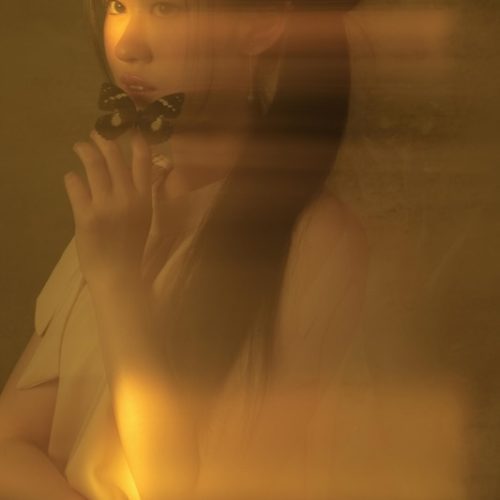
There is also this song by the Oji-Cree singer, songwriter and producer Anachnid – her full name is Anna-Khesic Kway Harper. Her song is a pop song but… on the surface, it’s a love relationship breakup, and on another level, it is an analogy of the First Nations relationship with the rest of Canada. “You got the best of me / Trapped in your lies and your disgards / Stop it, don’t waste my time / Set me free, release me / Stop playing games with me…” So you’ve got to read it in both ways, and that fits very very well in the aesthetic of this whole work.
And then there is Laura Niquay’s song called “Moteskano”, which means “the past of our ancestors”, this a rock song about the First Nations pride and who they are. The lyrics are sung in Atikamekw, here is one quote translated: “I understood that she (my mother) was an inspiration in my life, my guide in life, it is a transmission, a way of life for future generations, let’s walk the path of our ancestors.”
PAN M 360: So how are all those elements superimposed in the final piece?
Andrew Paul MacDonald: I designed the piece for about 20 minutes, the piece is done in seven sections. The first one is a prelude, aggressive and imperative, with vocal interruptions. The second is Q-052’s rap, so I studied rap litterature very carefully, Run the Jewels, Snoop Dog, Eminem, etc. Quentin wrote the lyrics and I include a refrain. The third movement is called “Interlude One”, a big contrast to previous movements, slow, trippy… The fourth movement is Anachnid’s “La Lune”, a gentle love song with a double meaning that we discussed, and it has a static quality. The fifth movement is “Interlude 2”, an aggressive variation of the first interlude. The sixth movement is Laura Niquay’s “Moteskano”, an energetic reimagining of her rock song with a ground bass pattern. It continues with the last movement “Rave Up”, including improvisation, freestyle rap. A huge, energetic conclusion. And I must say that I am really honoured to have those three artists’ songs in my composed reimagining.
PAN M 360: So including those differents style in a cohesive piece was a challenge.
Andrew Paul MacDonald: Totally! Frame of Reference is a composed reimagining. I took those original songs apart, and I reassembled them, stretching, compressing, interrupting from different angles, turning them upside down, and all done with respect to the original forms and sentiments. I want the artists to sing what they are accustomed to. I didn’t want to mess around their pitch and their rhythm and then destroy the original aesthetic.
I also extracted motives from musical ideas in their song, in order to generate the rest of the musical material of the composition, including some instrumental parts in the piece. I find some key motivic ideas in each song, or even the rap. I also took from their traditional work certain rhythm patterns, certain melodic patterns, essentially pentatonic. I wanted to play with those elements tied into the history. So the instrumental section of the piece becomes a huge commentary on the songs themselves, to make the whole composition have a greater meaning.
PAN M 360: Happy with this very special experience?
Andrew Paul MacDonald: Very very eye-opening. I learned a lot about First Nations culture, conditions, concerns, and I hope that more people will learn about it as well.