Additional Information
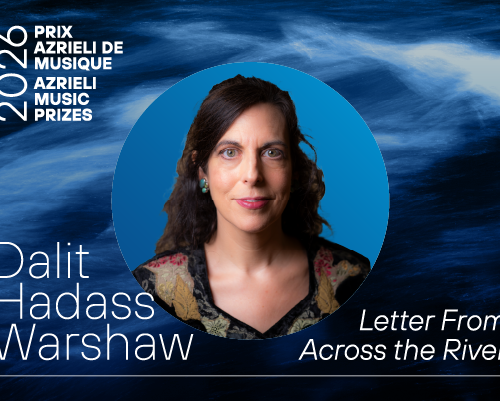
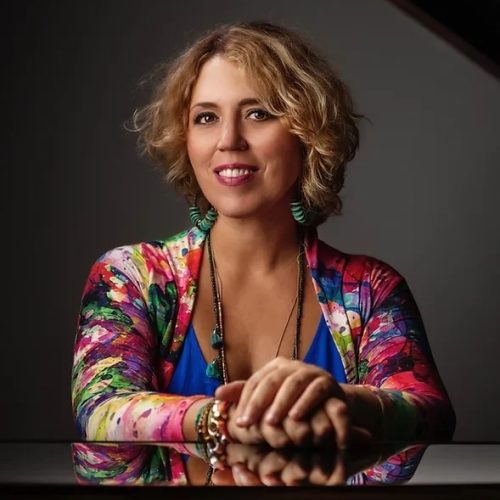
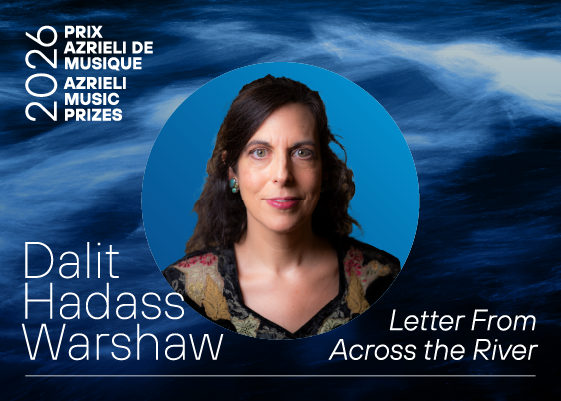
In just a little over a dozen years and six editions, the Azrieli Music Prizes have become one of the most prestigious music composition competitions on the planet when it comes to contemporary music. They were created in 2014 by Sharon Azrieli and are divided into four categories: the Azrieli Canadian Music Commission, the Azrieli International Music Commission, the Azrieli Jewish Music Commission, and the Azrieli Prize for Jewish Music. Three original creations, then, as well as a prize for an already existing, but recent, piece of music. Each prize is worth approximately $250,000, which includes $50,000 in cash, as well as a value of around $200,000 for stage performances, international broadcasts, recordings, etc. It’s substantial. The gala concert that will present the works chosen for the 2026 edition to the public will take place on Thursday, October 15, at the Maison symphonique de Montréal, with the Orchestre symphonique de Montréal, the OSM Choir, and various soloists under the direction of Asher Fisch. PanM360 spoke with each of the composers. HERE, THE NEW YORKER DALIT HADASS WARSHAW.
PANM360 : In one short sentence, what is your composition about?
DALIT HADASS WARSHAW : This piece describes an ordeal that occurred in the life of my great grandfather at a quintessential, very existential moment in his life. It is depicted using the biblical allegory of Jacob battling the angel in order to depict his own personal struggle.
Precisely, in Second World War Poland, my great grandfather swam across the Boug River to send a farewell letter, before returning to face his fate with his family.
PANM360 : This is certainly very poignant. How do you expose and construct the narrative?
DALIT HADASS WARSHAW : The way I set it up is in large part through using two languages, Yiddish and Hebrew, in a way as important protagonists in themselves. Watching how those languages vie against each other and their various significance.
Those are historical, those are dramatic. There are two soloists in the piece plus chorus, and there are certain reasons that, for example, the soprano would be allocated solely Hebrew. The baritone sings solely in English and Yiddish until perhaps the very final moment.
The chorus functions in a way as a Greek chorus and volleys back and forth between Hebrew and Yiddish.
PANM360 : For those who may not be familiar, what is the difference between the two languages?
DALIT HADASS WARSHAW : Yiddish was the language of the people. If you think not in terms of modern Hebrew or the way things stand now, think back at the time of the story. Yiddish for over a thousand years was not a religious language. It was the vernacular. It was the day-to-day and also the language of human experience. When suddenly there’s the advent of modern Yiddish poetry and plays and novels at the beginning of the last century, it’s where you really get the human stories and all their grit and all their three-dimensionality. Hebrew at the time was kind of like Latin. I think that’s the best way to see it.
PANM360 : What element of Jewish cultural history for you is the most inspiring?
DALIT HADASS WARSHAW : First of all, these questions are so excellent. I find that my responses, of course, they would shift by the day.
My most recent realization that I would convey now in response to your question, it has to do with the language. Yiddish. I’m bilingual in that I had Hebrew in my household growing up. I am fully American, but my mother is from Israel. A number of years ago, I began a serious study of Yiddish, and it completely opened my mind from so many vantage points. There’s so much of ancient biblical Hebrew sort of spattered within. That said, the main framework is Germanic. Then there are splashes of Slavic and Aramaic words.
You really could trace the history of Ashkenazic Jewish people through the language itself, which is just staggering to observe. What I found in the process of all this is that there’s so much relation to, as a musician, how we approach analysis and my composition process. The way I analyze, the way I research, the way I convey, I realized that perhaps I gathered more from that lineage, from the Jewish lineage, in approaching my own music composition than I ever realized or gave myself credit for.
Anyway, it was a revelation to me.
This past century, I think there’s been such world trauma. The result is that subsequent generations are cutting off from the past and looking solely forward. What ends up happening is that there are these unrealized vestiges that they morph, they transform into other means of outlet of thinking and of creativity, and that maybe we are more connected with our past than we realize.
PANM360 : How do you feel about receiving the Azrieli 2026 Commission of Jewish Music? What does it represent for you?
DALIT HADASS WARSHAW : It is so deeply meaningful for many reasons, but a very important one for me as a creator is that it reconciles so many aspects of my own identity. Cultural, personal, musical, aspects that have often been disparate in the past. The fact that the forces themselves are so large, also.
The full symphony, the chorus. I get to indulge in my love of orchestra, my love of vocal writing, choral writing, and soloistic writing, but also to explore the idea of translingualism and simultaneous translation. And experiencing how my own musical language can change, can adapt according to the needs of specific languages.
These are all separate loves of mine.
Yes, but of course, most poignantly, my ability to convey a family story that has been so fundamentally tragic, but formative, and yet always unresolved, incomplete, because I have these voices that hover somewhere, but they’ve been forgotten. If I can air this story and bring others in and allow them to relate in their own ways, I think that is just extraordinary. I’m only a vehicle. As an artist, it is the most powerful feeling to have, being a conduit for enabling some change in energy.
Maybe this piece has really just tapped into all those elements.
PANM360 : Thank you