Additional Information
This time, invited to visually accompany musical artists rather than generate her own through her internationally renowned objects and installations, Montrealer Myriam Boucher brings a profound lightness to her work. Heightened sensitivity and a sense of letting go. Her description of a performance resembles a meditative mindfulness practice where improvisation and listening precede any preparation. She attributes this approach in part to her practice in sound ecology, and that after all these years of practice, adaptation and collaboration remain at the heart of her art.
In this interview, Myriam Boucher talks about her various artistic practices and how they influence one another. Above all, she reveals a philosophy of performing art and a guide to collaboration between musical and visual artists.
By discussing upcoming performances, she prepares us for a break with our expectations. This is the magic of improvisation that Myriam Boucher evokes: not knowing what will happen, we wait for it with even greater impatience! One more reason to attend this first Nocturne. Because although this is only the beginning of the series, it will only happen once.
PAN M 360: How do you feel about returning to play at Mutek this year?
Myriam Boucher: For me, this stage is a bit like playing with family. These are people you see year after year and who truly work for the community while respecting the artists’ work. It’s a very welcoming environment.
PAN M 360: Last year, you participated three times as a VJ and artist. This year again, you’re working with three artists of varying styles, in two different spaces. What have you learned from your experiences, and how are you preparing for the next ones?
Myriam Boucher: I’m always learning. I’ve played in these spaces several times, but each time, the music is different. My way of playing and using the space is also completely different.
What you learn is that you always have to adapt, act as if it’s your first time playing. Because you can also become a little too comfortable playing in spaces multiple times. You can lose your listening skills.
Every year, Mutek presents a new, rather impressive set design, so I adapt. For example, at the Théâtre Maisonneuve for A/Visions, it’s an Italian-style stage. I find that these venues have a lot of emptiness: the stage is large, the screen is far away, people are seated, there’s a lot of space. It’s going to be interesting to work with the lighting designer, both on the colors and the style, to understand how to fill this space.
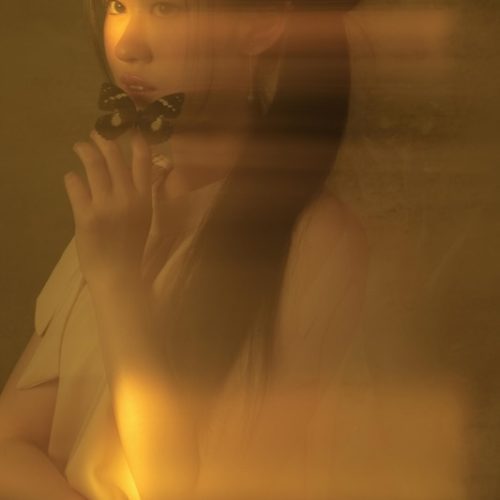
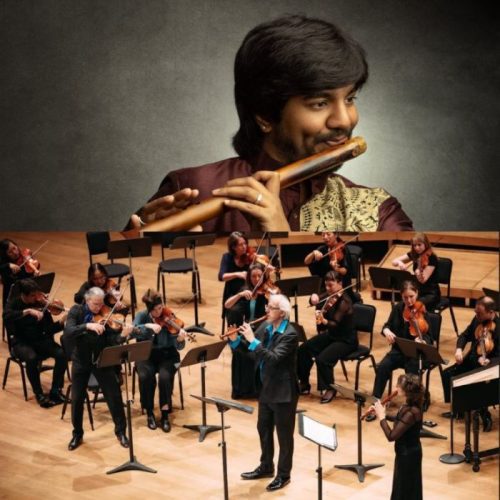
Then I play with three sets of exceptional musicians whose presence will be very strong: Yu Su in Nocturne 1, Shackleton + Waclaw Zimpel + Siddartha Belmannu in A/Visions 2, and Kyle Hall in Nocturne 3. So the idea is not to create a tapestry on a screen behind, but to truly envelop their presence.
PAN M 360: Listening seems central to your practice. Beforehand, to discuss with the lighting designers and understand the space, and on stage, to listen to the music of the guest artists. You also practice sound ecology, which is focused on listening. Are there any links between these two practices that help you better adapt to the space and the artists who occupy it?
Myriam Boucher: I love this connection you highlight because it’s really at the heart of what I do. In sound ecology, often the first thing we think of is working with field recordings and landscapes. Some artists do this, but it’s not just that. Personally, I approach sound ecology more as a listening process, but also as a relational space.
VJing is still very much focused on improvisation, and in improvisation, you have to be very attentive; not only to the music but also to everything that’s happening around you: the atmosphere, the audience’s energy, the lighting. You could say there are many parallels to be drawn with the ecology of sound in this sense. It’s something I love because I’m in the present moment throughout the performance, constantly reacting.
PAN M 360: You play at festivals all over the world. I imagine the audience and atmosphere vary greatly from stage to stage. Is there any preparation involved in this regard to familiarize yourself with the space?
Myriam Boucher: When I’m composing, whether it’s visuals or music, I don’t think about those things at all. Even if we compose with the idea that we’re going to share it with people for a while, I follow my intuition first.
Once we’re there, when we go to festivals, especially abroad, we know a little less what to expect. It might be the first time we’re going to play there. In those cases, I’m going to soak it all up. I’m going to do immersion sessions of the venue, the city, its people, and the overall energy. I’m going to see lots of shows to really soak it up and then integrate all the elements I’ve experienced from the venue into my set. It influences me enormously.
PAN M 360: In your preparation, how do you approach collaboration? Have you developed a vocabulary or a work rhythm that facilitates these exchanges?
Myriam Boucher: I always ask what the essence of the music is, what does it mean to the person making it. I’ve done a lot of collaborations with people who sing, without necessarily understanding the lyrics, so I ask myself, “What does the music mean to the person? What are the emotions, what’s the atmosphere?”
Sometimes the music can be super intense, but the emotions it carries are truly meditative or contemplative, even if it’s techno, for example. That’s really an exchange I always have with the artists. Usually, there’s a trust that develops; I have a lot of carte blanche. But the colors, textures, emotions, and flow are really key words that guide my creative process.
PAN M 360: How much freedom do you give yourself when you go on stage to improvise?
Myriam Boucher: 100%. I prepare visuals, but five minutes beforehand, I can decide to use something else. I always have a hard drive with lots of material. I can say to myself, “This video is good, this one isn’t,” and then go and dip into my library depending on the moment.
My library is always nearby for more visuals. I can change a lot of things live, but there’s still a lot of preparation beforehand, as I mentioned. I reserve the right to change direction if I don’t feel like it. It’s really intuitive, in the present moment. At that point, there’s a kind of letting go, in any case, that I’ve decided to have in my practice. I tell myself it’s too late to stress about it; I just have to enjoy it.
PAN M 360: In your personal practice as a musician and audiovisual artist, I wonder how this intuitive approach manifests itself. For example, one of your works, Littoral, combines music and technology in a fairly robust concept. How do you find the right balance between a sensory experience and a more intellectual or political discourse?
Myriam Boucher: That’s a really good question, because I have a pretty much 100% sensory approach. By that, I mean that my approach is not at all intellectual, reflective, or conceptual. I never think about what I’m going to do before a performance. I never know what I’m going to do. But once I let myself go into the sound, into the image, I often become obsessed with something that was probably there before, for a long time, but that wasn’t necessarily assumed or thought about.
Recently, I bought a new synthesizer module and went so far as to produce cicada sounds. Right away, it triggered a lot of memories of landscapes because I come from the countryside. I started to be obsessed with these sounds, it lasted for years! And, finally, I did a performance with it. But all that to say that at the beginning it’s quite intuitive.
This year marks the tenth year since Myriam Boucher first presented at MUTEK in 2015. She will be presenting there on 3 different occasions as a VJ at Nocturnes for Yu Su, Kyle Hall and for the much anticipated collaboration between Shackleton & Waclaw Zimpel and Siddhartha Belmannu at A/VISIONS 2. You can see more of her work on her website: https://www.myriamboucher.com.