Additional Information
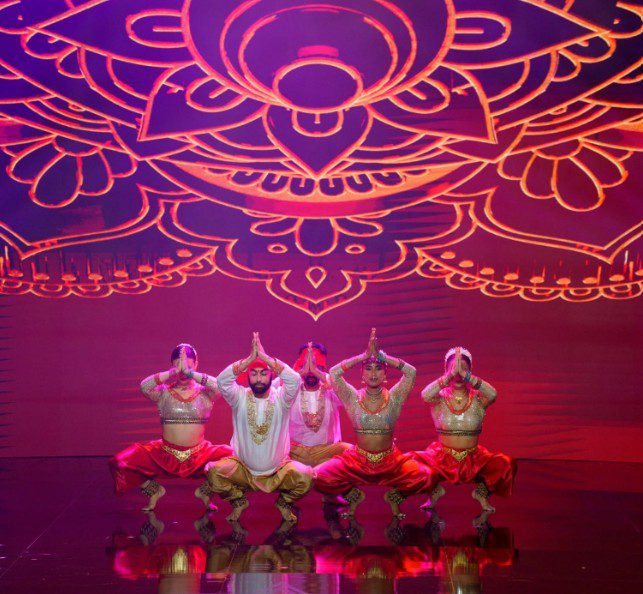
This Saturday, August 15, at the Quai de l’Horloge in the Old Port, Orientalys festivalgoers will get to see the Veils of Bollywood dance troupe perform. Focused on the musical, choreographic, and cinematic pop culture produced in Mumbai, as we all know, this Bollywood program features a dance workshop and two shows, followed by a DJ set to wrap up the evening in style. For PAN M 360, Jeremy Fortin sat down with Rameez Karim, the troupe’s founder, to discuss Veils, Bollywood, and this Saturday’s event.
PAN M 360: Hello, Rameez. On Saturday night, you’ll be hosting an entire evening dedicated to Bollywood culture. Could you tell me a little more about your dance troupe, Les Voiles de Bollywood, and the mission you’re pursuing as an organization?
Rameez Karim : Veils of Bollywood is a dance troupe based in Montreal. Our mission is to make Bollywood dance as accessible as possible to as many people as possible by promoting Bollywood and Indian dance, as well as through immersive experiences and workshops that we present around the world.
It was important to me to create a space for understanding interculturality—an exchange that can educate the public about this culture, but also to create a space where people can come together to appreciate other cultures and traditions. Personally, I believe that dance is a tool for social change that can be used to bring about change on multiple levels and to bring people together in today’s highly polarized and challenging world.
PAN M 360: The evening consists of several segments. The first is a participatory dance workshop. Could you tell me how it works and why passing on Bollywood culture is important to you in your practice?
Rameez Karim : We are very grateful to everyone who comes to this event and who may not know much about dance, Bollywood in general, or Indian culture. So, instead of just putting on a show, I think it’s also quite important to get the audience involved and encourage them to try things out.
A participatory workshop is a way to educate people through physical experience. What does this commitment entail? Where does this vocabulary—which comes from elsewhere—come from? The workshop format is still accessible. I’ll demonstrate some movements and explain them. We’ll also dance to music; it’s accessible in the sense that everyone can participate. It’s for beginners—even if you’ve never danced before, even if you dance every day, and even if you have physical limitations. It’s accessible to everyone, and I mention this constantly while I’m teaching.
Because when it comes to accessibility, it’s not just about making programs available to different audiences—it’s also about how we can create a more physical experience. For me, demonstrating something is one way to teach, just like engaging participants in physical activity. I always try to create a non-judgmental space where everyone can feel comfortable.
We’re all together—it’s a space for community, and the energy is focused on the community. And doing it in a place like Orientalys, outdoors, where it’s accessible and open, with everyone together—the vibe is really strong. It leaves its mark on the experience, on the nights, on the artists involved, and it leaves its mark on the festival as well.
PAN M 360: The evening continues with two performances—one focused on dance and the other on singing. Can you tell me what people can expect from these performances?
Rameez Karim :So, for the dance portion, I really wanted to showcase India’s cultural mosaic, which is so rich in history. We’re bringing India to Montreal to showcase six different regions of the country, taking the audience on a journey through dance and music. The goal is to highlight the various influences that have significantly shaped Bollywood dance, because people don’t always realize that Bollywood dance is a blend of classical, tribal, and folk dance styles originating in India.
There are more than 200 different dances in India; there are many communities, and there are many regions, each with its own traditions, music, and dance. So I really wanted to showcase that to educate the audience.
Sometimes, the audience feels like they know Bollywood culture, but that’s not always the case. There’s a lot of diversity! So, the goal with the dance segment is really to showcase these different regions.
Only six regions are represented, but we have enough time to explore them in depth and discover what they have to offer in terms of beauty, dance, and costumes.
And when it comes to music, people can hear the various influences of Bollywood music. The musicians are also very experienced and capable of performing music from different eras of Bollywood—a culture that has evolved significantly over time. So, they’ll also highlight the various historical influences on Bollywood in some of the songs.
PANM 360: One last quick question: What would you like the audience to take away from this immersion in Bollywood culture, as well as Indian culture in general?
Rameez Karim : I really want the audience to have fun. It’s so important to have fun at the event. We try so hard to educate the audience through art. It’s not just about coming and putting on a show. There are so many other things involved. We do this with all our hearts, with so much hope, and so much joy.
We’re together, outdoors in the summer. Everyone comes from a different place. Everyone has a different experience. But that’s what makes us so beautiful. So, coming together, appreciating our culture, living together, dancing together, building collective energy—that’s what we really want the evening to be.
We also want the public to remember the Orientalys Festival—this magnificent festival with a diverse lineup and artists who want to share the interculturalism and multiculturalism that exist in Montreal, in Quebec, and throughout Canada. And we want everyone to realize the importance of community. We need to realize the importance of community, of being together, of being united. Because the world today is so, so divided. There’s a lot of polarization, and we want to move in the opposite direction.