Additional Information
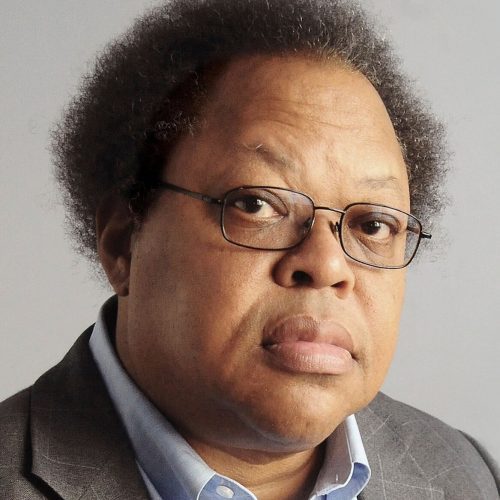
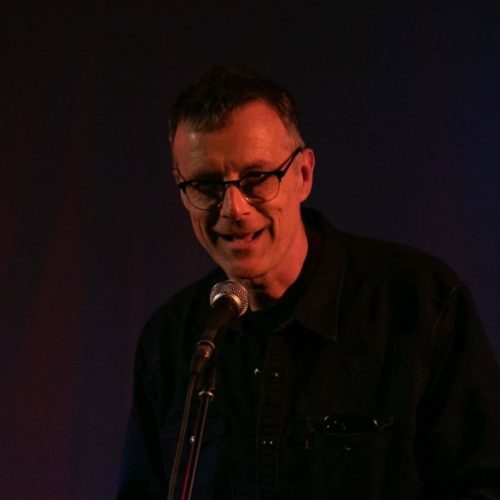
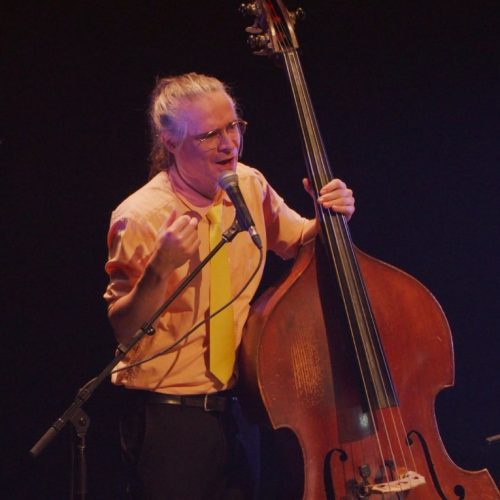
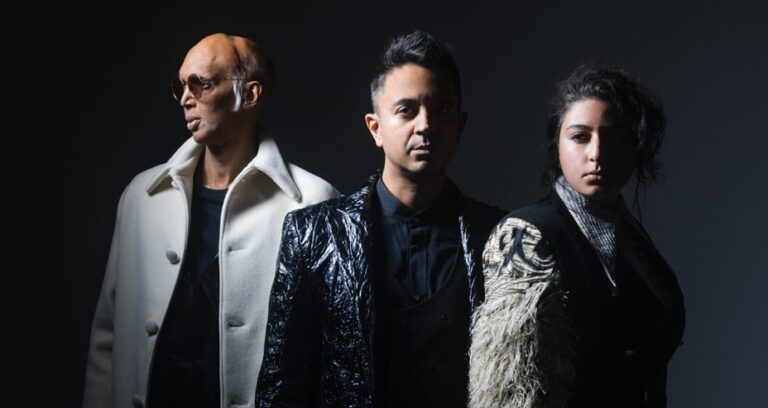
Love in Exile is a great recording project led by singer/producer Arooj Aftab, keyboardist and improviser Vijay Iyer and bassist/ producer Shahzad Ismaily, all based in the New York area. This collaboration excistes PAN M 360 music lovers because this project brings together artists from different horizons who share Indian or Pakistani origins. Inevitably, their cultural heritage leads us to improvisations tinged with the colors of southern Asia, but which are also part of an open musical language that takes shape in the West, more specifically in the USA. The meditative character of this recent album is not its only vector, warn the three artists interviewed in their dressing room at the Monument National, shortly before taking to the stage.
PAN M 360 : So this is a trio project, within each member has an equal importance? Everyone is contributing to the same goal? So can you comment about this teamwork? How is it built? What motivated it?
Vijay Iyer : I think the best way to put it is that we had a chance to play together five years ago, spontaneously. And we immediately had a feeling that it was something with continuing. I think that’s how the best bands start with a feeling like, Oh, this feels like something. It wasn’t anything more than that. But also, it wasn’t anything less than.
Arooj Aftab : I agree. Yeah, it was, it felt special in a way that we wanted to do it again, because, you know, you can throw together special bands for different occasions, you know, like collaborative presentations, and then you may not, you’d like and say, Okay, that was really wonderful. But like, we’re not going to do it again. But we did it again. And then it felt again, amazing. And we did it a third time. And it felt again, like, like so strong.
PAN M 360 : We can’t say it’s a sort of a instrumental ambient, it would be reductive and simplistic. And at the same time, it’s cool and soft. Sometimes there are some elements of intensity, but most of the time, we are close to meditation. Well your explanations will be much better!
Shahzad Ismaily : Well, one thing I’ll say about that : sometimes, not always, but sometimes if I feel like a few pieces have evolved to be quite still, I may decide to pick up the bass and let the next piece be active or let the next piece start with a baseline that, for lack of a better word might be a little bit like funky or rhythmic or from a different space. So in that sense, I think truly, the music could go many other places, though it does often land in a kind of, like a glacial sort of deeply considering heart space. Sometimes he did, it’s open to other kinds of things. Yeah, for example, we played last night in Ottawa. And there was one piece that featured kind of an anarchic, chaotic sounds from Vijay and I and Arooj singing through the center of that. So that also had a very much non meditative, like, non peaceful kind of space.
Vijay Iyer : A friend of mine who I spoke to me after the concert, she said that she was with a friend of hers. And this friend said, Well, if these musicians are trying to evoke a lot of different feelings, it was successful. So It’s not only about ecstasy and pleasure, you know, or stasis, it’s not only that. There’s often tension also. So it’s sort of about the tension and kind of finding its own way towards resolution. Then we talk about tension and release. This is like that on the scale of like, the timescale of how we breathe or how we have feelings in marriage and receive that. Yeah but it’s still basically a similar principle. We might start somewhere that has a question. And then we find an answer to it.
PAN M 360 : About cultural references in this music: of course it would be reductive and simplistic to perceive this music as an modern update of South Asian or Oriental traditions. That wouldn’t be relevant.
Shahzad Ismaily : It’s helpful to hear you articulate that, because we often come up to either journalists or, or even just a listener, or fan after show, who don’t have the delicacy to really see that or even begin that way. Because what’s interesting is, after you said that, then it allows us to go further into it instead of starting at that beginning place.
PAN M 360 : Yeah each of us have some history of our music ancestors, it’s impossible to avoid that. But at the same time, this is not the point. It happens through us. Let’s take the example of Arooj. Some traditional stuff is there, but Arooj is doing contemporary and universal music.
Arooj Aftab : Yeah, I mean, I get to explore the many influences of mine, that lead me to sing the way that I do. And I get to explore singing, I get to explore voice as an instrument with this group, which is something that is quite difficult to do. And I don’t think that the code is quite cracked yet. And so it’s really, really nice for me to explore that in every show. And to really, you know, unapologetically go into my Sade, into my Mariah, into my Ella, into my inner strength, etc. throughout the concert. So it’s really showing off a lot of range, you know, vocally which I don’t do in my solo project. I am more of a producer. I’m more of an equalitarian focused on music. And the singing is not so virtuosic.
PAN M 360 : Yeah, we can say that you are more into production creativity than technical performance.
Arooj Aftab : Yeah, the emotions are all very… Like, sometimes it’s just sort of fun and goofy, as well, when we’re playing. So yes, it’s a beautiful project that has a lot of different colors inside of it.
PAN M 360 : And there is also a difference between each performance of this trio and also what can happen with it in the studio.
Vijay Iyer : Yeah, we basically every time that we’ve performed together or recorded together, we approach it the same way, which is we start from nothing. And we just start building all together from whatever elements are offered by each of us. And so it kind of every, every piece emerges from that process. And we don’t hold on to and say, Let’s do that one again.
PAN M 360 : So there is no setlist planned before a concert.
Vijay Iyer : Yeah, there’s no repertoire, I would say. And so it’s more that there are elements or ingredients or processes that have become now more and more familiar. We’ve done it a few times. . Yeah. So I think the other thing is that process gives us a chance to sort of channel together. We like to tap into whatever reveals itself, and whatever comes through us, you know, but then in the course of that, we’re sort of figuring out what it is that we can do together. So these different these different possibilities kind of reveal themselves as best we coalesce around a new way of doing something together.
PAN M 360 : Yeah. And your playing is quite different from what you do in your own ensembles, you know, it’s not, it’s not based on, you know, high virtuosity or complicated constructions. It’s, you know, it’s about being at the moment very, very present and reacting. Am I right?
Vijay Iyer : Well, I like to think that everything I do is like that sense of like, being in the present. Yeah. But, I would also say that there are different kinds of so-called fair to assume that’s true. And I feel like there’s a virtual stupid listening going on in this group. Yeah, that was pretty special. Yeah. So that’s kind of that’s, I think, why we keep doing it because of
that.
PAN M 360 : Yeah, sometimes being calm and simple is much harder than the very complicated and technically high. Both are important, but you have to master both. Thank you so much.
AROOJ AFTAB , VIJAY IYER AND SHAHZAD ISMAILY PERFORMED AT MONUMENT NATIONAL ON THURSDAY JUNE 29th.