renseignements supplémentaires
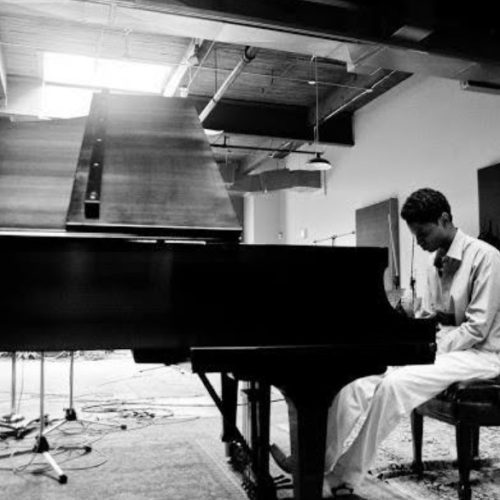
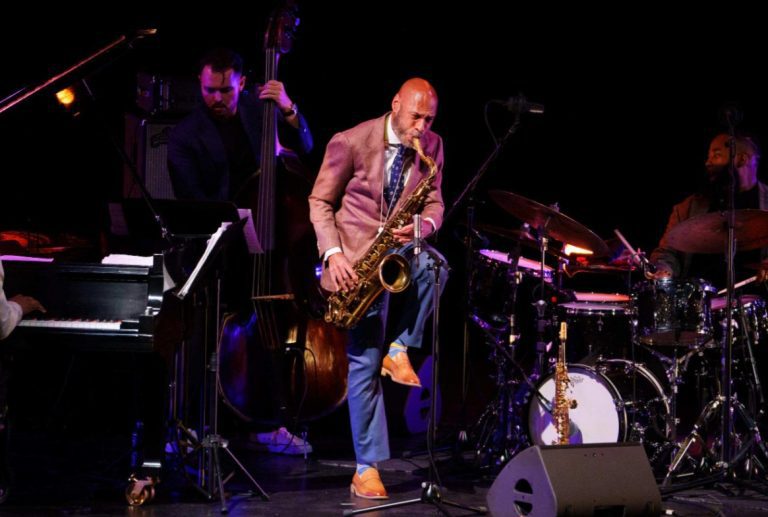
Le concert de Joshua Redman, lundi, a débuté par ce que l’on pourrait qualifier de rupture par rapport à son style habituel. Son groupe a interprété « A Message To Unsend », le premier titre de son dernier album, *Words Fall Short*, un morceau mélancolique en 7/8 à la mélodie triste. Son solo d’ouverture s’est inscrit dans l’ambiance du morceau, s’en tenant principalement à des phrases lyriques sobres avant de passer le relais au pianiste Paul Cornish. Cette ouverture étonnamment morose du concert a pris fin avant même la fin du morceau, car Redman est rapidement revenu pour un deuxième solo, débordant cette fois d’énergie et explorant toute la gamme du saxophone, comme le savent bien ses fidèles auditeurs. Ces changements de tonalité ont été une constante tout au long du concert, mettant en valeur la grande capacité du groupe à maîtriser l’énergie de sa prestation.
Il convient de noter que le groupe de Redman est entièrement composé de jeunes talents prometteurs du jazz, tous âgés de bien moins de 35 ans. Paul Cornish, le bassiste Philip Norris et le batteur Nazir Ebo sont sans aucun doute des noms à suivre de près.
L’un des moments forts du concert a été le morceau « Borrowed Eyes », avec le long solo de contrebasse de Norris. Il a joué avec un phrasé d’une lyrisme impressionnant et des touches occasionnelles de langage blues, remplissant la salle d’une sonorité comme peu de contrebassistes parviennent à le faire. Tout aussi mémorable fut l’improvisation collective sur « She Knows », en particulier le jeu d’interaction entre le saxophone de Redman et le piano de Cornish, qui imitait (intentionnellement ou non) le gazouillis des oiseaux dans une forêt.
Soit dit en passant, c’est toutefois lors du rappel que le concert a atteint son apogée, lorsque le groupe a interprété « Jig-A-Jug », un morceau de blues tiré de son album des années 90 *Spirit of the Moment : Live at the Village Vanguard*, répondant ainsi à une demande qu’ils avaient reçue auparavant d’un auditeur anonyme mais persévérant. C’est là que les choses se sont vraiment déchaînées, chaque membre semblant savourer cette forme familière de blues et profiter pleinement de l’instant. Joshua Redman joue avec une certaine extravagance qui, venant de n’importe qui d’autre, pourrait paraître égocentrique. Mais quand on le regarde, on voit bien qu’il ne le fait pas pour se mettre en avant ; il le fait pour se divertir – et il y parvient parfaitement.
PAN M 360 a eu l’occasion de s’entretenir avec Joshua Redman au lendemain du concert. Il a évoqué l’état actuel du jazz, ses projets à venir et bien d’autres sujets encore.
PAN M 360 : Dans le monde du jazz, il existe une longue tradition selon laquelle des musiciens confirmés lancent la carrière de jeunes talents en les intégrant dans leur groupe. Le choix d’avoir un groupe composé de musiciens plus jeunes sur votre dernier album [Words Fall Short] et pour cette tournée était-il délibéré, ou s’agissait-il simplement des musiciens avec lesquels vous aviez envie de jouer ?
Joshua Redman: Non, pas du tout. Et c’est drôle, tout à coup, on me pose tout le temps ce genre de questions, comme si, d’un coup, j’étais devenu le « vieux » (rires). Je veux dire, je reconnais bien sûr que dans pratiquement tous les groupes où j’ai joué auparavant, il y avait soit des musiciens de ma génération ou très proches de moi, soit des musiciens plus âgés, soit un mélange des deux. Et c’est la première fois que je fais partie d’un groupe avec des musiciens d’une génération complètement différente, et j’ai l’âge d’être leur parent ! Mais je n’ai jamais fait le choix délibéré et conscient de rejoindre un groupe de jeunes. Ce n’était pas du tout ça. Ce groupe a vu le jour parce que j’ai enregistré un album avec la chanteuse, Gabrielle Cavassa, où en sommes-nous ? Nous avons enregistré cet album avec une formation de musiciens de haut vol. Brian Blade était à la batterie, Joe Sanders à la basse, Aaron Parks au piano, et nous savions que ce groupe ne pourrait pas partir en tournée sur le long terme pour ce projet. Je savais, dès la préparation de la tournée, que je devais constituer un groupe capable de s’engager sur une longue période. Je cherchais donc un groupe composé d’excellents musiciens qui correspondraient vraiment à ce projet et qui, je l’espérais, s’y engageraient. J’ai beaucoup écouté et demandé autour de moi, et maintenant, c’est un peu gênant à dire, mais on peut faire beaucoup de recherches sur Internet, tu sais, on voit des extraits sur YouTube ou ailleurs. J’ai même donné quelques concerts avec ces musiciens avant le début de la tournée, dans différentes formations. J’étais donc vraiment convaincu que c’était le bon groupe pour ce projet. Et ce groupe s’est en quelque sorte formé en jouant de la musique qui n’avait pas été composée à l’origine pour eux ni interprétée par eux auparavant. Et, tu sais, ces gars-là, ils étaient capables d’apprendre la musique si vite, mais aussi de manière si approfondie, et d’aller droit au cœur de chaque chanson. C’était comme si, quoi que je leur propose, ils arrivaient à en faire quelque chose de génial. Du coup, j’ai commencé à leur proposer des compositions originales, je crois que c’était à l’automne 2024. Je me suis dit : « Oh, j’adorerais faire un album avec ces gars-là. » On a donc enregistré *Words Fall Short*, un album de compositions originales, et on est en tournée depuis sa sortie en juin de l’année dernière. On a d’ailleurs un nouvel album. C’est un autre album entièrement composé de morceaux originaux. C’est un double album. Il ne sortira probablement pas avant la fin de l’année prochaine.
PAN M 360 : Nous avons donc un peu parlé des fossés générationnels. Diriez-vous qu’il existe des différences notables entre les milieux du jazz dans lesquels vous évoluez aujourd’hui et ceux de vos débuts ?
Joshua Redman: C’est une très bonne question. Je veux dire, tout d’abord, je tiens à préciser que, même s’il s’agit de musiciens plus jeunes, issus d’une autre génération, ma relation avec eux n’est vraiment pas différente de celle que j’entretiens avec les musiciens de ma propre génération. En fait, je ne considère pas ce groupe différemment des autres groupes que j’ai pu suivre.
PAN M 360 : Je n’essaie pas forcément d’être, disons, un mentor ou quoi que ce soit de ce genre.
Joshua Redman: Non, je ne vois vraiment pas les choses comme ça. J’ai l’impression d’apprendre bien plus d’eux qu’ils ne pourraient jamais apprendre de moi. Et puis, j’ai énormément de respect pour eux, pour leurs points de vue individuels et pour ce qu’ils apportent en tant que groupe. En tant que leader du groupe, mon objectif est simplement d’essayer de créer les conditions permettant aux musiciens d’exprimer pleinement leur individualité, tout en s’inscrivant dans un véritable contexte collectif. C’est donc à moi qu’incombe cette responsabilité. Je choisis les morceaux, j’en compose la plupart, je réfléchis à la manière de structurer les sets et je dirige les répétitions quand nous avons la rare chance de pouvoir répéter, mais je peux honnêtement dire que je n’interagis pas avec eux différemment de la façon dont je le ferais, disons, avec Brad Mehldau, Christopher McBride ou Brian Blade, tu vois ? Une partie de la beauté de cette musique réside dans le fait que, oui, il y a une grande histoire et un héritage, ainsi qu’une tradition de mentorat. Mais il y a toujours tellement de fertilisation croisée et d’interaction entre les générations dans cette musique – je pense même plus que dans d’autres formes de musique – que pour moi, le jazz peut en quelque sorte faire tomber toutes les frontières théoriques qui séparent des personnes de générations différentes, de milieux différents ou quoi que ce soit d’autre. Quelle était la question initiale ?
PAN M 360 : Je me demande si, en ce qui concerne le fonctionnement des choses, le milieu a beaucoup changé depuis tes débuts.
Joshua Redman: C’est difficile à dire. Je veux dire, j’ai fait mes débuts à une époque où, tu sais, il y avait en quelque sorte… enfin, ce n’était pas comme s’il y avait eu une renaissance du jazz, parce que musicalement, le jazz a toujours été en pleine forme. Mais on a assisté à une sorte de regain d’intérêt en ce qui concerne la place du jazz dans la culture populaire. L’industrie du disque était dans une situation très différente, n’est-ce pas ? Tu sais, avant le streaming. Je pense donc qu’il y avait plus d’opportunités pour les musiciens. Il y avait plus de concerts, plus d’endroits où jouer. C’était plus facile d’organiser des tournées. C’était plus difficile d’enregistrer un album. Aujourd’hui, c’est tellement facile d’enregistrer un album, ce qui est génial. Mais il y a juste… je ne veux pas dire qu’il y a une surabondance, mais il y a tellement de musique qui circule, et c’est tellement facile de faire écouter cette musique aux gens, tu vois, mais est-ce que les gens écoutent vraiment ? Et je veux dire, il y avait des « gardiens », et ce n’étaient pas forcément les bons, mais au moins il y avait un filtre, tu vois. Aujourd’hui, il y a tellement de choses qui sollicitent notre attention, et on vit à une époque où les gens n’ont plus d’attention, n’est-ce pas ? Je pense donc que c’est différent. Mais la musique, je pense, se porte très bien. Je veux dire, je joue avec trois des meilleurs musiciens qui, selon moi, jouent aujourd’hui. J’ai de la chance. Il y a tellement de jeunes musiciens talentueux qui émergent, tu vois, tout va bien se passer.
PAN M 360 : Oui, j’entends beaucoup de musiciens dire, et je le constate moi-même, que la scène a toujours existé, qu’elle soit ou non au premier plan du grand public, ou qu’elle soit visible par ceux qui n’en font pas partie.
Joshua Redman: Je pense que oui. Je pense que la seule chose à laquelle il faut faire attention, quand la scène n’est pas encore très ancrée dans la culture, et aussi avec le développement des conservatoires et de l’enseignement du jazz – ce qui est formidable –, c’est le risque de voir cette scène devenir plus fermée. Je veux dire, bien sûr, les musiciens jouent de la musique pour d’autres musiciens. Bien sûr, ce sont les autres musiciens qui vont le mieux s’identifier à votre musique, la comprendre, en saisir le langage et les rouages mieux que quiconque. Je pense qu’il est naturel pour les musiciens de vouloir être acceptés et reconnus par leurs pairs, mais je pense aussi qu’il est très important pour eux, en particulier pour les musiciens de jazz, d’avoir l’occasion de jouer leur musique devant des personnes qui ne sont pas musiciennes et qui n’ont pas suivi de formation musicale. Les musiciens qui le font ne manquent pas. Mais je pense que, surtout au sein de ce que j’appellerais, faute d’un meilleur terme, le jazz acoustique « grand public », il y a peut-être un peu plus de risques que ce genre devienne un peu trop éloigné et un peu trop replié sur lui-même.
PAN M 360 : En parlant de ce nouvel album, beaucoup de titres sont tirés de passages littéraires. Est-ce un concept que vous aviez prévu dès le départ ou qui s’est développé au fur et à mesure ?
Joshua Redman: Non, ce que je veux dire, c’est que souvent, quand j’écris des morceaux, j’ai rarement un titre, tu vois ? Et puis, au bout d’un moment, je me décide pour quelque chose ; parfois le titre change, mais au final, j’essaie de saisir quelque chose de ce que je ressens par rapport à la musique. Et l’une des forces et des faiblesses du jazz instrumental, c’est qu’il n’y a pas de paroles, ce qui rend l’interprétation d’autant plus libre. Et quand je choisis un titre, je cherche à en trouver un qui, d’une manière ou d’une autre, rende compte d’une partie de la signification de la musique sans pour autant la restreindre trop. Mais c’est juste comme ça que ça s’est passé. Je n’ai jamais écrit de chanson sur un livre ou un passage. Je ne suis pas un grand lecteur, mais la littérature a eu une influence profonde sur moi. Ça m’a semblé tout naturel.
PAN M 360 : Ça s’introduit peut-être par osmose.
Joshua Redman: Oui, oui.
PAN M 360 : Super. Bon, j’aimerais parler un peu du concert d’hier soir. J’ai remarqué que beaucoup de tes solos prenaient des directions assez différentes. Plus précisément, quand tu as joué « A Message to Unsend », tu as fait deux solos, et l’un d’eux était un peu plus… je dirais qu’il y avait plus de retenue, et qu’il restait en phase avec l’ambiance de la mélodie principale du morceau, puis plus tard, tu es revenu avec une plus grande amplitude dynamique. Je me demandais : est-ce qu’il t’arrive parfois d’entamer un solo avec une idée préconçue de ce qu’il va donner ? Est-ce que tu le prépares un peu, ou est-ce que tout vient spontanément ?
Joshua Redman: Bon, en fait, la réponse facile, c’est non. Parce que pour moi, c’est de l’improvisation, et il y a quelque chose de sacré là-dedans, tu vois ? Ça ne veut pas dire que je ne vais jamais jouer deux fois la même chose, bien sûr, je joue la même chose des millions de fois. Je pense qu’il existe un idéal platonicien de l’improvisation, qui consiste à créer quelque chose de totalement et complètement nouveau sur le moment, quelque chose qui n’a jamais été dit auparavant, une réaction à ce que l’on ressent et à ce que l’on pense à cet instant précis. Et je pense que c’est un idéal qui vaut la peine d’être poursuivi, mais c’est aussi un idéal impossible. Je veux dire, nous utilisons le langage, nous développons le langage par la pratique, par osmose, par l’écoute. Et je n’aime pas trop l’idée de la mémoire musculaire, parce que je veux que tout donne l’impression d’être intentionnel, mais, tu sais, quand on est en plein cœur d’une « bataille » musicale ou quelque chose comme ça, il y a forcément une certaine automatisation qui s’installe. Du coup, je n’ai jamais cette impression de me dire : « Bon, voilà ce que je veux jouer sur ce solo, à ce moment-là. » Vous savez, pour moi, l’important, c’est simplement d’être dans l’instant présent et de laisser les choses se dérouler de la manière la plus spontanée et la plus naturelle possible. Cela dit, comme on joue ces morceaux soir après soir, et qu’ils ont tendance à s’inscrire à des moments précis dans le récit global du concert, je pense qu’il y a des arcs naturels, texturaux et émotionnels qui font partie intégrante du sens de la chanson. Donc, pour ce morceau, « A Message to Unsend », qui est souvent celui avec lequel on commence, pour simplifier à l’extrême, c’est un peu comme un grand arc. Vous voyez ? Je joue, il y a un petit arc, puis [Paul Cornish] prend le relais, puis je reprends à mon tour, et d’un point de vue structurel et émotionnel, on monte vers une sorte de point culminant à la fin du tout dernier pont de la chanson. Puis ça redescend, l’énergie chute de manière assez spectaculaire et ça redevient très intime. Donc, en ce sens, une certaine signification a été intégrée à la chanson.
PAN M 360 : On finit par trouver sa propre façon de jouer, j’imagine.
Joshua Redman: Oui, oui. Mais à l’intérieur de ça, il y a de grandes différences.
PAN M 360 : Je sais que tu as dit que tu avais beaucoup tourné pour promouvoir ce nouvel album. Tu as toute une série de concerts prévus cet été et cet automne. Est-ce que tu composes beaucoup de musique quand tu es en tournée ?
Joshua Redman: Non. En fait, j’ai écrit très peu de chansons en tournée. J’en ai écrit quelques-unes, mais ces derniers temps, j’écris très rarement. Il y a eu un moment où je me suis dit : « Peut-être que je n’écrirai plus jamais de chanson. » Et puis j’ai écrit tout un tas de chansons pour ce groupe ! Il arrivera un moment où je ne pourrai plus jouer, [et] je n’arrive pas à imaginer ce que ça va donner. Mais je peux imaginer un moment où j’aurai peut-être simplement l’impression de n’avoir plus rien à écrire, tu vois ? Je crois que Stevie Wonder a dit qu’on n’avait droit qu’à, disons, une centaine de bonnes chansons – je suis sûr que ce n’est pas vrai, parce qu’il en a probablement 500 – mais parfois, quand j’écris quelque chose, je me dis : « Oh, c’est cool. » Et puis, je prends du recul et je me dis : « C’est exactement comme ce que j’écrivais il y a 15 ans. » Ouais, on verra bien !
Photo by Benoît Rousseau