Additional Information
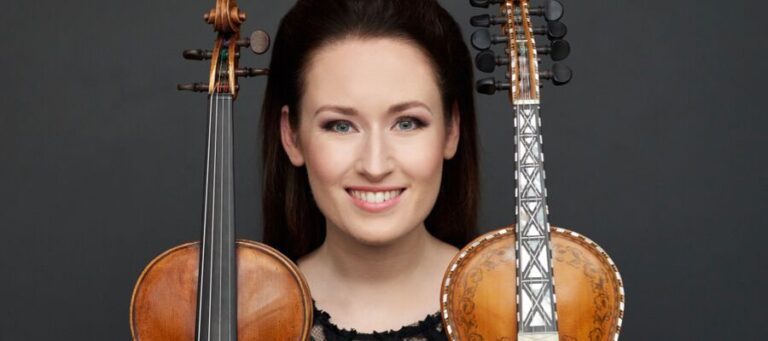
If you’re familiar with the music of the Lord of the Rings film trilogy, you may have in mind the theme associated with the Riders of Rohan and occasionally played by a violin. Or at least, a particular violin. It’s the Hardanger fiddle, a traditional Norwegian instrument made of four “melodic” strings (like a classical violin) to which are added five “resonant” strings (known as sympathetic). Hence the buzzing effect that comes with playing this instrument.
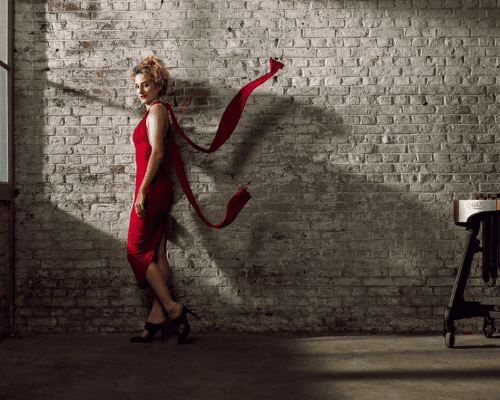
On Friday June 16, as part of the Montréal Baroque 2023 Festival, Norwegian violinist Ragnhild Hemsing will present a highly original concert featuring the baroque violin alongside the traditional Hardanger fiddle in a programme featuring Handel, Lully, Marais, Nordic folk music and, yes, Vivaldi with a totally original version of his Four Seasons (played on, you guessed it, the Hardanger!).
I met the young artist and talked to her about this fascinating instrument, the concert programme and lots of other things.
Pan M 360: What role does the traditional violin play in Norwegian society?
Ragnhild Hemsing: It’s a tradition that’s still very much alive. A lot of students are learning this style of playing (because it’s not just about the particularity of the instrument, but the way it’s played), and there are a lot of festivals and events linked to traditional music. It’s also a very oral tradition, because you learn from the masters and from memory.
Pan M 360: Is the playing technique radically different from that of the classical violin?
Ragnhild Hemsing: It’s completely different. I think I’m probably the only artist who plays both the traditional hardanger and the classical violin. It’s very difficult to tune, because with four basic strings and five sympathetic strings, there are 27 different ways of tuning the instrument. I’ll need to have several of them pre-tuned with me for the concert, otherwise it would take too long to re-tune between pieces! All these possibilities exist because each type of instrument tuning corresponds either to a regional musical background (one valley has its style, another village another), or to desired moods linked to certain times of the day (morning, afternoon, evening), or to a whole host of other factors. It’s a very rich and complex tradition. In general, a classical violinist cannot play the Hardanger, and vice versa.
Pan M 360: How did you come to master this tradition, as well as that of academic classical music?
Ragnhild Hemsing: Traditional music is part of my roots. I started playing the Hardanger at the age of five. I come from the Valdres region, a very active centre for traditional music in Norway, where many traditional musicians come from. I went on to study and learn classical violin after that. I was very happy when I realised that I didn’t have to choose, and that I could simply do both. That’s what I’ve been doing ever since.
Pan M 360: They are magnificent instruments, splendidly ornamented…
Ragnhild Hemsing: Yes, they are. Each maker has his own signature and style. My main instrument dates from 1867. The old instruments (because new ones are being made) had a dragon’s head on top of the instrument. This referred to a whole panorama of legends and myths associated with Norwegian pagan culture. And many pieces of folk music refer specifically to these stories. That’s why, for a very long time, it was forbidden to play Hardanger in churches. It was said to be the devil’s instrument! That’s no longer the case, of course…
Pan M 360: Are there any ‘classical’ pieces written for the Hardanger?
Ragnhild Hemsing: There aren’t many. To my knowledge, the first dates from 1905 and is by Johann Halvorsen. It’s a suite for Hardanger and orchestra. Later, another Norwegian composer, Geirr Tveitt, wrote some pieces, including two concertos.
Pan M 360: You’ve just released an album featuring Tveitt’s Concerto No. 2 (for Hardanger), coupled with Bruch’s Concerto (for classical violin) ….
Ragnhild Hemsing: Yes. On the Berlin Classics label. I also play classical works arranged for the Hardanger, like Grieg for example. Or the Four Seasons! The people of Montreal will be the first in America to hear my nordic vision of Vivaldi. It will be very special.
Pan M 360: You’re also commissioning new pieces…
Ragnhild Hemsing: I’d really like to expand the ‘classical’ Hardanger repertoire. And I really enjoy taking this instrument to classical venues elsewhere in the world.
Pan M 360: Next Friday’s concert will be a mix of Hardanger and classical. What have you prepared?
Ragnhild Hemsing: Yes, it’s going to be a very nice mix, I think. There will be a bit of everything we’ve been talking about: baroque with Handel, Vivaldi, Marais, etc., sometimes with Hardanger and sometimes with classical violin. I’ll also be presenting a contemporary piece by Agnes Ida Pettersen, for Hardanger and orchestra. I will be accompanied by the Barokkanerne ensemble and the Finnish Baroque Orchestra.