Additional Information
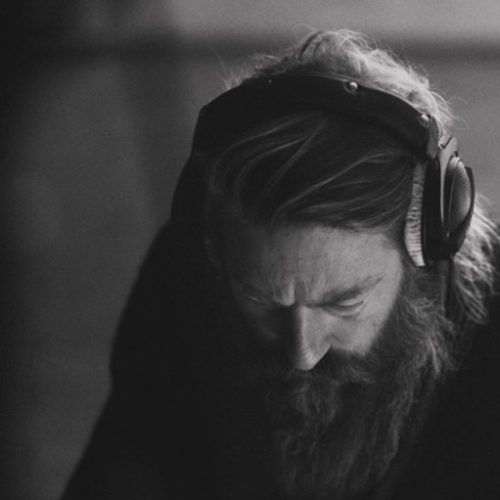
Electroacoustic percussionist and composer Sébastien Forrester creates music that is simultaneously emotional, kinetic, and intellectually explosive. Through his choice of instruments, he explores the recesses of a repressed imagination, linked to rare materials—in this case, minerals and stones. In this interview, he explains the unfolding of this exploratory process, and why the Satosphère represents its ultimate culmination.
Les Yeux Fermés invites the imagination to fully embrace space through sound. This acousmatic experience will reveal the Satosphère as a cinema for the ear, where two renowned artists unveil the fruit of a spatialization residency. December explores a new musical territory in an ambient style composed for the image, while Sébastien Forrester develops his hybrid practice, at the crossroads of percussion and electroacoustic composition. An experience not to be missed.
Les Yeux Fermés at the SAT, October 23. Info and tickets HERE
PAN M 360: You will be doing a residency at the S.A.T. this week. Are the pieces being presented next Thursday new creations composed for the occasion, or are they reinterpretations of your existing works?
Sébastien Forrester: I hesitated at first, then I realized that adapting pre-existing works – especially some of my latest pieces, which are very dense and relatively orchestral – would take me a considerable amount of time and energy. So I preferred the first option!
I was fortunate enough to experiment with a small lithophone a few months ago. Having worked extensively with the vibraphone, metallophone, and marimba in recent years, I was struck by the purity of the stone’s resonances. I extracted the body of this new work from it: all the harmonies that listeners will hear come from it.
I have also accumulated a huge amount of mineral and geological field recordings, made between Brittany, Auvergne, Morocco, Reunion Island and Iceland since 2017. I regularly extract patterns, textures, and sometimes even rhythmic sequences from them. With all these elements, I have created a series of sound environments that will serve as a basis for improvising live with a drum kit at the SAT. I wanted to create a dialogue between stone and percussion.
PAN M 360: What do you hope to accomplish during this residency?
Sébastien Forrester: My goal is always essentially exploratory. I work on instinct, I let my emotions guide me and I try, afterward, to extract a concept, a direction or a narrative arc. In the case of this new commission at the SAT, the objective is simply to bring new musical ideas to life in three dimensions and in a limited time, while ensuring that they can be deployed appropriately on the 93 speakers of the dome. I am very much looking forward to confronting them in space.
PAN M 360: In such a unique location, there can be a learning curve with the tools. How do you think you balance this technical learning while maintaining a creative sensibility?
Sébastien Forrester: The vast technical possibilities offered by the SAT’s sound system are proving to be much more stimulating than restrictive at the moment. I’m more focused on projection than execution, as I won’t be going there until next week. However, they have forced me to be much more methodical than usual: to organize the sound sources by layers, by locations, by clusters; to think about their coexistence with the live percussion as well. To establish a real architecture, a precise mapping of the sound. I’ve even drawn placements, trajectories, which had never happened to me before.
PAN M 360: The listening experience you’re offering is unusual. How accessible is it to a wide audience, and how would you recommend preparing for it?
Sébastien Forrester: All forms of sound art are inherently accessible to everyone, insofar as we have been producing sounds, shaping them, and sharing them since the dawn of time. I recently discovered that lithophones have existed for several thousand years. Being able to listen to a work in a place like the SAT represents the height of this sharing approach, because the place offers the optimal conditions for listening, feeling, immersing oneself, and letting oneself be carried away. I would advise the public to come curious and open-minded, in search of discoveries.
PAN M 360: Where do you think this feeling of immersion lies? Is it more sensory, imaginative, or emotional?
Sébastien Forrester: I would spontaneously say all three; they are, moreover, intimately linked. The senses create the first impression, the apprehension of the environment and the experience, then the imagination anchors it in memory and makes it palpable.
PAN M 360: How does total darkness and the ban on phones fundamentally change the audience’s relationship with music, compared to a traditional concert?
Sébastien Forrester: Darkness increases the perception of surrounding sounds. When you’re deprived of one sense, the others are only reinforced. I remember experiencing sounds inside a cave in the Lot region; during the visit, the speleologist briefly deprived us of light. It was then that I truly became aware of the complexity of the sound environment, the richness of the sources, the frequencies, the reverberations, the sounds of our bodies. Being plunged into darkness is immensely revealing.
PAN M 360: The G.R.I.S. spatialization software used at the S.A.T. was designed by composer Robert Normandeau, who is also, coincidentally, one of the pioneers of “cinema for the ear.” What do you think of this strong link between spatialization and sound narration?
Sébastien Forrester: Splitting sound sources, distributing or locating them, moving them, making them evolve in space naturally tells a story. It’s a process that allows us to recreate a certain familiarity, or even to play with it, alter it, distort it, and create a variation that defies understanding. In our daily world, the situations and moments we experience, sounds constantly surround us; they are never distributed across a stereo band like when we listen to WAV or MP3 files. Spatialization allows us to restore this natural arrangement while augmenting it with an infinite number of wonderful possibilities. It’s an extremely inspiring mode of composition, and to be confronted with it for the very first time at the SAT is an incredible opportunity.