Additional Information
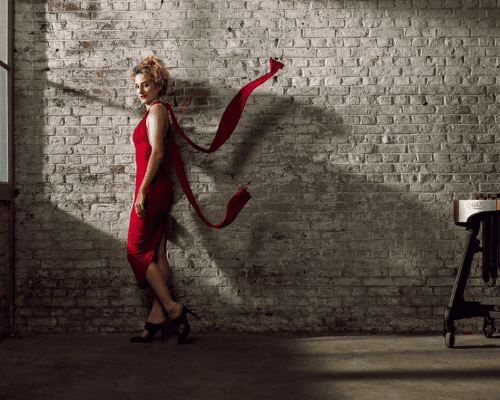
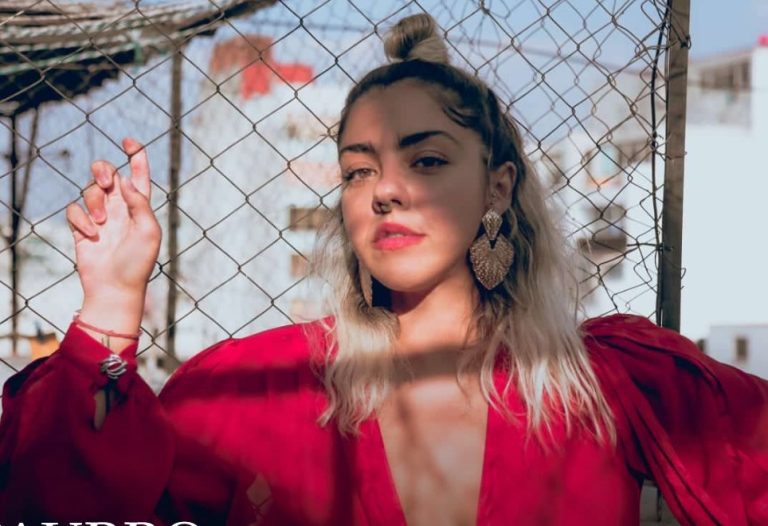
From the 5th to the 6th of June, the SAT (Société des Arts Technologiques), is celebrating its 30th anniversary with the ambitious Futurs Antérieurs event, where 30 artists will take over the entirety of the building over the course of two days. PAURRO (Paulina Rodriguez) is one of these artists, and the one who will oversee Satosphère’s closing DJ set on the night of the 5th.
With more than a decade of experience in the music industry and having played in famous venues such as Berlin’s Tresor and The Boiler Room, the Mexico born and Barcelona based DJ, Producer, independent label owner and radio host will bring an eclectic sound to the dancefloor. We can expect Breakbeats, Latin music, Hard grooves, techno, 90’s dance influences, and many surprises over the course of her upcoming DJ Set.
In this interview, she offers us a sneak-peek into her approach to DJ-ing and producing, what’s to come on the night of the 5th, and where she currently stands in her creative journey.
FUTURS ANTÉRIEURS, INFOS & TICKETS HERE
PAN M 360: Ok, Let’s start by introducing who you are to the reader. Who are you, where are you from, what is your practice and what kind of music do you make?
PAURRO: My name is Paulina. I’m from Mexico City, born and raised in Mexico City. I am currently based in Barcelona.
I am a DJ and producer. I see myself as a DJ first, and a producer second. The type of music that I like playing and making is dance-y, upbeat, a little bit rave-y, with lots of references to the nineties.
Oh, and I’m also a label owner and radio show host as well. I’m a multitasker.
PAN M 360 – Looking at your current practice, and comparing it to when you started your career, what would be the core of your creative practice as it stands now, both as a DJ and as a producer?
PAURRO: I definitely feel like what I produce came from what I like playing because I started DJing first. When I started producing, I just tried to replicate songs that I really liked playing. It was kind of one after the other, you know, the first helped the other come to life. I feel like my music has obviously evolved, as it is a little bit more… refined? I do it with more intention and I have clearer intentions. When I started, it was about experimenting and seeing if the music sounded okay. It was rawer.
It was more about trying to figure out the structure of the tracks, but now I’m more focused on the sound and the details within the music, on the textures. I definitely feel like it came from playing dance music. It’s like I want to replicate all these tracks that I really love. In every track that I make, I try to replicate one or two tracks that I really like.
PAN M 360 : Pointing at something you just said, what’s the importance of texture for you? It seems to be something that’s really at the core of what you’re doing.
PAURRO: It’s the production journey; it really expands your horizons. The more you get into textures, the bigger the world becomes, the more you learn about them, and the more creative possibilities you have. I really like it when music has hidden sounds and textures. Lately, that’s what I focus on the most, because I have kind of already found a structure that works for me, with sonic elements that are always in my music. I already know like the base of my, I don’t know, my music pizza (laughs).
I really like it when I have textures and weird sounds coming in every once in a while. I love that. So yes, I think textures are what I’m most focused on right now.
PAN M 360: I was listening to your music while preparing for this interview. I really enjoyed how you use voice samples, especially how you use them as rhythmic elements. It’s something that seemed quite consistent across your work.
PAURRO: Yes. Yes! I love chopping voices.
That started because when adding a vocal to a track, let’s say from a sample, I struggled to accommodate the timing properly. That’s why I started chopping vocals to time them how I wanted them to be. It was a way for me to just figure it out. It wasn’t very thought-out.
My melodic side isn’t very well developed yet, but my friend Matias, with whom I will be playing at the SAT, and who is a sort of mentor figure for me, told me to not worry about melodies. He told me to look at musical elements, say a piano or vocals, as rhythms. So that’s what I try to do, in ways that make sense with the tracks, to use different patterns, to make different patterns, from even just one vocal sample. I like the way it sounds.
PAN M 360 : You like to blend genres; you’ve even said in past interviews that you simply don’t pay attention to them. It’s something that shows when listening to some of your music, you are indeed very eclectic. Thus, what kind of sounds can we expect to hear in your upcoming performance at the SAT? Perhaps not a specific sound, but maybe a kind of mood, an emotion, that you’ll be going for?
PAURRO: I mean, I will be coming right after Matias, who is also super eclectic. There is always something unexpected in his set. I want to follow what he is doing.
I know it will be very percussive. So, I will have a lot of percussion in my sets.
I like 90’s sounding vocals, so that will be there, but I also want a rave-y side. Lots of breaks, too, which is one of the things that I like most. Mood wise, I want to go for something, hum, sexy, still rave-y, but not too fast, slower, a little bit more paced.
PAN M 360- I’m kind of curious: when you do a DJ-set, how much of it do you plan in advance? What’s the portion that is pre-selected before the event, and what is the portion that you work-out on the spot?
PAURRO : What I like to do is picking the first three or four tracks in advance, and have the first two or three transitions be pre-planned as well. I like knowing what I’m doing at the beginning, it allows me to gain confidence, read the room, and then decide where it should be going. It also gives me time to get familiarised with the equipment and see if the monitoring is okay. It gives me the space to really get into it and be present. It’s about gaining confidence and then improvising. I have a playlist, but I rarely follow it.
I sometimes also have a final track in mind, towards which I try to build up when I arrive at the last hour of my set. To get a good sense of closure.
PAN M 360 : Here at PANM, we also care about what happens on and under the table. What kind of gears do you work with? How do they shape your DJ-ing and producing?
PAURRO : I don’t really have any gear for production; I use my computer. I mean, I use lots of plugins, but I feel like I barely know how to use Ableton, to be honest. It’s like there is always something new that I need to learn, so I’m just really focused on that for now.
But I do want to explore playing with hardware as well. That’s another step in the journey. It would be like a step up, I guess, sound design with hardware is another level to focus on. It would sound so different, with way more texture, and it just has more flavor. But I’m not there yet. I’m really getting comfortable with Ableton, which is what works for me now.
For DJ-ing, I like playing with digital and vinyls. Every time I can play both, I do both. I haven’t done an all vinyl set in a while, which I really want to do. But the music that I play right now, I don’t think I have it on vinyl. I need to get more records that represent what I am right now. But I never want to stop playing records, because that’s how I learned to DJ.
PAN M 360: Will your set at the SAT be an all-digital mix?
PAURRO: Yes. I’m still moving from Mexico, so it was too much for me to bring records to play for this tour, but hopefully next time I can bring records. I feel like a lot of people stopped doing it because it is hard to travel with them. It’s expensive now because now you have to pay for extra luggage, and it’s something physical that you have to take care of. But I mean, you just have to get used to it.
PAN M 360: For the SAT show, what kind of equipment are you bringing in with you?
PAURRO: I play with four C-DJs and a B10. Yeah, I love the B10. You can do so many things with it. I like doing sharp cuts. It depends on the tracks, but let’s say that what I’m going to play has a big bass line, a fat bass line, I want it to come in, not as a shock, but to make it suddenly very present.
PAN M 360: How do you plan your set? Do you start from a song, a mood, a certain sound, a place, a time period, et cetera? And how do you assemble things together? Do you work from like free association, collage, looking for contrast or continuity, a chapter-like structure? More simply, how do you build your sets sound wise and how do you construct their “narrative”?
PAURRO: So I have an idea of how the gig is. I look at who else is playing with me and what the place is like. Is it a warehouse or in a club? I look at the vibe of the event, and I interpret it in my own way. It’s about what their vibe is according to me. Should my sound be more Latin? Maybe more bass-y? Maybe more house-y? Whatever the room needs, I create something from there. The first song I play really sets the mood for what I am going for.
I really care for the whole to feel harmonic, for all of it to make sense. I want my set to be as cohesive as possible. But I also love surprise elements. I am not a DJ who likes things to go up slowly. I like it when there are sudden downs and ups. I go for wow moments, rather than just making it all nice and cohesive. But in general, I try to mix both. I really feel satisfied when I get a sense that my sets have a common thread woven through them. I want to make it “grow” nicely
PAN M 360 : You will be performing in the Satosphère, the 360-degree projection dome at the SAT, which allows for both total sonic and visual immersion.
How will this impact your set? Have you been in conversation with the VJs (Visual Jockeys) who will be performing with you or no? What can we expect from the encounter of your sonic world with their visual world?
PAURRO : It’s really funny because it’s Bunbun who is doing the visual for me, and Alex. And Alex did the visuals for me in Mutek Japan. And unfortunately, we both had technical issues with our sets over there. We were both struggling at the same time. So we asked the SAT to let us work together again, so that this time we could do it properly. Based on what he did for me in Mutek, I know what he is going to do. I will be presenting a world that is similar to what I presented on Mutek, but for a space like the SAT, which is smaller, more intimate.
PAN M 360: Could you describe a little bit what it is you did at Mutek Japan then, to give us an idea of what it might be like on the 5th?
PAURRO: It was kind of crazy because it’s Japan. I felt like I had to show a crazy side, something riskier. Like crazy vocals, screams, random sounds, something more techno, a little bit faster, with many genre variations because I wanted to show my full range. I think it will be like that at the SAT as well.
PAN M 360: What are you hoping that people will get from your performance at the SAT? What would be the ideal experience they would get from your set?
PAURRO: It’s a closing set, so I hope they go home really satisfied with all of it, that they leave with a good taste in their mouth. I want them to see how much work I have put into making my set. To show that I am a pro, (laughing). I just want them to dance a lot and to go back home having spent every last bit of their energy, thinking “I’m good, I’m ready for bed. This was a good night out. She was dope”.
PAN M 360: Last question, an open ended one: is there anything in this conversation that we didn’t touch upon which you feel to be important in your artistic practice?
PAURRO: Something that I didn’t mention, and which has been really important as part of my whole journey as a person, DJ and producer is my label. It gave me a lot of perspective. Having a label gives you a sense of reality of how things really are in the music industry. It sounds a little bit cheesy, but it makes me feel grateful that I get to do what I do because the music industry is really bad right now for independent artists. Also, listening to all this great music that comes in and that we’re gonna release, it inspires me a lot. It gives me more ideas on how I want to approach production and moods that I want to explore. And also, collabs. Now I want to do collabs. I was always very insecure about collabs, but now that I have the label, I just want to make that happen. It’s opening a new door.
PAN M 360: Thank you very much for this interview. Any closing comment about your upcoming Set on the 5th and the Futurs Antérieurs event overall?
PAURRO: It’s gonna be really really fun, so people should go! All your senses are going to be entertained and you’re gonna see things that are kind of out of format. And I am not just talking only about myself; I am talking about all of the other artists. They are incredible. I’m excited for the whole night. I will be hanging around; I want to see it all.