Additional Information
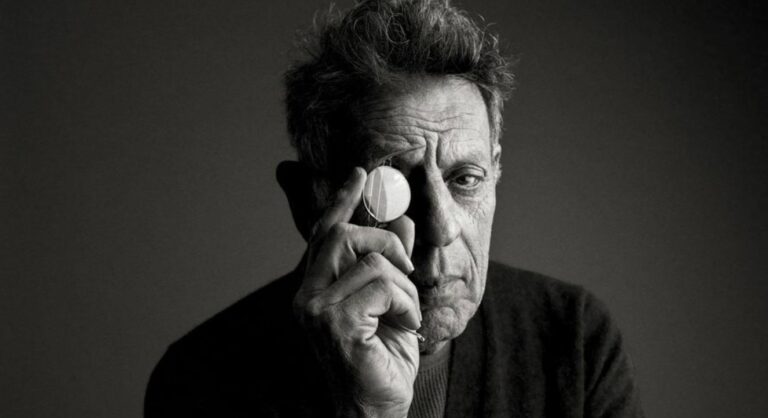
Four string quartets by Philip Glass will be performed by the Molinari Quartet on Friday, February 13, at the Montreal Conservatory of Music. This program concludes the Montreal ensemble’s complete cycle of the composer’s nine quartets, a process begun six years ago.
The program begins with the Bent Suite, the score for which, created in 1997, is taken from the music Glass wrote for the film Bent, a cinematic adaptation of Martin Sherman’s moving play about the persecution of homosexuals in Nazi Germany.
In 2015, the Kronos Quartet launched the Fifty for the Future project, consisting of 50 short works commissioned from renowned composers as well as young composers at the beginning of their careers in order to promote the contemporary corpus, hence Quartet Satz which is intended as an adaptation of Evening songno 2 for piano.
Glass’s 8th quartet takes us back to forms typical of the composer, to a “Glassian classicism” with its repeated arpeggios and its tonal harmony of total sobriety.
As for the 9th quartet, it comes from a piece of theatre music written in 2022 for the play King Lear by William Shakespeare, which was then being presented on Broadway.
Thus, this program promises to be diverse, certainly less linear and repetitive than some might initially believe.
Olga Ranzenhofer, artistic director and first violin of Molinari, tells us more about this program by courteously answering questions from PAN M 360.
PAN M 360: Why choose Philip Glass? For the intrinsic qualities of his work in string quartets? For his undeniable influence on our time? For other reasons?
Olga Ranzenhofer: There are works that are very formative for a string quartet, and Glass’s quartets, which appear rather simple, are among them. These works present great challenges to performers: the tonal harmony must be perfect, and the ensemble impeccable. There are very few nuances in the scores, so one must understand the harmony and play accordingly. One mustn’t over-exaggerate the phrasing, because Glass didn’t include it, although it is often implied. Our task, therefore, is to carefully balance the nuances and the hierarchy of the voices.
Of course, the works of this American composer appeal to all audiences. In our concerts, we often perform highly complex works that are very demanding for our audience. With this concert of Glass quartets, we offer our audience a concert that may be less demanding in terms of listening skill but is nonetheless very diverse and of high musical quality.
Glass enjoys widespread acclaim: fans of popular music and jazz, as well as opera and concert music enthusiasts, appreciate his work. There will always be those who say his music is too simple, too repetitive, but it’s undeniable that concert halls are packed when Glass is playing and the audience leaves very happy.
Indeed, Glass is the first composer to have simultaneously conquered a large multigenerational audience in opera, in the concert hall, in the world of dance, in cinema and in popular music.
PAN M 360: What is your history with these works?
Olga Ranzenhofer: From our very first season in 1997-98, we performed a Glass quartet. It’s always a pleasure to revisit his works, and it delights the audience. With this concert, we complete our full cycle of Glass’s quartets in concert. We’ve already recorded two volumes of quartets with ATMA Classique, and this August, we’ll finish the complete cycle on CD. Currently, volumes 1 and 2 are available digitally on streaming platforms or as downloads, but when volume three is completed, ATMA will release a three-CD set.
PAN M 360: What technical challenges arise in these works in general?
Olga Ranzenhofer: Through simple and repetitive music, one must find the common thread and see the overall form, the grand structure. Sometimes the simplest things are the most difficult to execute well because everything must be perfect: the intonation, the ensemble playing, the balance of voices, the timbre, etc.
PAN M 360: Let’s talk about the specific forms that each of these quartets in the program takes.
Olga Ranzenhofer: The four quartets we will be playing in this concert are indeed very different from one another, both in form and in terms of their genesis. Bent’s Suite is a succession of eight highly contrasting movements, sometimes featuring rhythmic interplay and sometimes accompanied melodies. Quite unusually, the last movement is a violin solo! The score for quartet is taken from the music Glass wrote for the film Bent. This film is a cinematic adaptation of Martin Sherman’s moving 1979 play, which deals with the persecution of homosexuals in Nazi Germany.
Glass wrote a short piece for piano entitled Evening Song No. 2, and Quartet Satz is its adaptation for quartet. It is a delicate, arch-shaped work lasting 8 minutes.
The 8th quartet is a classically formed and aesthetically pleasing quartet in three movements. Typically “Glassian” arpeggios abound in this quartet. Even the slow movement contains arpeggios that, this time, become melodic.
Finally, the 9th quartet, “King Lear,” is taken from the incidental music Glass composed for the Shakespeare play that was presented on Broadway in 2019. The quartet is in five movements, but each contains numerous highly defined and contrasting subsections. Glass also significantly alters the order of the sections compared to the Broadway production of the play.
This quartet features sounds not found in the composer’s earlier quartets, such as ponticello and col legno battuto. Furthermore, Glass makes extensive use of accompanied melody, another unusual characteristic.
PAN M 360: How do you perceive the formal evolution of these quartets, from 1997 to 2022?
Olga Ranzenhofer: The last four quartets are very different and do not follow any particular development. Each one is the product of a different source of inspiration or a specific need, leading the composer to create within these constraints. The value of playing several quartets by the same composer, or even his complete works, lies in the fact that one can follow the evolution and, in Glass’s particular case, identify the characteristics and particularities of his writing. In light of our work on the complete Glass quartets, we can easily identify the features of his writing, and these are present in all his quartets: the superimposition of duple and triple meter, the grouping of eighth notes (e.g., 3 + 3 + 2 + 2), arpeggios, irregular time signatures, simple rhythms, and, of course, tonal harmony.
PAN M 360: Philip Glass made headlines a few days ago when he canceled the performance of his 15th Symphony, inspired by Abraham Lincoln, at the Kennedy Center in protest against the Trump administration. What do you think of this action by the composer?
Olga Ranzenhofer: Philip Glass’s withdrawal of his work reveals him as a man of principle. It was a highly anticipated event as part of the United States’ 250th anniversary celebrations, and he decided to cancel the premiere at the Kennedy Center. The subject of his 15th Symphony is Abraham Lincoln, one of the most important presidents of the United States, who, among other things, abolished slavery. Given the current situation within the American administration, presenting this work there would have been antithetical and contrary to the values conveyed by the piece.
PAN M 360: Since the Glass effect is also discussed with large audiences, can we also observe that the Molinari concerts attract different audiences from one program to another, given the wide range of your offerings, from Glass to Schnittke? Or is your audience willing to attend almost all of your offerings?
Olga Ranzenhofer: Indeed, our programming is very diverse. Over our 29 seasons, we have succeeded in building a loyal audience. I believe it’s fair to say that they have complete confidence in us and our artistic offerings. If we decide to perform a work, it’s because we are convinced of its quality, and we perform it with great conviction; that’s why our audience is ready to follow us on our adventures.
Quatuor Molinari
Olga Ranzenhofer, violIn
Antoine Bareil, violIn
Cynthia Blanchon, viola
Pierre-Alain Bouvrette, cello
The Quartet according to Glass
Philip Glass (1937)
Suite de Bent (1996)
Bent #1 –
Bent #2 –
Bent #3 –
Bent #4
Bent #5
Bent #6
Bent #7
Bent #8
Quartet Satz (2017)
Pause
Quatuor no 8 (2018)
Mouvement I
Mouvement II
Mouvement III
Quatuor no 9 King Lear (2022)
Mouvement I –
Mouvement II
Mouvement III
Mouvement IV
Mouvement V