Additional Information
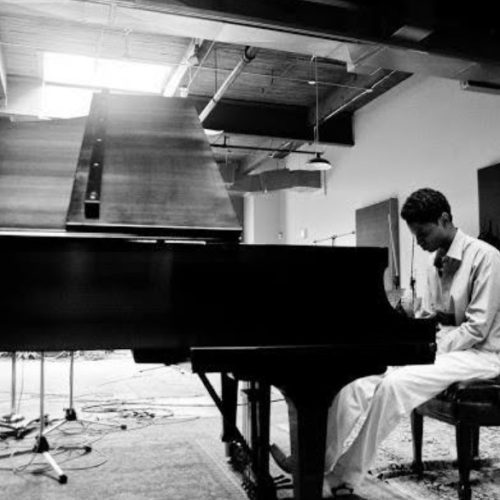
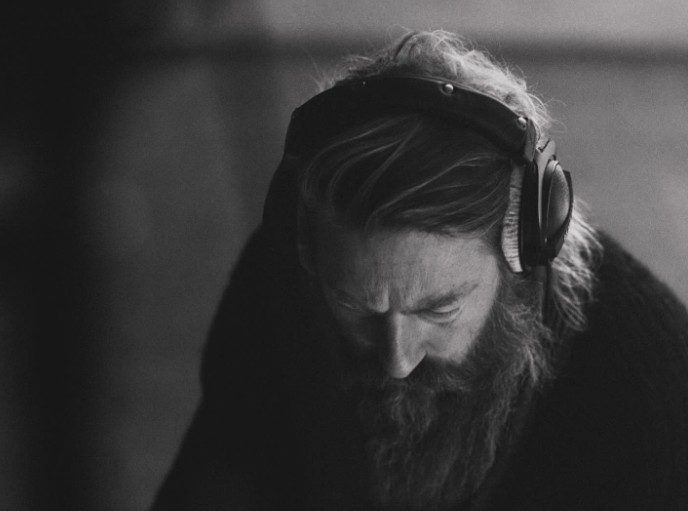
Joep Beving is neither a virtuoso nor an academic. He is one of those self-taught artists who has succeeded in developing his own unique musical language, thereby winning over an international audience that cheers him on wherever he performs. Often associated with the neoclassical movement, the pianist is back at the Palais Montcalm to showcase the style of his album Liminal, released last March. The following conversation reveals that the Dutch musician’s musical world also draws on his reflections on the precarious state of our planet today. Rich imagination!
PAN M 360: I saw your last concert in Montreal in July 2025 , it was at the Gesù Theatre for the Jazzfest. The venue was full and I realised that you had a real following in Québec.
Joep Beving: Uh, yeah, probably. I don’t precisely remember that gig, I know that it was during the Montreal Jazzfest. And I have no idea where I’m going to perform this time.
PAN M 360: You’re going to perform at Palais Montcalm in Quebec City, a great venue with exceptional acoustics.
Joep Beving: Yeah, I performed there as well, and I thought I also was playing in Montreal.
PAN M 360: Yeah, you’re playing also in Montreal at Beanfield Theatre, very nice venue too.
Joep Beving: Okay !
PAN M 360: I listened carefully to your music in order to prepare this interview, so I know basically the way you’ve built it, and also that it’s an ongoing process. Even if you are not trained in institutions, you have played music since your childhood, and you’ve been involved in advertising at the early stages of your career. So you pursued your real instincts as composers. And now, after all those years, we can listen to a mature craft with a strong identity. So I’d like you to pinpoint the way you see your own identity as a composer and a player.
Joep Beving: Oh, that’s a very interesting question. I think much of it is exploring, I think one of the things that characterizes me being a composer is that it’s that I’m discovering. And then I don’t come from an academic training project, so it’s very much unhinted or non-disturbed by preconception, and it’s very much about being free and engaging with the instrument and the music and trying to discover, you know, what I think is beautiful or what I think feels like how I feel at a particular moment.
And so it’s, I rarely see myself as like a traditional composer or a composer, it’s more like I’m, you know, like I’m an artist and I’m making records, and sometimes I venture into this world of classical or more really composed music, and then it’s exciting, it’s like you know, trying something new and see what is there to discover without, again, without being you know, disrupted by rules and conventions. So, maybe it’s not the most interesting answer, but it’s very true.
PAN M 360: I understand that you became, well, you’re a self-taught musician in a way, but at the same time you have great taste. I see your major influences in your bio, so you quote Bill Evans, Keith Jarrett, Philip Glass, Arvo Pärt, Frederic Chopin, Erik Satie, Radiohead, Mahler, Pēteris Vasks , and Tigran Hamasyan, which are excellent choices. So, it’s very broad, so you have a sort of vast piano and composer culture, but at the same time you do your own thing without high virtuosity, with an apparent simplicity. All is about the composing, it’s not a question of technical performance, and it’s a very tonal music with nice harmonies that everyone understands.
Joep Beving: You know, I like atonal music, and I like when the music is not sugar-coated. But one thing that I think is very present in me is the kind of the need to look for balance in harmony in life, and oftentimes in response to how the world is developing, you build up a lot of anger and frustration, and so a logical place would be to have that shine through in the stories you tell or the work you do.
But then I end up, for my part, not so much reflecting on the times, but just feeding it with more aggression, and so I’m really drawn to create music where there is also definitely an element of feeling better, or an escape in a way, or dreaming, or daydreaming, and I think it’s necessary to do that, because it’s what I need for my own sanity, and it’s what a lot of people, I think, need as well.
PAN M 360: Oniric, contemplative, ambient, meditative are some of your values, much more than chaos. Well, you probably like chaos, as you said, you say you would listen to atonal music, but we don’t hear a lot of atonal sounds in yours. As did your elders as Arvo Pärt or Philip Glass, who remained tonal too. But a t the same time they became very contemporary, maintaining music from the past with a different twang. This is what you do, but in your way.
Joep Beving: Yeah, I think that’s true, I agree. I’m working on a record at the moment where there’s much more atonality, but it’s definitely in a way that it’s not atonal per se. It’s kind of making atonal become tonal.
PAN M 360: Yeah, it’s just a tool in your expression, it’s not a purpose. It comes naturally when it has to come.
Joep Beving: Yeah, that’s correct, but I do listen to a lot of darker things. Sometimes you look for more pain and more discontent, and just to see how far you can stretch and appease it or turn it into something that could be the opposite. And for me, that’s kind of an exercise in how to deal with the gravity of reality. So, I would sooner pick a dark piece for my own mental health than a light piece.
PAN M 360: Well, it’s important to be well balanced. You seem to be a well-tempered person ! I don’t know you, but I imagine you easily live close to nature. I can imagine you in the forest, but at the same time you live in Amsterdam, don’t you?
Joep Beving: True, I live in Amsterdam, but I also live in the forest. I have a big garden. I have a forest home for getting away from the busy city.
PAN M 360: Okay, so you’re not downtown at all, you’re somewhere in the surrounding area?
Joep Beving: Yeah.
PAN M 360: It’s great ! Also, your music feels the North. Maybe because I also live in the North, there’s probably a natural Québécois or Canadian affinity with northern European music.
Joep Beving: Yeah, I agree and I love it.
PAN M 360: And can you just explain the Liminal album and what does it represent for you? And what are your most recent achievements as a composer and a player through this album?
Joep Beving: Well, I think with that last part of the question included, I should basically, or I should say that it was very difficult to get to work, to get to a place of composing new music. And like I mentioned before, there’s this urge to throw a piano out of the window and record the destruction as a reflection of what’s going on.
PAN M 360: Yeah, as an expression of the actual context.
Joep Beving: Yes. And so just the idea of sitting behind a piano and trying to, again, be inspired or be looking for something that we consider beautiful felt very, besides the point, and even a bit hypocritical, definitely very privileged, considering the time. And I was absolutely inspired to do so, and it was even impossible actually to do so.
And so I had to get my act straight, kind of, and silence my thinking and my worrying, which also is a thing of privilege. And I was talking to an artist friend of mine, and she recommended a book to me, called Wild Renaissance. It’s an academic book by a French scholar, Guillaume Logé. It kind of looks at how art dealt with the changing relationships in our reality and how, basically, how everything has become human-centered in our obsession with control and being the center of the universe and leading to stupidity.
So, what helped me was just to kind of, you know, step out of the ideas I was having before, and I used my own experience and my own questioning as a human to look at what our relationship with reality is, what it consists of, and what kind of levels there are, and how to learn from thinking about this in a very, well, curious and inquisitive manner. But now, for the first time, it felt so, besides the points, I kind of had the idea that I wanted to create a very humble record, where I would try not to influence the music that much, and I would try to have the music kind of decide where it wants to go, and that was what I was looking for in the composition.
And I ended up with two sides, and one is the very strong feeling of nostalgia, which is, you know, you can discuss that in many ways, but it’s kind of blinging on to the past, and the idea that we can, you know, we can build these little shelters where we can hide ourselves from the change that is going in the wrong direction. Yeah, this is what we can do right now, unfortunately, not more than shelters.
PAN M 360: You know, try to isolate as a small minority means a lot about the actual context.
Joep Beving: And so, I just wanted to express that feeling kind of powerless. But at the same time also, you know, what is in this liminal state, what is a hopeful thought, or what is a way out? And it’s definitely stepping out of the idea of human-centeredness, or anthropocentrism, and basically becoming more like other beings on the planet that are trying to create systems that keep themselves generating and renewing, and mutually beneficial, and not just destructive. So, that has been the aim with the record. So, in response to not knowing what the future holds, what is our response, it’s either seeking shelter, or it’s seeking an alternative, which would be to have a different relationship with nature, have a different relationship with other organisms.
And even looking at technology, like, is it, you know, is it, especially now that it becomes intelligent, or maybe even conscious at some point, you know, what is our relationship with them, and how do we treat that, and how do we trust that? So, those are the themes that were playing in my head, and out from that came this album. And yeah, I was quite happy that I could actually create something. And so, that for me was quite the accomplishment.
And now, being on tour, and playing the new music for audiences again, and feeling that it’s mostly the right tonality, or the right sentiment that was touched upon, feels good, and feels like, okay, it’s not entirely pointless, what I’m doing here. Which is a small, but for me, relevant achievement. And I mean, more on a professional level, I think I’ve done some writing for an orchestra, and I’ve performed pieces with an orchestra, and now I’m turning that for my next album into orchestral recording.
PAN M 360: Do you write yourself all the arrangements and orchestrations ?
Joep Beving: Yeah, yeah. So, it’s going to be a big ensemble. How many pieces? We did it the first time with 45 musicians, I think.
PAN M 360: Oh yeah, so sort of almost a small symphony orchestra.
Joep Beving: Yeah, it was a small symphony orchestra. And now, for the record, we will have to upscale, because I need big string sections. So, that’s what we’re doing next year, recording this music, and that’s exciting. And at the same time, I’m looking for something new. And I don’t know what that is yet.
PAN M 360: It’s going to emerge itself.
Joep Beving: Yeah, I hope so. At least I feel a bit more inspired now than I felt like one and a half years ago, when I created Liminal. And I don’t know, it’s just like I’ve been… Trying not to become depressed is already a lot of work for a lot of people, I think.
PAN M 360: So, let’s have a couple of hints about the next concerts in Québec.
Joep Beving: For example, I’m doing one piece from the new album, which is called When Humans Do Algorithms. And that piece is a build up from 22 different rhythmical patterns. And so, I tried to find a way to perform this live with the looping pedal, but it’s polyrhythmic. So, I’m using a computer with which I’m playing, and I created a live version for this particular track where I’m bringing AI in. But in a way, that is purposeful, I think. And it’s a very minimal setup that I can travel with. And most of the concert will be highly meditative solo piano. But the ending is a bit more of a surprise.
PAN M 360: Okay. So, we won’t ask for it; a surprise is a surprise.
Joep Beving: Well, if people follow me, they probably have seen it on some social channel. But anyway, it will be a surprise for most people, I’m pretty sure !