Nuits d’Afrique | Las Karamba, Between Sisterhood and Activism

Interview by Michel Labrecque
Genres and styles : latino / Rumba / Salsa / Son

Additional Information

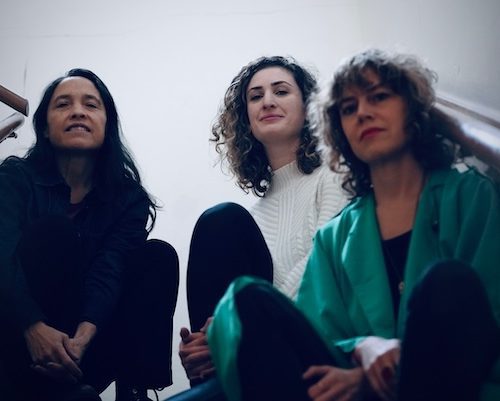
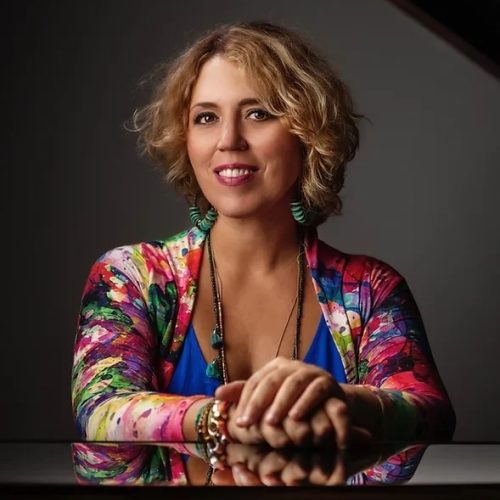
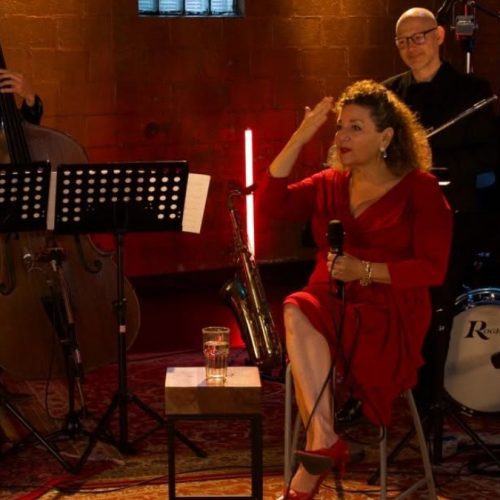
Las Karamba is an all-female group from Barcelona, made up mainly of Latin American immigrants.

Two Venezuelans, two Cubans, one Argentinean and one Catalan. After two albums, Las Karamba will be at Nuits d’Afrique for the first time on July 20, at Scène TD in the Quartier des Spectacles, at 8:15pm. Free admission. Michel Labrecque spoke, in Spanish, with two members of this festive yet militant group. Natacha Arizu, Argentine and keyboardist, and Ayvin Bruno, Venezuelan and singer, answer his questions.

PANM360: Tell me about the genesis of this women’s group, how did Las Karamba come about?

Ayvin Bruno: I can say I’m the initiator, it was 2018. In Barcelona, there’s a whole open music scene, which allows jam sessions, where lots of people from many different countries can meet. It was in this context that we formed this all-female group, to tell our stories of migration, from Latin America to Europe. We quickly realized that we had a lot in common, even though we came from different countries. In 2021, Camino Asi, our first album, was released, and in 2024, our second, Te lo Digo Cantando, will be much of what we present in Montreal.

PANM360: It seems to me that the musical denominator between the six of you is a love for Cuban music: salsa, rumba, son, etc. Am I right?

Natacha Arizu: No, although I’m Argentine, I grew up listening to a lot of Cuban music, and it’s the same for the others. There are also two Cuban musicians in the group. So that’s our musical base, but after that, each of us brings a bit of the color of her country and her personal experience.

Ayvin Bruno: But we all have this affinity with the Cuban sound. It’s a dance music that’s recognized internationally. And that unites us.

PANM360: Your music is danceable, but you also want to make people think. What do you want to say in your songs?

Ayvin Bruno: You know, on the whole, Latin music is written from a masculine, even patriarchal, perspective. Because the vast majority of composers were men. Our songs tell our side of the story. They tell of our struggles, our daily lives, our lives as mothers, our anxieties, and also the perspective of our mothers or our ancestors. I think it’s a social necessity to do that.

We also wrote a song in Catalan, since we live in Barcelona and it’s the language of the majority. But, apart from a Catalan woman who’s with us, we tell the story from our perspective as migrants, coming here to tame a new society and offer it the best of us. And now we have the opportunity to tell our stories on an international scale by shooting abroad.

PANM360: As Latin Americans, why did you choose to immigrate to Spain rather than the United States, as so many people do?

Natacha Arizu: For my part, I was attracted by the cultural similarities and the common language. For me, the United States didn’t necessarily represent an ideal. Argentina is largely populated by European immigrants. And what’s happening in the United States at the moment reinforces my choice.

Ayvin Bruno: For my part, I’ve had an Italian passport since the age of 9, thanks to my grandmother. It was much easier to come to Europe. That’s why my sister, who’s also part of Las Karamba, and I have been here for almost 20 years. I have a lot of Venezuelan friends who live in the United States, and their situation is very complicated right now with the new administration. I’m very happy with my choice.

PANM360: And right now, the Spanish economy is doing quite well, and the country seems very happy to welcome immigrants with a common language and culture. Let’s get back to the music: what will you be presenting in Montreal?

Natacha Arizu: These will be 100% original compositions. You’ll be able to dance and think at the same time. It’s a mixture of things.

Ayvin Bruno: You’ll also feel our complicity, our solidarity, which we’re living to the full because we’re constantly together on this tour. Our first in North America.

PANM360: See you in Montreal, at the TD Stage, on July 20!
Publicité panam

Latest 360 Content

MUTEK 2026 | Istanbul Ghetto Club, A Sense of Déjè Vu… and of Never Having Heard It Before

MUTEK 2026 | Istanbul Ghetto Club, A Sense of Déjè Vu… and of Never Having Heard It Before

MUTEK 2026 | The Super Vibrant World of Chiquita Magic, from Louis Cole Big Band to Hardware Techno

MUTEK 2026 | The Super Vibrant World of Chiquita Magic, from Louis Cole Big Band to Hardware Techno

MUTEK 2026 | Herbert in Three Shows: The Activist, Composer and Producer Is Finally Back

MUTEK 2026 | Herbert in Three Shows: The Activist, Composer and Producer Is Finally Back

MUTEK 2026 : What Does a Laser Sound Like in the Super Galaxy Meow Meow ?

MUTEK 2026 : What Does a Laser Sound Like in the Super Galaxy Meow Meow ?

MUTEK 2026 | Finding the Flow With Fennesz

MUTEK 2026 | Finding the Flow With Fennesz

Domaine Forget 2026 | Mathieu Lussier and the discovery of French music

Domaine Forget 2026 | Mathieu Lussier and the discovery of French music

Domaine Forget 2026 | Final concert under Flowers and Crowns

Domaine Forget 2026 | Final concert under Flowers and Crowns

Orientalys 2026 | Saturday Night Bollywood Fever

Orientalys 2026 | Saturday Night Bollywood Fever

Discover Le Qafila: a pop, Sufi fusion, Indian bhangra group in Montreal

Discover Le Qafila: a pop, Sufi fusion, Indian bhangra group in Montreal

Orientalys 2026 | Kabyle All-Night Event, “A Sensitive Journey Through Memory”

Orientalys 2026 | Kabyle All-Night Event, “A Sensitive Journey Through Memory”

Domaine Forget 2026 | Timeless and Classical Viennese Music: Dialogues Between Haydn, Beethoven, Mozart…and Labadie

Domaine Forget 2026 | Timeless and Classical Viennese Music: Dialogues Between Haydn, Beethoven, Mozart…and Labadie

Orientalys 2026 | Rakcha Band, A Jazz-Funk-Fusion Group from Tunisia now Based in Montreal

Orientalys 2026 | Rakcha Band, A Jazz-Funk-Fusion Group from Tunisia now Based in Montreal

Orientalys | DJ Mina, from classical singing to DJing

Orientalys | DJ Mina, from classical singing to DJing

Orientalys 2026 | August 13–16: The Festival’s Highlights!

Orientalys 2026 | August 13–16: The Festival’s Highlights!

Présence autochtone | Waiting for the (real) Great Peace of MTL, Forestare, Joséphine Bacon, Richard Desjardins and many others on stage

Présence autochtone | Waiting for the (real) Great Peace of MTL, Forestare, Joséphine Bacon, Richard Desjardins and many others on stage

Orientalys 2026 | Qi Shen and Jasmine Xu, an erhu/piano duo, mother/daughter, to discover

Orientalys 2026 | Qi Shen and Jasmine Xu, an erhu/piano duo, mother/daughter, to discover

Présence autochtone | Leonard Sumner, another perspective for songwriting

Présence autochtone | Leonard Sumner, another perspective for songwriting

Orientalys 2026 | Alex Iskandar: Ambassador of Central Asian Traditions in Montreal

Orientalys 2026 | Alex Iskandar: Ambassador of Central Asian Traditions in Montreal

Présence Autochtone I Rei Speaks About His ‘Haka’ Rap

Présence Autochtone I Rei Speaks About His ‘Haka’ Rap

Domesicle Series: The Story of Sister Zo

Domesicle Series: The Story of Sister Zo

Airborne strings in the Parks of Montreal with Andrei Feher and the Orchestre classique de Montréal

Airborne strings in the Parks of Montreal with Andrei Feher and the Orchestre classique de Montréal

Présence autochtone 2026 | We talk about the Programming with the Director

Présence autochtone 2026 | We talk about the Programming with the Director

Concerts aux Îles du Bic | Samaqani Cocahq Gives Voice to Wolastoq Traditions

Concerts aux Îles du Bic | Samaqani Cocahq Gives Voice to Wolastoq Traditions

Concerts aux Îles du Bic | Pierre-Luc Lecours and the Ensemble Modulaire: Between Sound, Image, and the Moment

Concerts aux Îles du Bic | Pierre-Luc Lecours and the Ensemble Modulaire: Between Sound, Image, and the Moment

Subscribe to our newsletter

Inscription
Infolettre

"*" indicates required fields

Type of Suscribers