Additional Information
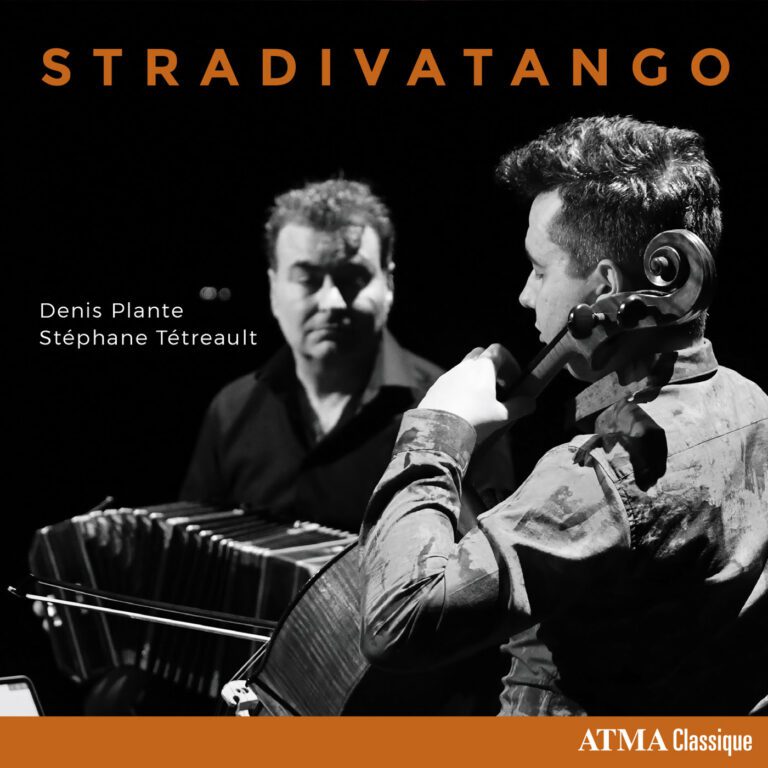
Stradivatango, born of the musical complicity between Stéphane Tétreault and Denis Plante, explores a subtle balance between tradition and reinvention. Carried by the resounding sonority of the cello and the bewitching whispers of the bandoneon, (a type of concertina) the album unfurls a striking expressiveness between vertigo and grace.
PAN M 360: Stradivatango fuses Baroque and Tango influences in a unique way. What drew you to this combination, and how did you and Denis Plante shape the album’s musical identity?
Stéphane Tétreault: Stradivatango was born of our fascination with the encounter between Baroque and tango. Tango, like Baroque music, demands mastery of phrasing and ornamentation, but also freedom of interpretation. With Denis Plante, we shaped a sound that respects this spontaneity, where bandoneon and cello dialogue like dancers suspended between vertigo and grace. Each piece on the album is part of this duality between tradition and reinvention.
PAN M 360: The cello and bandoneon have very distinct timbres. What do you like best about their dialogue, and how did you approach the balance between the two instruments?
Stéphane Tétreault: The cello and the bandoneon have very contrasting personalities: one sings with depth and lyricism, the other murmurs with an almost resigned melancholy. This contrast is precisely what makes their dialogue so fascinating. As in a dance, the balance is based on listening to each other: sometimes one leads, sometimes the other, and sometimes they merge into a single voice.
PAN M 360: Tango is a highly expressive music, often charged with intensity and passion. What aspects of the genre resonate most with you, and how do you express them through your playing?
Stéphane Tétreault: Tango moves me with its theatricality and emotional intensity. It’s music that carries an indomitable nostalgia, a tension between pain and exaltation. My playing seeks to translate this expressiveness, sculpting each phrase with the tango’s breath, playing on silences, accents and colours to convey this duality between elegance and fury.
PAN M 360: Denis Plante structured Stradivatango like a baroque suite. Did you approach the work with a “historically informed” sensibility, or did you prefer a more modern approach?
Stéphane Tétreault: Stradivatango is inspired by Baroque structures, while fully embracing the soul of tango. Each piece explores an aesthetic in which ancient dances are reinvented through the prism of the bandoneon and cello. While incorporating elements of historically informed practice, I sought to capture the expressive essence of tango, integrating its rhythmic freedom and dramatic intensity within a framework reminiscent of the sophistication and élan of Baroque suites.
PAN M 360: Your Stradivarius Comtesse de Stainlein is an exceptional instrument. How does its sound influence your interpretation of Tango compared with other styles you’ve explored?
Stéphane Tétreault: My Comtesse enriches Tango with a unique depth of sound. Her warm timbre and resonance open up a vast field of expression, from the delicate, impressionistic harmonies of Cobián to the dramatic ardour of Piazzolla. It infuses tango with an almost orchestral breadth in Denis Plante’s music, where each note becomes a story in its own right.
PAN M 360: Is there a particular passage or moment on the album that has a special meaning for you? If so, why?
Stéphane Tétreault: A defining moment for me is “Le prince écarlate,” a tribute to Vivaldi that perfectly illustrates the fusion between baroque and tango. Its dizzying writing evokes Vivaldian violinistic traits while retaining the dramatic tension of tango. It embodies the essence of Stradivatango: a conversation between two eras, driven by virtuosity and emotion.
PAN M 360: What would you like listeners to remember about Stradivatango? Is there a specific emotion, story or atmosphere you’d like them to feel?
Stéphane Tétreault: I’d like listeners to feel the alchemy between past and present, between Baroque sophistication and tango intensity. More than just an album, Stradivatango is an immersion in a universe where every note is a story, where the music dances on a tightrope between nostalgia and passion.