Additional Information
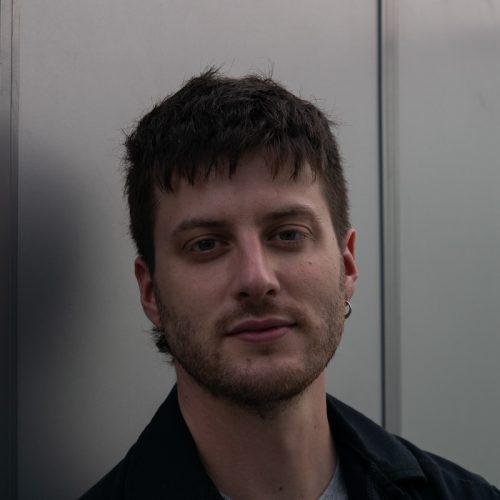
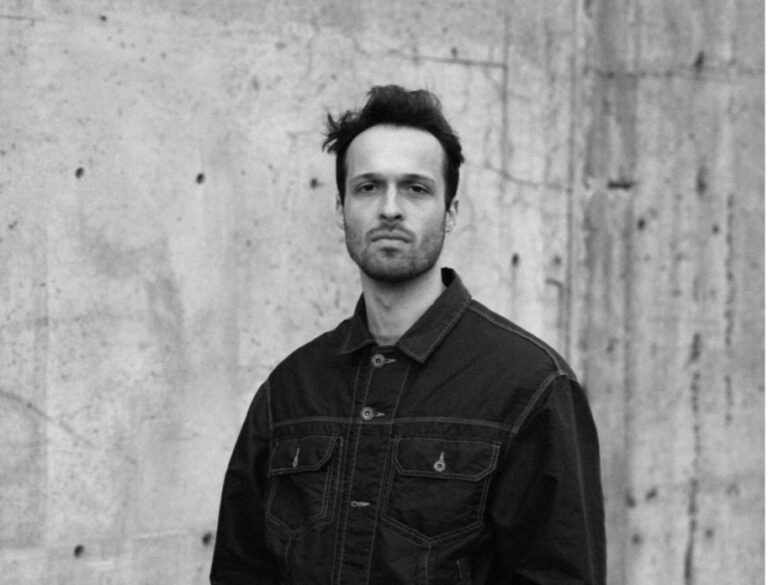
Keru Not Never, aka Justin Leduc-Frenette, has been composing major works of electronic music for several years now, and with disconcerting ease. While his first two albums revealed a great mastery of electroacoustic methods, his most recent album, Mezzanine, delves into the complex worlds of classical and contemporary music. Long orchestral variations are condensed into layers of harmonies and melodies, as deeply rooted in silence as they are soaring. The drama that unfolds is intense in nature, but soothing in form. Justin Leduc-Frenette manages to walk the fine line between repetition and unpredictability with finesse, and his musical aesthetic also cuts across tradition. This could be described as “post-classical,” a recurring theme in EAF concerts. Here is a gem of counterculture at the heart of the S.A.T.
This Thursday at the EAF concert, Keru Not Never will present some of the new processes developed during the creation of Mezzanine, as well as a range of entirely new works.
PAN M 360: Welcome back! I’m glad to be able to talk to you after our previous interview. I was very disappointed to learn on the day itself that your concert with Corporation had been canceled.
K.N.N.: Yeah, me too.
PAN M 360: I understand that you put a lot of preparation into this concert, considering that it was the opening act for Andy Stott. You realized quite abruptly that it wasn’t going to happen after all. How did you feel about that?
K.N.N.: The cancellation hit us hard, because we had invested so much work and creative energy into it. It was as if the show had become fiction, and that fiction had collapsed.
As we mentioned in the other interview, we composed material exclusively for that show, and we also collaborated with William Hayes on a video. It was awesome. The concert has been postponed until May 9, 2026. That’s a long way off, but maybe we’ll create new things for that show and work on it even more. In the end, it might be a good thing. And maybe public transportation will be up and running by then.
PAN M 360: I can’t wait. Let’s talk about Keru Not Never. For the upcoming concert, will you mainly be performing songs from Mezzanine or other material as well?
Keru Not Never: There won’t be any material from my first two albums. There will be a few tracks from Mezzanine, modified for live performance but close to the album versions, maybe three. That’s not the main part of the concert, which lasts about 50 minutes.
Most of the show will be new material, with echoes of Mezzanine, particularly in the use of strings and wind instruments. It will be much more massive than Mezzanine, which was more delicate and minimalist.
I started with the Mezzanine method, but I wanted to do something more inspired by spectral music. It’s going to be almost like doom metal in terms of aesthetics, even without electric guitars.
I also wanted it to be a bit like an opera. There will be lots of voices, masses of voices like clouds, but it will be purely live electronic music.
PAN M 360: That really speaks to me. I already find the album Mezzanine quite powerful. But I’ve heard what you’re capable of on your previous albums too. When you talk about creating something “massive,” I have high expectations.
Keru Not Never: I kind of see what you mean about the other albums, because there was some electro-acoustic work, sometimes quite brutal, with percussion and all that. But yes, there are things that might remind you of the other albums. Sometimes I don’t realize it, but I have my own aesthetic. Without meaning to, I repeat certain things, certain obsessions. I don’t know if it will meet your expectations. I hope so.
PAN M 360: I hope that, at the same time, I can be surprised. That’s the best part.
Keru Not Never: I’m exploring new things. I really tried to do something new. For me, I don’t know about the people who are going to listen, but for me, I tried to do new things. There are moments that are even a little bit close to rock. That’s new for me. I’ve never done anything like that before. We’ll see how it turns out live.
PAN M 360: There are some beautiful intersections between electronic music, rock, and noise. Especially in a performance context.
Keru Not Never: Yes, absolutely.
PAN M 360: Speaking of renewal, in Mezzanine you mention having used new methods. What was your journey like in that regard, going from your first albums such as Tereza and The Wind Of?
He had a lot of shows in churches where he had a somewhat sacred side to electronic music, so I used a lot of synthetic choirs. I wanted to break away from that “sacred” side of electronic music, a bit like “power ambient” and all those subgenres. It was an aesthetic renewal. In the meantime, I studied literature at the bachelor’s, master’s, and doctoral levels. That really shaped my writing, and it continues to do so.
PAN M 360: Dans tes derniers albums, on ressent qu’il y a une intention derrière chaque morceau, dont les albums sont l’œuvre accomplie d’une recherche passionnée. C’est un phénomène qui se fait de plus en plus rare dans l’industrie musicale actuelle où le streaming domine. À ton avis, comment est-ce que cette réalité affecte le processus créatif?
Keru Not Never: Yes, these are questions that are always on my mind, because I have difficulty with the cultural industry, so to speak. I think slowness is really important in creation. Yet, in terms of the act itself, the act of creation can be very quick. Some of my pieces took very little time to make. But the idea that things need to settle, dry, inhabit time, is something that has become important to me.
I don’t want to be prescriptive about these issues; I think every artist does things their own way, but there is definitely pressure to release more and more music quickly. Some artists are even abandoning the album format in favor of a faster format. The short form allows you to hold people’s attention. Not permanently, but every three months, with a new release. There’s this kind of technique that, whether intentionally or not, traps us in a kind of saturation of the cultural space.
I’m not saying it’s the norm, but let’s say it’s part of a particular culture, which is that of the attention economy, of speed, of production, of the profitability of things, of the way artistic successes are evaluated according to statistics on views, listens, streaming on a given continent, in a given country, all this kind of mapping of supposed success.
I’m not looking to make music that is financially profitable; that’s not my goal at all. In a way, I’m playing the game a little less. But there is pressure to do so, because that’s what allows you to do things that are heard today.
PAN M 360: Do you think there will be fatigue associated with this attention economy?
Keru Not Never: Yes, I think there is cultural fatigue. Everyone feels it, even if few acknowledge it artistically. I’m not saying I’m succeeding, but it’s a shared feeling.
PAN M 360: We must move forward with confidence, without worrying too much.
Keru Not Never: Yes, but it’s hard. When you’re not in the public eye or on people’s minds, you feel like you don’t exist. This pressure undermines creativity. Creativity is lost and becomes an accessory with which we appear in public. A collective cynicism sets in. We need to find ways to stay optimistic without falling into that trap.
Keru Not Never: Hakeem Lapointe is doing an excellent job. It’s essential. He’s giving the SAT back an interesting space for contemporary electronic music that’s almost counterculture, but with a great infrastructure. He’s doing important work for the Montreal scene.
PAN M 360: I agree. I’m excited to see shows at the SAT again. Jiyoun Wi will be doing almost a noise set, and that makes me happy. I’m really excited for tomorrow. For your performance, do you leave a lot of room for improvisation?
Keru Not Never: I have a 45-minute structure in Ableton. I segment the pieces into different elements so that I can play with the timbres live: make a sound almost absent, distort it, choose how I feed it. The sequence of the pieces is set, but I want to be able to deviate from certain choices.
It’s half improvisation, half selection of composed pieces. I play on minimalist skeletons to which I add elements. I want to be able to push the intensity slider: stack, superimpose, saturate. It’s a new show. We’ll see how it goes.
PAN M 360: It’s cool to have that intensity. Will the audience be seated?
Keru Not Never: It’s a seated show. I like seated concerts: there’s less pressure to get a physical reaction, and the focus is different. Tomorrow, it might be different.