Additional Information
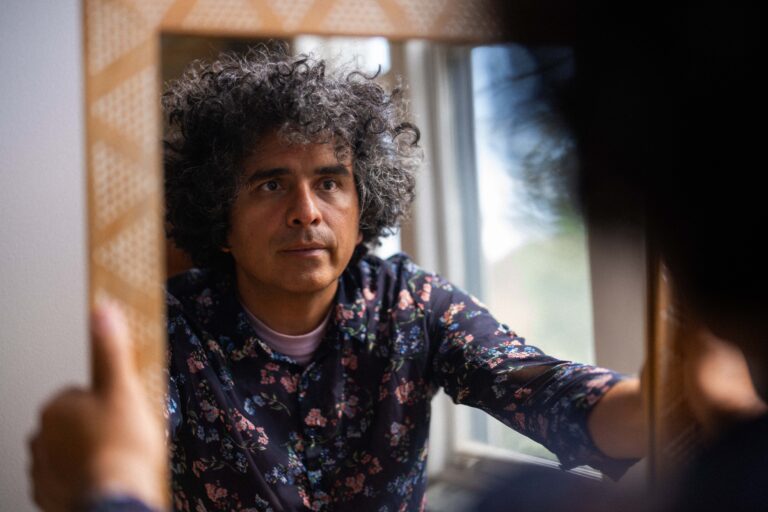
Helado Negro, real name Roberto Carlos Lange, has always understood that the darkest songs can make you move. In a wide-ranging conversation about his new EP The Last Sound on Earth (out via Big Dada), the electronic producer and singer-songwriter discusses the paradox at the heart of his work: pairing lyrics steeped in gloom and doom with music that demands your body dance. Drawing from childhood memories of Caribbean dance music at family parties, the rave culture that shaped him in ’90s Miami, and decades of experimental electronic production, Lange explores how movement—whether on a dancefloor or in the studio—can be a way of processing what the thinking mind cannot. From Kraftwerk to Michael Snow films, from jungle compilations to Deep Listening practices, this is our conversation with Helado Negro.
PAN M 360: What was the inspiration behind this new EP, The Last Sound on Earth?
Roberto Carlos Lange: One of the motivations was this idea of like having lyrical content that felt a little doomy and gloomy, but then also having something to contrast it, like the music that was more danceable, more moving, more body moving. That was reflecting a lot of music I grew up with. A lot of music that’s dancing music from the Caribbean, like salsa, merengue, bachata and cumbia. And I remember as a little kid, you know, being at parties and dancing with my relatives or then just like it occurring to me that like, everyone’s like having such a beautiful, great time. And then, the song they’re dancing to, which has a lot of energy and rhythm, is like the darkest song in the world, you know?
PAN M 360: There is something about dancing to, yeah, these like doom and gloom kind of like lyrics…
Roberto Carlos Lange: Yeah, I think it may make you feel it less in your head and more in your body. And I feel like in your body, at least you can get it out. You can sweat and move. And I feel like sometimes when you’re like ruminating, it’s like you’re stuck, and there’s no way to like move your brain, you know? But dancing helps that.
PAN M 360: There is definitely way more drum and bass, kind of jungle on this EP than your other, more soundscapey stuff. Is that from the music you grew up with as well?
Roberto Carlos Lange: Historically, I have released EPs. A lot of EPs. And a lot of them are deeply electronic and deeply experimental. And some of them are danceier, like this one. I think, you know, albums always end up getting more contextualized than they do with EPs. So for me, it’s something I’ve always done and something I grew up with. Like, I mean, like those are my first majorly influential records for me. I got a sampler, and then when I was 18 and that’s how I started making music. I didn’t really play in bands or anything like that. I was just gathering sounds via samples and synthesizers. And then it kind of like all spawned from there. A really early influence was my brother. I remember he came home in like ’94 from a trip he had taken. I can’t remember where, but he had these like compilation CDs of a bunch of jungle and techno CDs. Then we started going to raves in Miami.
PAN M 360: Do you remember those raves quite well?
Roberto Carlos Lange: I mean, I was like 14, 15, or 16? And there was this one called Beat Camp, and downstairs was a jungle room with a live MC. And they were just like playing jungle nonstop, and there would be a new, different live MC. And in Miami at the time, there’d be a lot of people from the UK coming. So we were getting like all these people, and I had no idea who was there. There was like all this massively influential music coming through. And then upstairs, there was like the chill-out room, and it was like all this experimental stuff. It was the first time I heard things from like Warp and Skam [labels]. Man, it was just like this whole other world that I was just exposed to and excited about. So those were kind of things that formed me and that are inside my head and my work.
PAN M 360: This new EP, did you make most of it on the road while touring?
Roberto Carlos Lange: As soon as I finished PHASOR, I had finished that song “More” as well. I was like, ‘Damn, I really like this. Maybe I could add this to the album, or I was like, or I could just have this be something else, you know? And then, right after that, I finished “Sender Receiver,” and those became like a kind of couplet. And I was like, okay, well maybe I can make more music that feels like it’s in this world. So then I kind of focused on that. Soon after came “Protector.” And at the very end came “Zenith” and “Don’t Give It Up Now.” “Zenith is like the only real non-vocal track, more of an ambient track, I guess you could say. I feel like “Zenith” ended up being one of these cool processes that just appeared. It was just like a jam, per se, you know? And I think what’s really important when you do these things is you gotta make sure that they’re relating to something human and conversational. Like, it sounds a conversation between me and a machine or something, you know?
PAN M 360: And during the songwriting process, do you think about how these tracks will translate to a live setting?
Roberto Carlos Lange: That always comes later. I feel like that would stifle the studio environment. As I said, since I’m not a band and I don’t necessarily have like a band when I’m writing in a room that changes the dynamic of what the playability of things is, you know? And I think the exciting thing, historically speaking, has always been that like … I think of like Kraftwerk and like all these like early electronic groups when they’re performing live, you know, they would use reel-to-reels and play back a bunch of tracks and then play on top of it. I think Can did it too. And for me, a lot of times my end result is like the most important thing, I think, my performances, especially if I’m singing on something, is my connection with my voice and my body. And ultimately, if there are people there.
PAN M 360: Is there any other form of art that kind of influenced The Last Sound on Earth? Like visually or films?
Roberto Carlos Lange: There’s that Michael Snow film, Wavelength. It’s like a pretty experimental film that’s really long and tedious. I watched it in small increments. It wasn’t like I was captivated by every moment. But I think what every moment revealed to me was kind of just thinking about patience and thinking about observation and thinking about maybe even like a parallel to Pauline Oliveros’ Deep Listening. In that film [Michael Snow’s], it’s just like there are affected and unaffected moments, but it’s slowly zooming in throughout the film. And I think that’s really, I don’t know, I just found it fun and interesting.
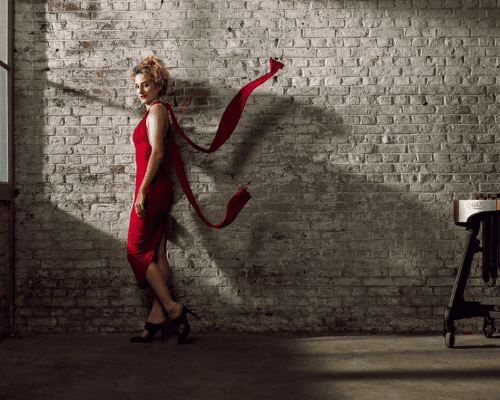
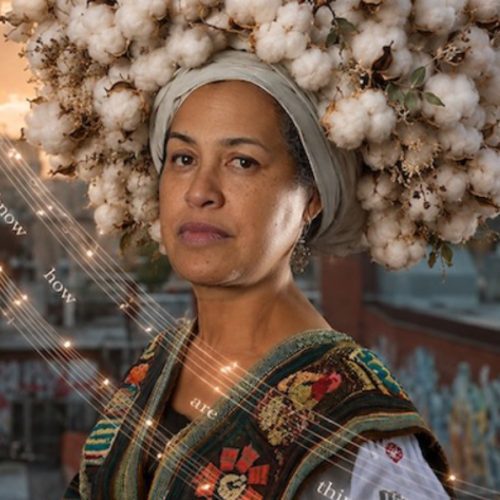
Photos by Spencer Kelly