Ligeti Festival at Salle Bourgie | OSM Ensemble and Quatuor Ligeti: A Composer with Multiple Musicalities

by Rédaction PAN M 360

One hundred years ago, the fascinating Hungarian composer György Ligeti was born. Although he passed away in 2006, his music has left an imposing mark on contemporary and contemporary music of the 20th and 21st centuries. Salle Bourgie and the Ligeti Quartet have invited a host of performers and composers to pay tribute to this diverse and moving architect of sound.

Ligeti’s music is difficult to define in a single work since it evolves not only through the formats in which he composed but also through the periods. So it was impossible to adequately represent and honor his work through a single concert. That’s why this festival is made up of three separate, independent concerts, to represent the different aspects of Ligeti’s work and present it to an audience that is often already conquered, but still curious about such unusual music.

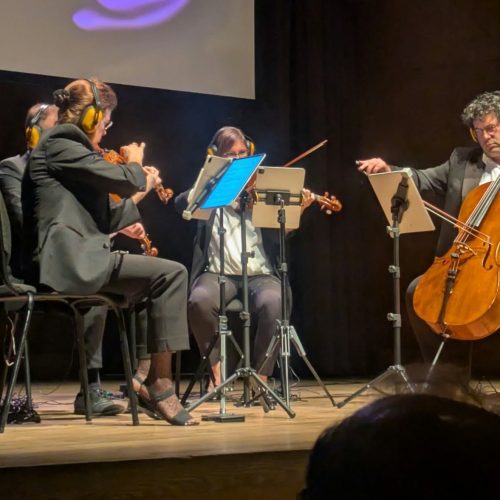
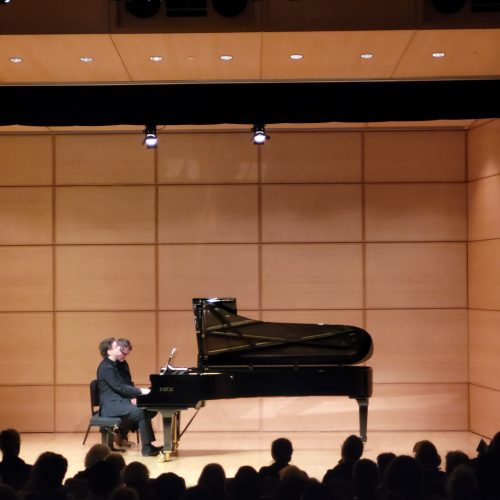
Saturday evening’s concert set the ball rolling, with talented guests either complementing the Ligeti Quartet with larger-scale works or offering their own interpretations of the composer’s works.

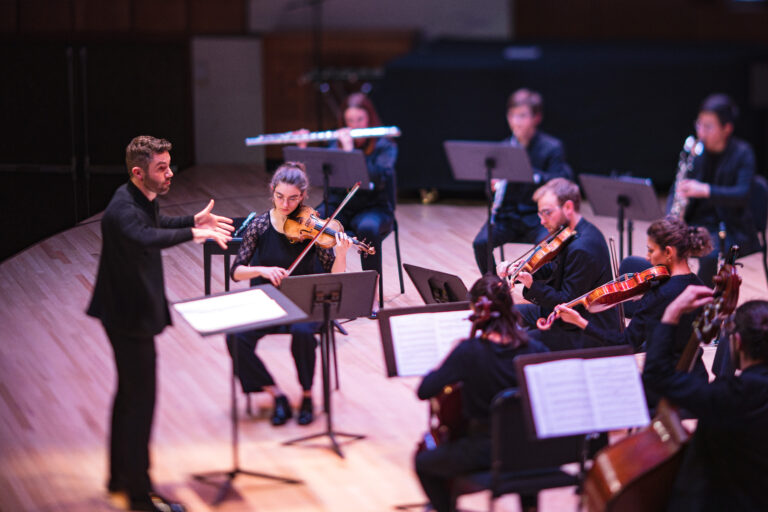
Conductor Jean-Michaël Lavoie and the Ensemble de l’Université de Montréal et de l’Université McGill made up of students from both music faculties, assisted the Quartet in Ramifications, a work dating from the late 1960s and firmly part of its more textured style now associated with suspense (thanks to Stanley Kubrick). The performance is exemplary, and the audience appreciates it.

An OSM delegation of wind instruments (brass and woodwinds) presented Kammerkonzert (Chamber Concerto, composed 1969-70), with an enlarged orchestra, and Six Bagatelles for Wind Quintet (1953). In both works, the marriage of timbres and textures was utterly delectable. The OSM musicians’ mastery of sound was more than adequate to pay tribute to such works.

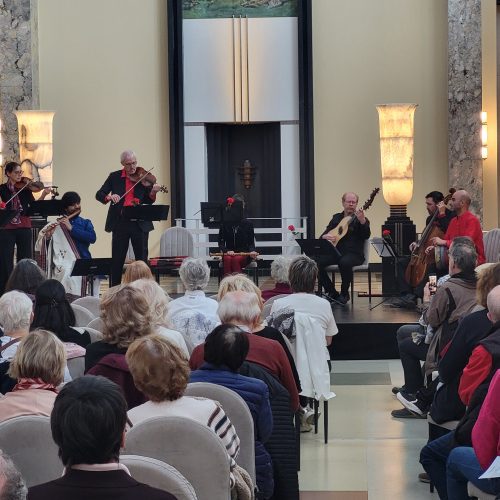
A health problem forced a change of program, and for the first time, we had a more intimate encounter with the Ligeti Quartet, who kindly offered to play works that were not on the program. As a result, we were able to hear a wider range of Ligeti’s compositional styles, with some fine contextualizations by the quartet members. A window onto a more melodic style, the musicians’ impromptu effort was much appreciated, and the works (extracts from the string repertoire) were magnificent.

Read about the second concert HERE!

Photo credit: Simon Laroche
Latest 360 Content

FMA 2026 | Amin Reihani: Making Music a Language of Peace

FMA 2026 | Amin Reihani: Making Music a Language of Peace

The Brooks – Live in Brazil

The Brooks – Live in Brazil

Meagan Milatz – Innig

Meagan Milatz – Innig

My Fierce Ignorant Step at Danse Danse: the seduction of emptiness  

My Fierce Ignorant Step at Danse Danse: the seduction of emptiness  

Can You Hear the Birds ? The art of the trio according to Gentiane MG

Can You Hear the Birds ? The art of the trio according to Gentiane MG

Damian Nisenson – Lento

Damian Nisenson – Lento

Kaoru Watanabe – The Arch

Kaoru Watanabe – The Arch

Molinari-Mondrian: an excellent meeting of eyes, ears, Quebec, and the Netherlands

Molinari-Mondrian: an excellent meeting of eyes, ears, Quebec, and the Netherlands

Judith Fliedl, invited by Le Vivier: I love producing sounds that are not “normal.”

Judith Fliedl, invited by Le Vivier: I love producing sounds that are not “normal.”

Charlotte Greve – Waterbodies

Charlotte Greve – Waterbodies

Ernesto Cervini Quartet – Water Pistols at Dawn

Ernesto Cervini Quartet – Water Pistols at Dawn

Sophianne Girard – Si vivante

Sophianne Girard – Si vivante

Tara Davidson’s Marni Project – The Reflection of an Echo

Tara Davidson’s Marni Project – The Reflection of an Echo

Susan Fancher/Ināra Zandmane – Strange Lights

Susan Fancher/Ināra Zandmane – Strange Lights

Guillaume Côté’s A Midsummer Night’s Dreams: the choreographer talks about his intimate relationship with music

Guillaume Côté’s A Midsummer Night’s Dreams: the choreographer talks about his intimate relationship with music

SQMC/Chapelle Historique du Bon Pasteur: Discovering Quebec’s contemporary music

SQMC/Chapelle Historique du Bon Pasteur: Discovering Quebec’s contemporary music

Akousma| Felix Deufel introduces us to the uncharted sonic richness of the Arctic

Akousma| Felix Deufel introduces us to the uncharted sonic richness of the Arctic

Akousma | Les Artefacts sonores de Roxanne Turcotte

Akousma | Les Artefacts sonores de Roxanne Turcotte

Akousma | The Audréanne Filion and Myriam Bleau Duo: Where Reality and the Virtual Merge

Akousma | The Audréanne Filion and Myriam Bleau Duo: Where Reality and the Virtual Merge

Akousma | Exzald S, la violence du calme

Akousma | Exzald S, la violence du calme

Mois du Créole 2026 | Richy Jay: Keeping Konpa and Zouk Alive in Montreal

Mois du Créole 2026 | Richy Jay: Keeping Konpa and Zouk Alive in Montreal

Akousma | Melanie Zhou: Shaping Sound, Expressing Emotion

Akousma | Melanie Zhou: Shaping Sound, Expressing Emotion

Akousma | Alex Brisson et l’exploration musicale du feedback

Akousma | Alex Brisson et l’exploration musicale du feedback

Caprice at the 9th Floor: a pleasant meeting between Baroque and Carnatic music

Caprice at the 9th Floor: a pleasant meeting between Baroque and Carnatic music

Subscribe to our newsletter

Inscription
Infolettre

"*" indicates required fields

Type of Suscribers