Additional Information
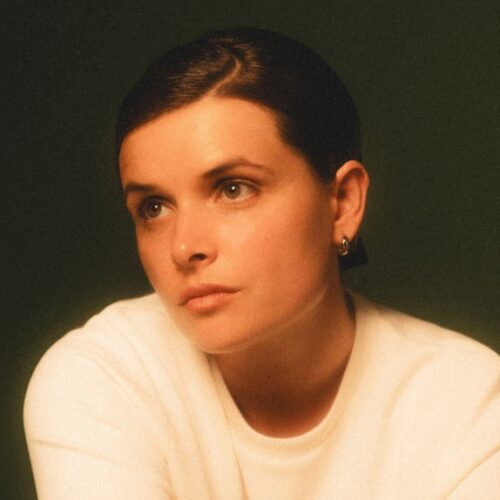
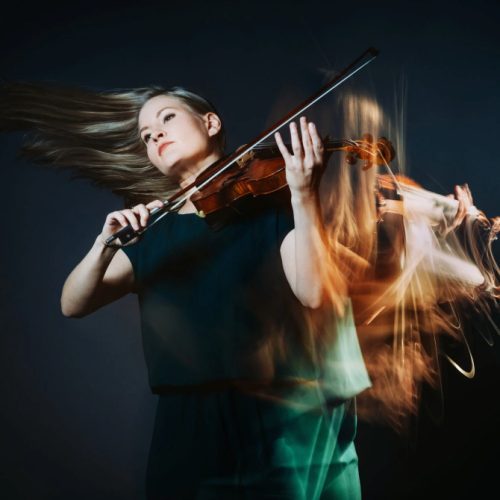
The first is a cellist, composer, and improviser who has helped premiere works by numerous composers, including Sarah Davachi, Geneviève Ackerman, Martin Arnold, and Simon Martin, while also making a name for herself in various contemporary music ensembles (No Hay Banda, Quatuor Mémoire, Ensemble Éclat) and on the experimental pop scene.
The second is a composer, digital artist, and performer whose work, for the past dozen years, has been part of the technological arts movement and explores the blurred boundary where the natural and the synthetic overlap. Through audiovisual performances, video works, and installations, she has performed at numerous festivals around the world.
A few days before their concert, Michel Rondeau sat down with them for PAN M 360.
PAN M 360: How did your collaboration begin?
Audréanne Filion : I’ve been following Myriam’s work for several years now. We met maybe five years ago. Myriam, I don’t know if you remember the year, but we first collaborated at the Belleville workshops. Myriam had contacted me to play the cello with her on one of her pieces, but after that, we also talked about possible interactions between the cello and electronics. We also worked together on another project with the Ensemble Éclat. Myriam then came up with the idea of creating a piece together—but to explore it further—and then to do a residency and really build something together.
Myriam Bleau : For my part, I had already started a series of collaborations with instrumentalists. I’m usually more into electronic music, but I did study composition a bit—I used to play guitar—and then I felt like going back to doing some collaborative work, so I did a project with other instrumentalists, Charlotte Layec [clarinetist] and Kalun (Leung) [trombonist].
I was interested in doing something with cellos, so I reached out to Audréanne, but at the same time, I’m always interested in collaborating with people who think a bit like me—and I do see some similarities in our musical tastes and artistic directions—so I always think it’s cool to exchange ideas, and I wanted to see if we could develop something together to take it a step further.
PAN M 360: What is the purpose of your research and your collaboration?
Audréanne :I’ve already done a bit of research on how to make my cello interact with electronics—with more ambient, drone-like textures and a little feedback—but it’s still a challenge for me to figure out how to play my cello and the electronics at the same time. For me, that’s really the heart of this research. And then Myriam is really good with sound, but also with programming. There’s a real exploration of the interaction between the cello and electronics—when the cello plays a certain thing, how the electronics will react. It’s also an aesthetic exploration of sounds.
Myriam : What I might add is that in most of my electronic music projects, what stands out is the idea of a spectrum between what’s somewhat pre-recorded and what’s actually performed live in real time. And that can go in so many different directions.
Also, since in contemporary music everything is written out, the idea is to follow the score pretty much “to the letter,” so there’s still a sense of something predetermined there as well. In electronic music, you can decide at what level within the spectrum you’re going to interact. Do I trigger sections that are pre-determined? Is it algorithmic? Is there an element of randomness that comes into play?
In exploring this kind of system—where there’s a bit of instability—and then deciding what that degree of instability would be, I was really drawn to developing something specifically with an instrument, a musician, where there’s also a truly immediate aspect to the material. Personally, it’s been a long time since I’ve played guitar on stage (laughs)—it’s no longer something I can do—so it was really about seeing how our two musical languages could interact.
We’ll see how the duo evolves, but I’m also really interested in developing a more long-term artistic language. Sometimes when you bring ideas together just for a project, something can develop over time, but I think there’s also something interesting about just letting ideas evolve over time, and then revisiting those same ideas specifically to see how they might evolve.
PAN M 360: Have you made any discoveries or encountered any particular difficulties in your research specifically related to combining the wonderful world of the virtual with that of the real?
Myriam :I think it’s always that sense of unpredictability—there’s always a slightly unstable element to it. I use SuperCollider for this project—it’s for attack detection or frequency detection—so there’s always a degree of instability depending on the venue we’re performing in. There’s going to be more or less feedback entering the system, so it’s like there are a lot of elements you have to learn to work with in a certain way. That’s always difficult, but I think that’s kind of the challenge we set for ourselves—it’s really about exploring.
Also, Audréanne is a really good improviser. I know that no matter what happens, we’ll be able to work around it and still find a way to put on a show that’ll be interesting, because that’s the whole point—it’s really about being attentive.
Audréanne : What we’re discovering is the interaction—it’s our two worlds and how they blend together. No matter what happens or what we do, it’s music.
We set up a kind of playground for ourselves, we explore connections and sounds that are possible together, and in the end, we always end up playing them in the moment. We discover our shared world.
PAN M 360: Does the time it takes you to react to certain things force you to improvise often, and how much of your live performances involve improvisation?
Myriam : We’re setting up sections where we still have a lot of freedom. For now, nothing is set in stone, but what happens within each section is sort of like a system that responds to specific parameters.
For example, in a section, if there’s something more percussive—something that really responds to Audréanne’s attacks—I, for my part, can react in a really dynamic way. As Audréanne said, each section is kind of like a little playground, and after that, we figure out how to transition from one section to the next.
Audréanne : We’ve worked on sections, types of sounds, and types of interactions, and now I have an idea of what sound I’m going to create that will work well with that particular section. There is a sort of structure in place, but exactly what I’m going to play or what’s going to happen—that’s improvised.
So, it’s not really written down, but at the same time, we both know what works best. That’s kind of the idea behind our exploration—figuring out together what atmosphere we want to create in each section. We know what kind of material to work with, but exactly how it’s going to unfold—that’s always going to be different.
PAN M 360: At Friday’s concert, is this the first time you’ve performed the piece you’re presenting?
Myriam : This is absolutely the first time we’re going to present it. It’s not the final version either. I think we see it more as a work in progress. It’s just a sort of snapshot in time of where we are right now. It’s still a project that we plan to develop further.
PAN M 360: What do you have in store for us on Friday?
Audréanne Filion : We have so many great sounds! I think we’ve done a good job. There are some really interesting things happening in the interplay between the cello and the electronics. Myriam was talking about a more rhythmic section where there’s a real response to the cello’s attacks—it’s a blast to play.
This is really just a starting point for our collaboration. I can’t wait to see how we’ll feel after performing it, and what it will bring to this piece going forward—how we’ll continue to develop things.
PAN M 360 : Myriam ?
Myriam : What I find really interesting about this project is trying to find systems of interaction that sound truly cohesive. That doesn’t mean we’ll always succeed—we still allow ourselves some freedom—but there’s this initial desire to really create sections that sound as if everything is working together, as if it were a single organism. Whether that’s through extensive real-time signal processing, the cello, real-time sampling, or a variety of analysis techniques—all of which ultimately ensure that every sound is, to some extent, controlled by the instrumental gesture.
The appeal of this exercise—at least for me—is seeing how we can create something that combines electronics and the cello without it sounding like two completely different worlds layered on top of each other. The point is that the cello isn’t just there to embellish, say, an electroacoustic framework that’s already in place, but rather that it truly works within both elements.
Plus, it adds another challenge: creating spatialization in real time. If, for example, I want to use Audréanne’s position in space so that certain elements seem to come from her and then travel through space—that sort of thing.
PAN M 360: To wrap up, what are your plans? Do you have any other concerts scheduled after the one at Akousma?
Audréanne : For now, we don’t have anything planned. But stay tuned…
Myriam : We’d like to develop an audiovisual program based on this project and then, eventually, go on tour with it. But since the project is really just getting started, we haven’t gotten to the point of looking for distribution yet. We’d also like to work on an album project based on this, but that really depends on a lot of factors. Still, it’s something we have in the works.