Additional Information
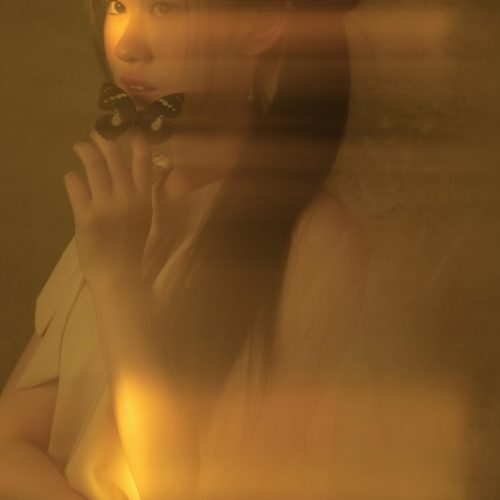
Continuing its programming that showcases the next generation of sound artists, Akousma will also present on the 21st of October the work of the young Canadian composer Mélanie Zhou. Currently a undergraduate student at McGill University’s Schulich School of Music, her piece Inter Mentes: A Lament is among the winning works of the 2026 Acousmatic Music Composition Competition petites formes organized as part of a cultural exchange between Taiwan, Japan, Canada, and France. In an interview with Alexandre Villemaire of PAN M 360, Melanie Zhou talks about her piece, as well as her background and musical aesthetic.
PAN M 360: Tell us a bit about your background. What inspired you to go and study music?
Melanie Zhou: I began my musical journey at the age of four, when I started studying classical piano. I would say that my path toward professional and academic composition, particularly contemporary composition, really began when I moved to Montreal to attend high school.
That was when I met my first composition teacher. He introduced me to the practical side of composition, including basic orchestration techniques, contemporary music, and allowed me to experiment with musical ideas. This experience sparked my interest in exploring different ways of shaping sound and communicating ideas beyond simply listening to mainstream pop music.
PAN M 360: What led you to choose electroacoustic music specifically as a medium of artistic expression?
Melanie Zhou: At the very beginning, I was more focused on classical music, particularly ensemble writing and orchestration. After developing those skills during my first few years of study, I was introduced to fixed-media composition and electronic music. I immediately became fascinated by it. I found it incredibly interesting because it offered greater flexibility and allowed me to focus more directly on expression than what is sometimes possible with traditional classical instruments.
Taking Professor Philippe Leroux’s class was particularly influential. He encouraged us to listen beyond the familiar timbres of classical instruments and to consider everyday objects, even small things we might find in the kitchen, as potential sound sources.
Instead of limiting ourselves to the familiar sounds of strings or percussion, we were encouraged to explore the uniqueness of different timbres and to carry the emotional ideas other than what is usually expect from with “mainstream” music.
I think that is one of the central ideas behind experimental and contemporary music.
PAN M 360: How would you describe your music and your compositional style?
Melanie Zhou: I don’t really work on one fixed style. I’m more interested in exploring different musical languages and finding the one that best serves each subject or idea I want to explore.
I’m also in experimenting with different materials and approaches. My work initially leaned more toward tonal writing, but I’m now increasingly exploring experimental music, electronics, and other inventions. Ultimately, I want to find the approach that best suits the subject itself and allows me to express what I hope to communicate to the audience at that particular moment.
PAN M 360: You really focus on the feeling you want to convey. Depending on what you feel would best represent a particular subject, you choose the musical style that suits it.
Melanie Zhou: Exactly.
PAN M 360: Tell us a bit about the award-winning piece you’ll be presenting as part of Akousma.
Melanie Zhou: I was quite surprised and shocked when I first learned that my work had received recognition by the concours petites formes. I received an email from Monsieur [Louis] Dufort and Mr. Réjean [Beaucage] inviting me to present the piece at Akousma.
The initial inspiration for the work came from Bert Meier’s poem A Lament. I find its simplicity really interesting. It consists of only three very short stanzas, yet I found it very insightful I have to say.
Around the same time, my great-grandfather passed away quite suddenly. At first, I hadn’t intended to establish such a personal connection between the poem and my own experience. However, as I began composing and revising the music, I gradually realized that the poem and my personal experience gradually became connected.
That connection has since become a very important part of the work.
PAN M 360: How is the piece structured?
Melanie Zhou: The first section evokes absence and mourning, as well as a search for reasons or meaning. There are also moments that suggest the language and emotional character of a lament.
The second section explores memories of childhood, with themes of innocence and vulnerability, as well as the image of the moon. I translated these ideas into very high-register sounds, with greater resonance and bell-like motifs.
The final section provides a contrast while also bringing the piece toward its conclusion. It explores the cycles of life, loss, and the passage of time. The music gradually fades, leaving traces of sound that reflect the chaotic nature of the mind.
Rather than ending with a clear sense of closure or a conventional cadence, the piece gradually dissolves, leaving the listener with a lingering impression.
PAN M 360: Are you using only synthesized sounds created electronically, recordings of acoustic instruments, or a combination of both? What can the audience expect to hear?
Melanie Zhou: I would say that about 80 percent of the piece is made from sounds I recorded myself in the McGill studio.
It can be sounds produced by a metal cooking pans, the scratching sounds made on a paper box and even the sound of a coin being flipped or dropped.
I then edited and processed these recordings in different ways, combining and balancing them to create new timbres rather than relying exclusively on synthesizers or pre-existing sounds. That said, I also use synthesizers in the piece. So, ultimately, it’s a blend of recorded sounds and electronic synthesis, with a balance between the real recorded sound and the synthesizers.
PAN M 360: What does receiving this award mean to you? What does it represent at this stage of your artistic journey?
Melanie Zhou: For me, this is really a starting point, especially since I’m still an undergraduate student.
I’m very excited and grateful to have this recognition. What matters most to me is the sense of connection that the piece can create between me, the jury, and the audiences. Knowing that people can connect personally with the emotions, I wanted to express through the music is particularly meaningful. I find that kind of connection even more valuable.
I’m also happy to have the opportunity to share my work with the public and have the opportunity to learn from other artists. It’s inspiring to discover the fantastic ideas they explore through their work, the subjects they choose, and the ways they translate those ideas into music.
PAN M 360: What are your plans for the future? Are there any projects you’d like to develop or bring to life?
Melanie Zhou: I’m currently starting a project that combines electronics with the alto saxophone and the erhu, a traditional Chinese instrument.
It’s a challenging project because it requires me to explore instruments and musical possibilities that I’m not yet very familiar with. I’m interested in discovering the uniqueness in the characteristics and timbres of each of these instruments.
I also hope to spend more time listening to and learning from my professors, classmates, friends, and other artists in the field to develop my own artistic language. More generally, I’d like to explore new musical approaches and pursue more collaborations with performers and artists working in different disciplines.
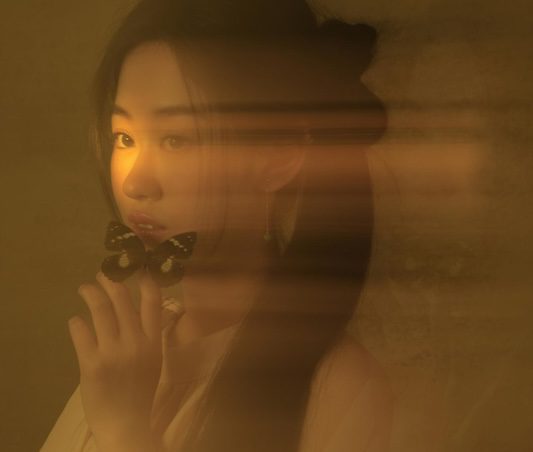
photo : Meng Meng