Additional Information
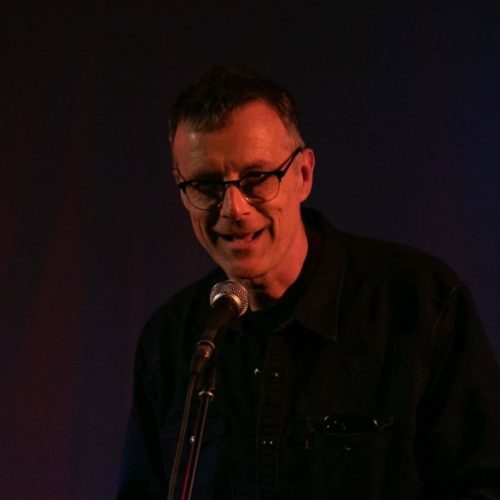
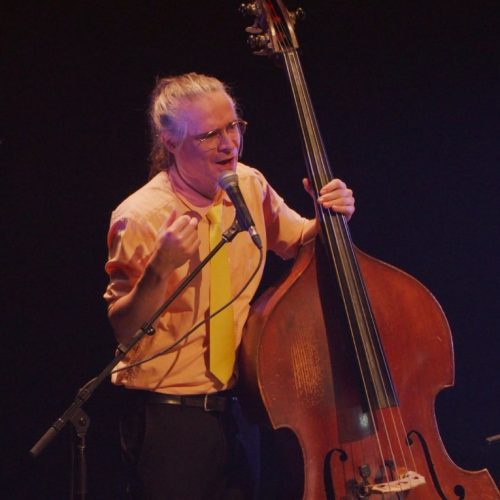
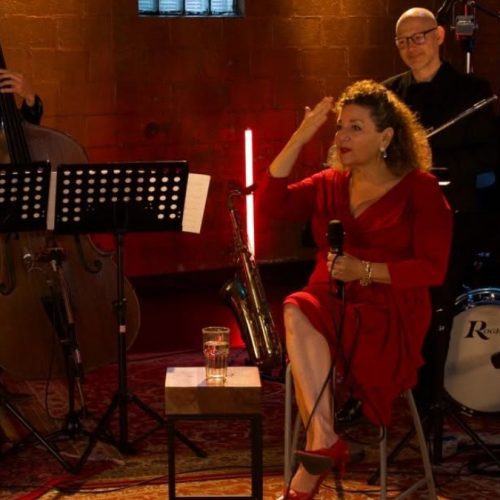
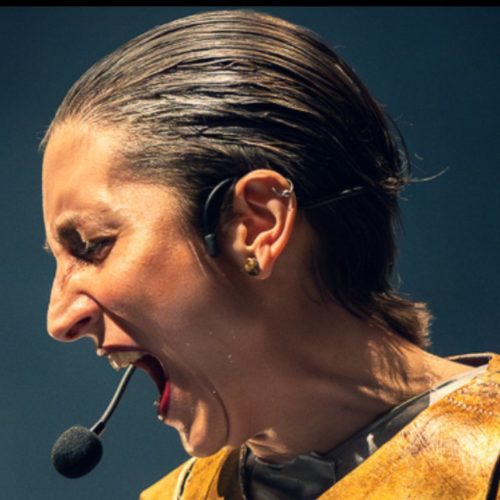
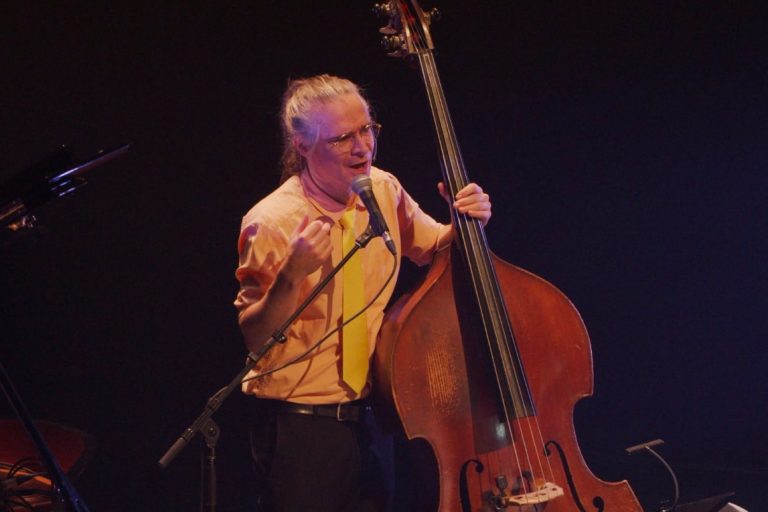
Through a series of recording and concert projects, double bassist Hugo Blouin continues his exploration of the musicality derived from spoken language, following in the footsteps of René Lussier (Le Trésor de la Langue) and Steve Reich (Different Trains) at the end of the 1980s. Four decades later, after exploring politics, corruption, and even hockey, he turns to the culinary world. A collection of recipes transformed into music, as well as other conversation topics from an evening among friends: discussions about art, childhood memories, and other anecdotes. These words were collected during interviews, transcribed, and then woven into the compositional structures. Led by Hugo Blouin on double bass, Le Buffet brings together John Hollenbeck on drums, Eugénie Jobin on vocals, Aurélien Tomasi on wind instruments, and Yannick Anctil on piano. Following his enthusiastic performance at the Québec Musiques Parallèles festival on October 3rd in Montreal, and on October 2nd in Saguenay, we wanted to delve into the secrets of creating this Buffet of “liberated” words with him, which is also an exciting album released in December 2025 by Ambiances magnétiques.
PanM360: Le buffet, it is based on recipes that you asked people close to you to share. Why?
Hugo Blouin: After two albums for the Charbonneau Commission (an inquiry into political corruption in Quebec) and then a hockey album, I felt like I had spent quite a bit of time in the archives. It’s a bit tedious to search through hours of material for the right clip, the part that speaks to me, and that is inspiring to make music from, even if it’s fascinating. In the meantime, I’m not composing. Then, anyway, I wanted to explore the material of recorded voice again, but I didn’t have a subject or archives that sparked my interest at hand.
I then thought to myself that I would make my own material. Meet people, control the parameters.
PanM360: How did you proceed?
Hugo Blouin: I started by sending all sorts of questions to people. I approached several topics, with the aim of seeing what would allow them to open up the most. In the end, the topic that worked best was food! It was a gateway into people’s kitchens, a place where there was no hesitation, where humour and spontaneity easily emerged. I found the material interesting, and then I focused my questions on it for the other people I interviewed.
That’s the heart of the album, but around that, there are also a whole bunch of childhood memories, anecdotes, reflections on music and art… I call it table jazz, because these are topics we would discuss around a table. But the most important thing in my approach is the storytelling. I’m not interested in reading a recipe and turning it into a song. I wanted people to tell it to me.
PanM360: Is the concert version very different from the album version?
Hugo Blouin: In the show, there is a whole narration, interventions between the songs that are intended to give cues, keys to the audience. What is not on the album. It’s a reflection I started with Charbonneau (where the subject was pretty out there for most people, singing about the Charbonneau commission, you know). Talking with the public, whether they are initiated or not, the clearer the process, the more people enjoy it. If they understand the process, if they can get interested in it, they have more fun. The show takes care of that.
PanM360: What touched you the most in the approach?
Hugo Blouin: It’s the emotion that resides in people when they share their stories. It greatly influences the music that will come out of it. It’s one of the things I was looking for, for people to be comfortable enough to convey their emotions, those that go with their story. On the album, there are two songs that are reworks of my cousin Jean’s. He was super enthusiastic about sharing his recipes. He had prepared his speech. And that enthusiasm (what he had prepared was good), it carries over into the two songs which are quite catchy, quite groovy.
The fact that he was groovy himself really helped. Because, in the end, there’s no magic in the process. If we re-record our interview, for example, and then go through all the notes, it might turn out that there’s no song to be made from it. It’s something I couldn’t appreciate as much when I was working on the archives. There, you have the archive, and that’s it.
PanM360: There’s something more scripted than pure jazz in there. Where is the possible improvisation zone? Is it confined? How do you organise it?
Hugo Blouin: It depends on the songs. There is a constraint with writing a song, which is that if we want to stay interesting, there are mechanisms to help us stay interesting.
For example, verses and choruses are formal markers. It’s something I willingly accept using. Finding a refrain in a narrative, whereas when we speak, there is necessarily no refrain, is a tactic. It certainly adds a kind of formal heaviness, but it’s something that already exists in traditional jazz. The great standards are like that. Afterwards, indeed, it remains jazz, in the sense that in most pieces, the accompaniment is improvised, except for certain passages where it is scripted.
The particularity of this album compared to the previous one is that there is more room for free improvisation, or let’s say with fewer constraints. There are influences of free and DIY improv. On the album, there is a masterful balloon solo by Émilie Fortin over serious jazz.
PanM360: It’s been a while since you’ve been working with this concept. Do you feel that the field is still open for many other projects? Do you sometimes feel like doing something else?
Hugo Blouin: No, it’s a curse, artistic commitment. The only guarantee we have when we finish a project is that we will start another one. So, it continues. I am writing for the next project, in the same aesthetic. It’s now been four albums in less than ten years. It’s the music I have in my head. And there are all sorts of ideas for the next albums. I don’t know yet to what extent it will be a mishmash or a concept. Right now, it’s a mishmash, I can tell you that.
PanM360: At what point in your life did the realisation happen to make this music, specifically?
Hugo Blouin: Around early 2010. At the time, I was working on a sound art project, I was in the Magdalen Islands, and I was collecting field recordings. I did a vox pop, recorded everyone, and then made a song with it. And at the same time, I was really into René Lussier’s The Treasure of the Language, a fundamental album.
PanM360: Who else do you find inspiring in this genre?
Hugo Blouin: There are plenty of other artists doing amazing things with the musicality of the language, including jazz musicians. Dan Weiss on drums, Jason Moran on piano, Tin Men & the Telephone. MonoNeon too, then Publio Delgado.
PanM360: But you’re the one who goes the furthest in the process, right?
Hugo Blouin: I don’t know, but it’s certain that using lyrics that are not meant to be sung and transforming them like this is not common. Let’s say that I’m mainly interested in making sure it’s musical. The dimension of a tour de force, or doing something impossible, interests me less now. I’m looking for ways to make it fit into a truly musical discourse.