Additional Information
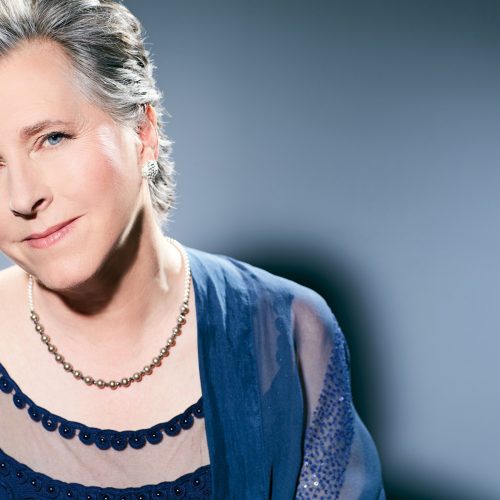
On July 28, the famous Italian pianist Saskia Giorgini will play at the Church of St. Melanie as part of the Festival de Lanaudière. Also very active in the recording and pedagogical fields, she is one of the most sought-after young performers on the international scene. PAN M 360 reached her to talk about the concert and her projects.
PAN M 360: Saskia, is this your first time in Canada? How do you feel about playing at the Lanaudière Festival, one of the most important festivals in the whole country?
SG: For me this is the second time in Canada! The first was some time ago, when at 19 I played a concert with the defunct CBC orchestra in Vancouver. As for the Lanaudière Festival, it is a reality much loved by all the colleagues who have had the opportunity to play there. For my part, therefore, I am very happy and proud to be able to participate, and I take this opportunity to thank the organization for the very welcome invitation.
PAN M 360: The program includes Liszt and Debussy, two composers who have brought great innovation to the piano world, especially in terms of timbre and atmosphere. Can you tell us more about the relationship that you think exists between these two composers?
SG: This program derives from the repertoire that I have tackled specifically in recent years and which has also been the subject of a series of recording projects. Having said that, I find that between the two composers there is more of a contrast. The former writes music characterized by countless sound layers, in which colours are predominant, which requires enormous precision in the study. The second, on the other hand, composes a much more romantically expressive music, in a certain way a direct type of expressivity, where there can be a certain space for instinct.
PAN M 360: In the program that will be played, milestones of the piano repertoire will be accompanied by a little-performed piece such as Debussy’s Tarantelle Styrienne. Can you tell us more about this choice?
SG: I have always been very careful to propose programs in which I can combine standard works with lesser-known ones, and this for the pleasure of both myself and the public. I must say that this piece by Debussy, which is very pleasant for me to play, represents a moment of relaxation and lightness within a program that offers a certain musical density and challenge, including the Liszt’s Mephisto Walzer and the Debussy’s L’Isle Joyeuse, two references of piano virtuosity.
PAN M 360: You are one of the most sought-after pianists of your generation. How do you think your Italian cultural heritage influences you from an artistic point of view?
SG: I believe that my culture of origin gives me an advantage in approaching melody with a certain naturalness, thanks to the operatic heritage of which Italy has always been a great representative. The way of dealing with melody in Italian opera is unique and being exposed to it since childhood allows me to approach the piano cantabile with a certain awareness. It must also be said that some of Liszt’s works, such as Petrarch’s Sonnets, sound and look as if they were written specifically for the human voice and being able to play this music is an enormous privilege for me, as well as a way to express my cultural heritage linked to the great Italian tradition.
PAN M 360: In addition to being a renowned performer, you are also a pedagogue at the University of Linz in Austria, a prestigious institution in Europe. What can you tell us about the relationship between pedagogy and interpretation?
SG: I find that they are both research activities. When I teach, I show all the possibilities to work on a passage. When I play, however, I look for solutions that work for me, but sometimes there are fewer questions behind them. Yet, students want explanations about why and how something is proposed to them, and this is a precious opportunity to learn in turn. And then, of course, there is a complementarity: on the one hand, being an active pianist allows me to teach the pieces I know with great precision, on the other hand, being a teacher allows me to learn new pieces that I have never faced personally. All this represents a great personal and professional enrichment for me!
PAN M 360: Tell us more about your present and future projects…
SG: As far as recordings are concerned, my new CD for Pentatone will be released in January. It is dedicated to Liszt and contains some lesser-known pieces. I also have some other recording ideas, maybe Debussy and Szymanowsky, but for now I can’t tell much more about it. As for the concerts, this fall I will play at Wigmore Hall and I will be back to Canada, this time in Vancouver. Then, next year, I will be in residence at the Auditori in Barcelona with a rather varied repertoire, including Mozart, Liszt and Strauss.
photo : Christine Rechling