Additional Information
PAN M 360: What can you tell us about the 24 competitors who have arrived in Montreal for this competition?
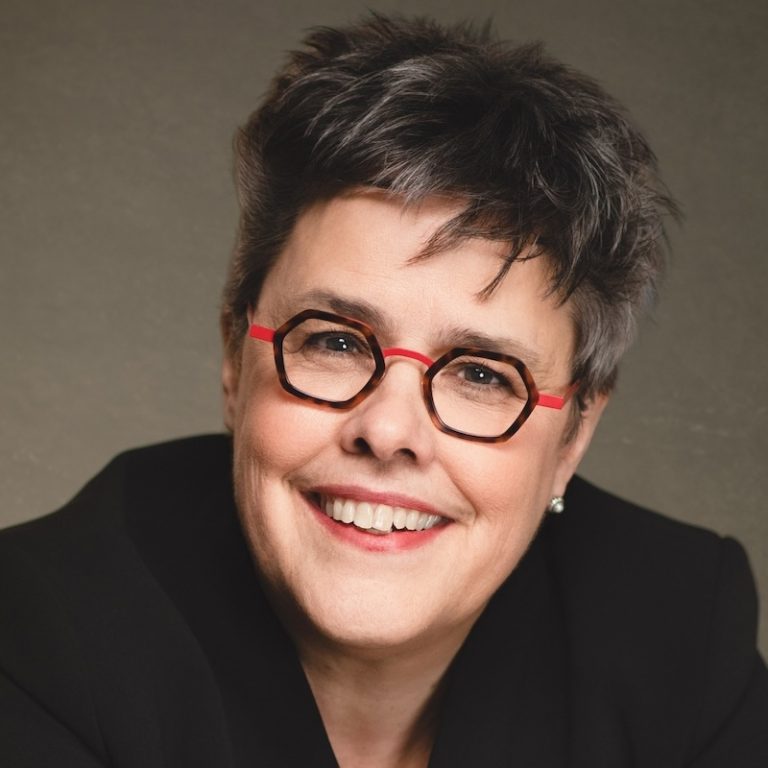
Chantal Poulin :As you know, we work with three disciplines: piano, violin, and voice. Each group has a distinct profile as a competitor. When we work with violin, the age range is much broader. This year, for example, we have two 17-year-olds and others who are in their thirties. But they all have one thing in common: they all come from leading music schools around the world. These are people who stand out. Today, the music world is so competitive that if a young artist from the new generation wants to make it, they have no choice but to be excellent. The 24 contestants were selected from 250 applicants and come from 17 different countries. We’re quite proud of that. In a world where borders are often becoming increasingly closed off, being able to create such a gathering through music is exceptional.
Yes, it’s a competition, but it’s also a friendly gathering that goes beyond that to allow music and humanity to triumph through it. The competition is, above all, a wonderful human adventure. When you see them arrive with all their baggage and their personal backgrounds, it’s a truly enriching experience.
PAN M 360: What are the new features—or elements that may be new—that you wanted to introduce this year in this edition of Violon 2026?
Chantal Poulin : Some things remain constant. We have a winning formula that we are committed to maintaining and replicating, and which has set us apart as a Montreal-based competition.
We also keep a close eye on developments in the field because, above all, we want to ensure that the competitors we select as winners are truly ready for an international career. We always strive to provide jury members with all the necessary experience to fully evaluate the artist. Each stage of the competition allows jury members to examine and assess certain complementary aspects. Of course, in the semifinals, we always feature the great violin sonatas.
But what’s new this year is that we’ve added two rounds to the finals. We’ll have five competitors in the first round, five finalists in the first round of the finals, and three grand finalists who will perform the following day, June 4, at the Maison symphonique. All of this is to allow the jury members to hear the strongest performers in the group in two types of concertos.
Another standout feature of the competition is the opportunity to work with jury chairs who are experts in the field.
This year, Lucie Robert’s involvement alongside my colleague, Artistic Director Shira Gilbert, allowed us to reevaluate how we select, listen to, and judge the 24 artists coming to Montreal. This applied both to the works that were commissioned and to the selection of the program.
Otherwise, there’s always this desire to really put down roots in Montreal. We’re very proud of our international reach, which is undoubtedly recognized in the music world, but we’re also very proud when our Montreal competition can establish a strong foothold in the Montreal ecosystem. That’s why it’s so important for us to have these connections with institutions and other classical music presenters. The Emerging Artists jury is also back.
PAN M 360: The Mini Violini are back this year. What is this category of the competition, and who is it for?
Chantal Poulin : This is an activity that complements the competition but is not part of it. The young people participating are not competing against one another. That’s not what we want. It’s an opportunity for the public to see these young people at the beginning of their training and to witness their potential. This year, they will take turns performing excerpts from Vivaldi’s Four Seasons. These are young people we are bound to see again. There is an Australian, two Canadians, and a young woman with dual American and South Korean citizenship. All are studying at prestigious music schools.
We also have, among the competitors in the 2026 edition of the Competition, Hannah Tam, who is an alumna of the 2017 Mini Violini.
PAN M 360: What does a typical day look like for a contestant in the Montreal International Music Competition?
Chantal Poulin : It’s very interesting, because playing the violin is, first and foremost, a physical endeavor. The young people who come to us are aware of this physical demand and usually take good care of their bodies. Of course, there are exceptions to every rule. The students often eat a healthy breakfast, go outside to get some fresh air, some do yoga, some go running, some meditate, but they all have a moment when they retreat into their own space to take care of themselves physically.
Some of them practice a lot, while others have already practiced extensively before arriving; when they get here, they’re pretty much settled in. They’ll go over things a bit, review certain passages, and work with the official pianist assigned to them, but for most of them, the work is already done before they arrive, so they won’t be spending as much time rehearsing. And they’ll also be careful not to get injured in the final hours. It would be a shame to injure a hand after working so hard. So it’s a bit of a mix of all that, which comes down above all to discipline and rigor, but also has a lot to do with each person’s personality. And then there’s the level of stress, and how each person handles it. It’s beautiful to see how everyone embraces that necessary stress in performance, but also how they manage it and bring it under control.
PAN M 360: What would you say to someone who saw the ads for this contest to convince them to come?
Chantal Poulin : One thing is certain: this challenge is shared by all classical music organizations in Montreal. Whether we’re talking to our colleagues and friends at Salle Bourgie or discussing it with the Montreal Symphony Orchestra, which is our official orchestra, it takes a tremendous amount of work to get people into the concert hall. But with conviction and determination, we’re getting there. With the competition, there’s an added challenge: people get the impression that it might be a bit elitist, but on the contrary, that’s not the case at all.
Attending a classical music competition is often more accessible than a more formal concert, since you get to see different musicians—each with their own unique style—take the stage one after another to showcase their best. Whether you’re a professionally trained musician or have no musical background at all, the fact remains that by the end of each session, everyone has an opinion. People will say, “For me, tonight, the second contestant really moved me.” ” Or others will say: “As for me, I didn’t like the third contestant’s repertoire.” One thing is certain: everyone can be moved by music. It’s a bit like the Olympics! I don’t usually sit in the stands to watch the runners around a track. But when the 100-meter dash comes around every four years, I like to turn on the TV for those 10 seconds to watch these amazing athletes race against each other. It’s spectacular, but why is it so spectacular? It’s because they’re driven by each other. That’s kind of what the Competition is all about.
Announcement of the finalists
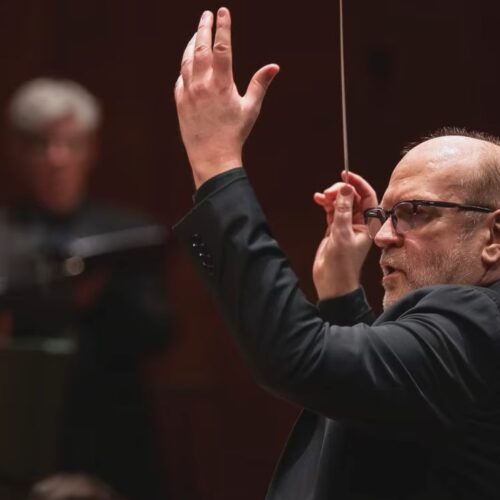
Of the 24 competitors who lined up at the start of last week, only five remain! Following a highly competitive semifinal that ran late into the evening on Sunday, May 31, at the Salle Bourgie, the international jury, chaired by violinist Lucie Robert, advanced Laurel Gagnon (United States), Koshiro Takeuchi (Japan), Sara Watanabe (Japan), Aozhe Zhang (China), and Bade Dastan (Belgium/Turkey) to the penultimate stage of the finals. These five violinists will perform on June 3 at the Maison symphonique with the Montreal Symphony Orchestra, where they will each perform a Mozart concerto. The Montreal orchestra will be conducted for the occasion by Austrian conductor Sascha Goetzel. Following this round, three will be selected to perform a major concerto from the violin repertoire the following day, June 4, for the grand finale.
To view the finalists’ program, watch the performances of the competitors in the Violin 2026 edition, or purchase tickets for the final rounds, please visit the competition’s website.
Photo Credits: Tam Photography