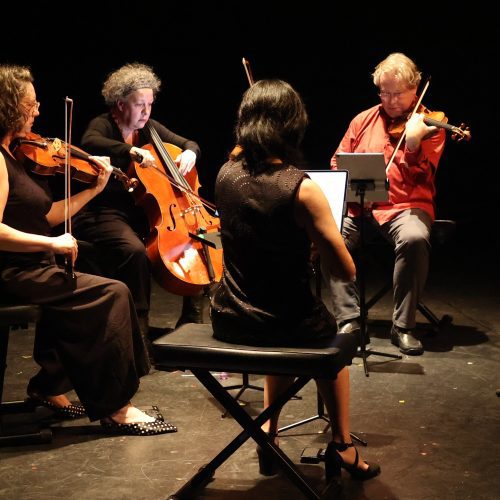
Female creation is abundant and wide-ranging, if the three new operas presented (in part) at Salle Bourgie last night are anything to go by. Together, these three operas cover a broad spectrum of contemporary and scholarly musical language. Indeed, the evening’s premiere, entitled Fables et légendes – Opéra d’aujourd’hui (Tales and Legends – Opera of Today) was perfectly balanced between one rigorously atonal work, another fundamentally melodic and consonant, and a third somewhere in between. Each opera is the fruit of a collaboration between two women, a composer and a librettist. All three works were partially staged, as Bourgie Hall (and probably also the organizers’ financial means) did not allow for complete scenography.
FIND OUT MORE ABOUT THE PROJECT IN AN INTERVIEW WITH KRISTIN HOFF OF 3 FEMMES MUSIC
The duo of composer Analia Llugdar and librettist Emné Nasereddine had the honor of launching the evening. Je suis fille de la fille (I am daughter of the daughter) is a musical setting of excerpts from the poetry book La danse du figuier, winner of the Prix Émile-Nelligan in 2021. Allow me to quote a comment from the jury that awarded the prize to Emné Nasereddine, about La danse du figuier :
In a meditation on her origins, the poet Nasereddine evokes three women: her grandmother, Téta, her mother, Fadwa, and her daughter, Emné. After her mother’s death, Emné makes a pithy observation: “the women of my country die before they can write”. This terrible observation undoubtedly motivated the poet to disobey her grandmother, who urged her to find a husband. By choosing instead to become a writer, Nasereddine faced a number of challenges. Once in Montreal, the poet moved into a territory where there were no “familiar scents”. It is poetry that will enable her to forge her own path in her host country, to sow the scents of Lebanon.
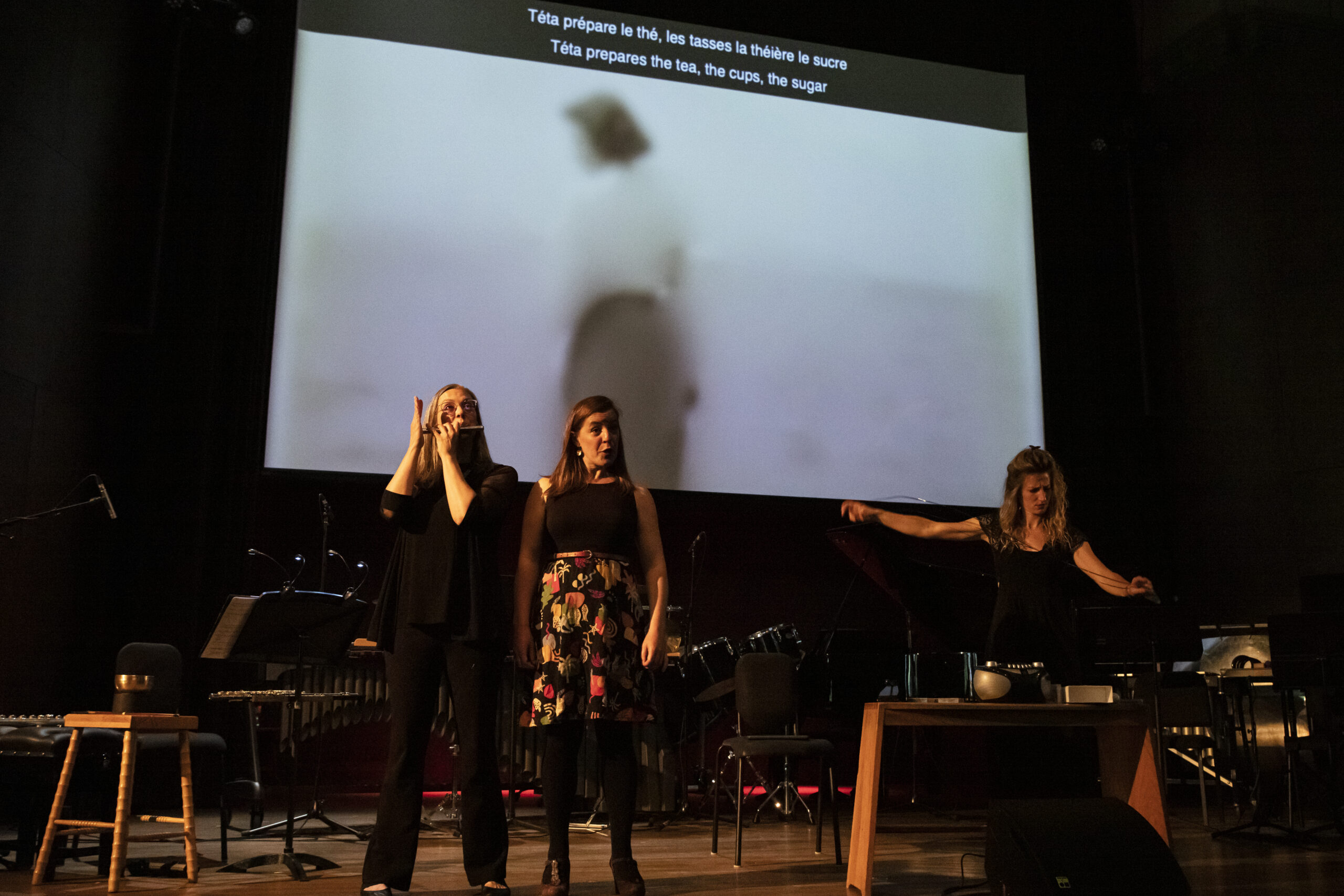
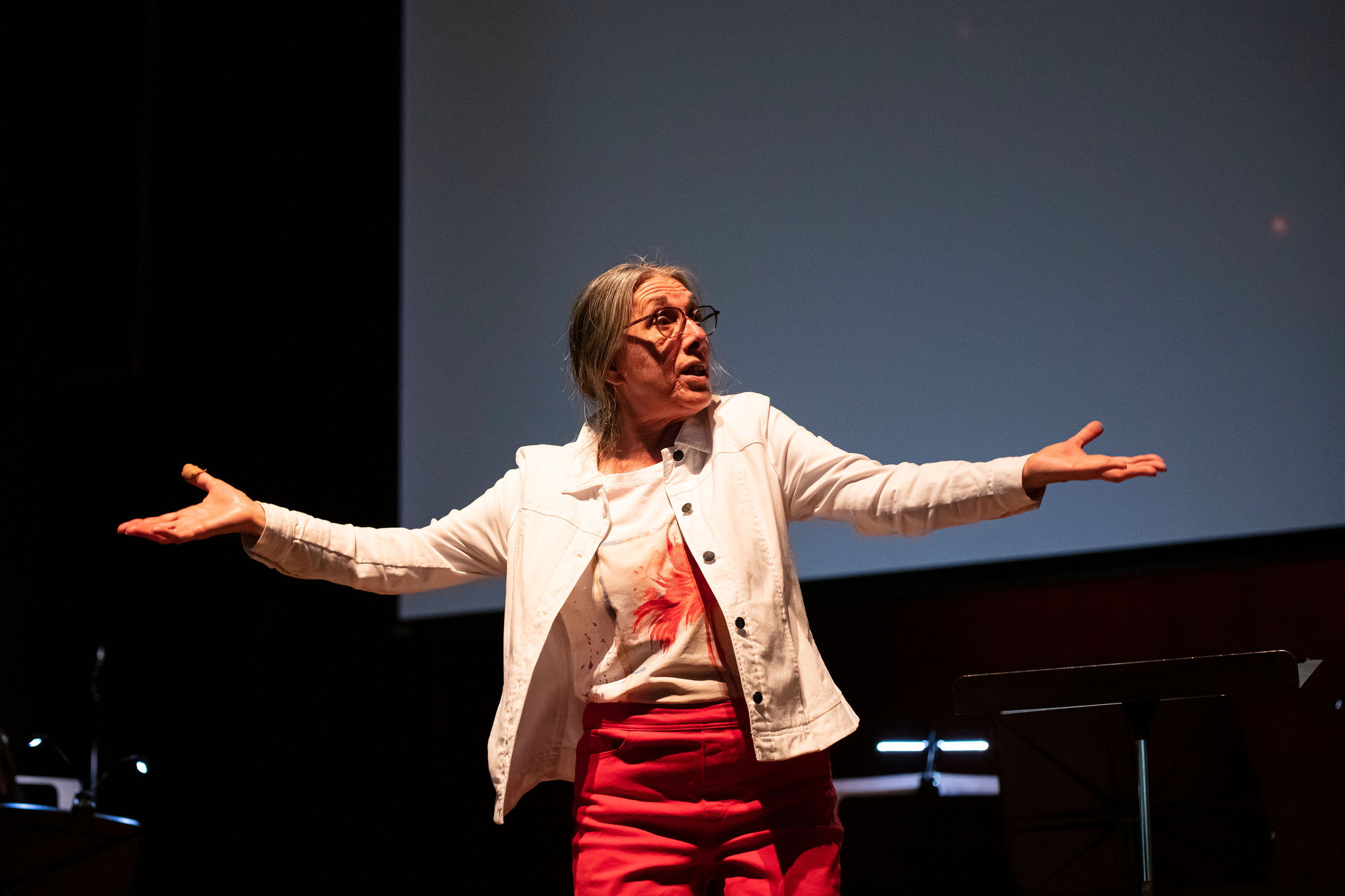
Llugdar’s music is not intended to describe any particular ethnocultural background. It is rigorously atonal, made up of timbral splits and fragmented rhythms. Accompanied only by a flute (Josée Poirier) and percussion (Krystina Marcoux), soprano Andréanne Brisson Paquin gave a well-embodied and, above all, vocally impressive performance. Llugdar’s score is demanding : abruptly interrupted lyrical flights, varied onomatopoeia and cooing need to be projected powerfully. One passage particularly struck me: the one in which the main character seems to return to her memory to evoke her grandmother, Téta, who is preparing the tea. The percussive sounds on the words tea, teapot, Téta, cup, etc. are amusing and remarkably well projected by Andréanne. A parenthesis (ostentatiously defined in and out of the piece by unusually violent attacks from the percussion – Krystina Marcoux, excellent) that felt good in a rather harsh total product. As mentioned above, this was an extract of some twenty minutes from a total work that must be around forty minutes long. No date has been set for the complete premiere.
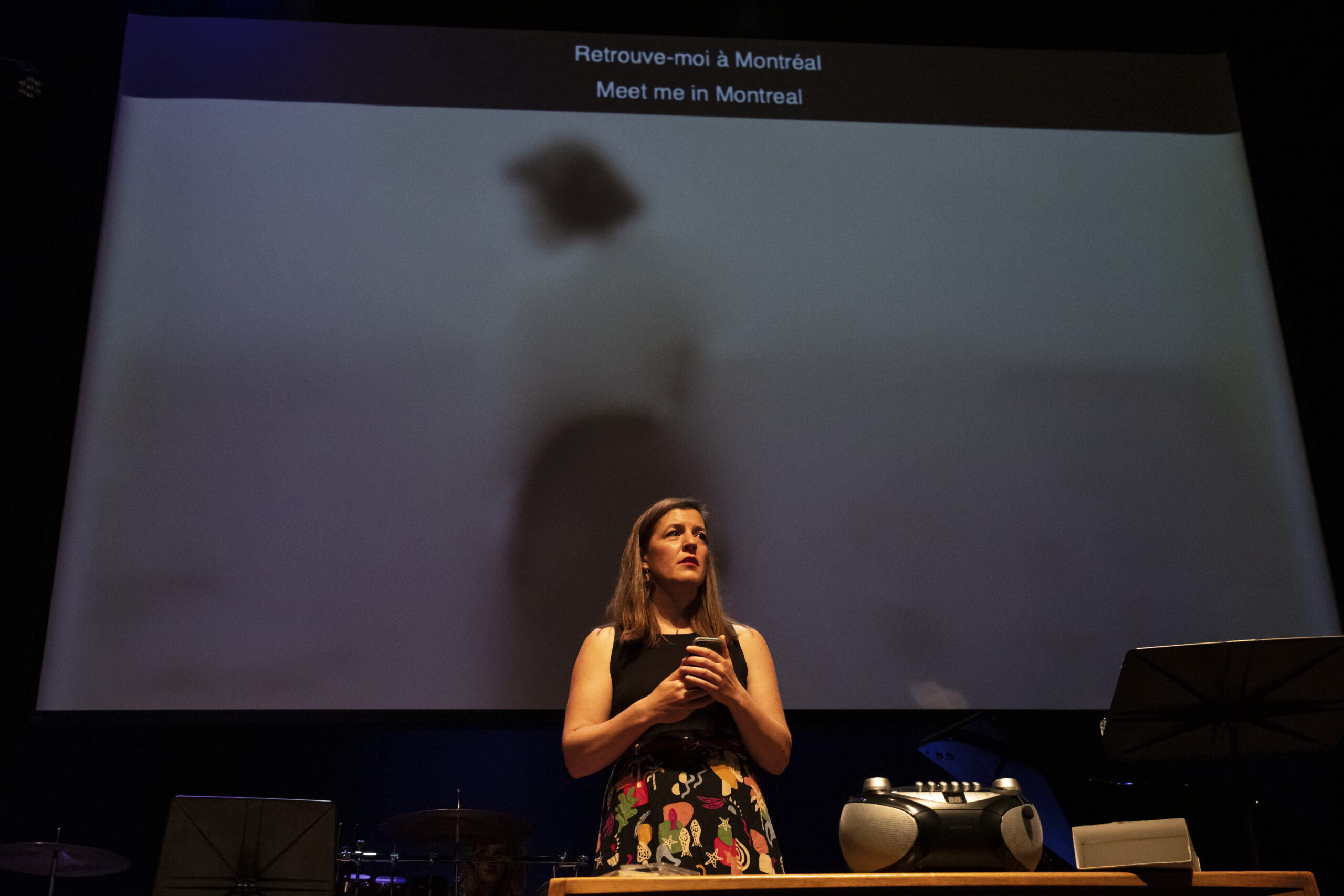
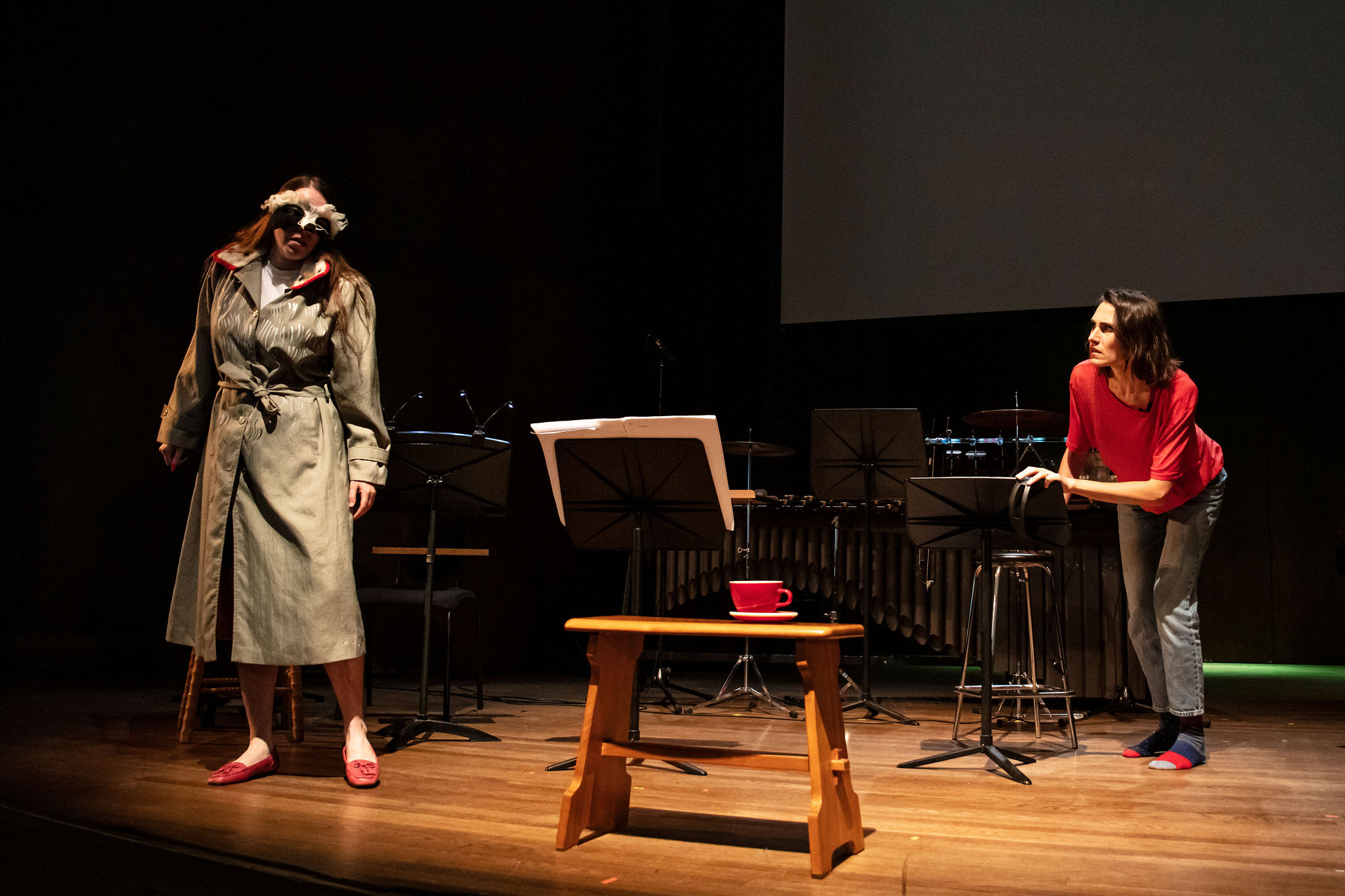
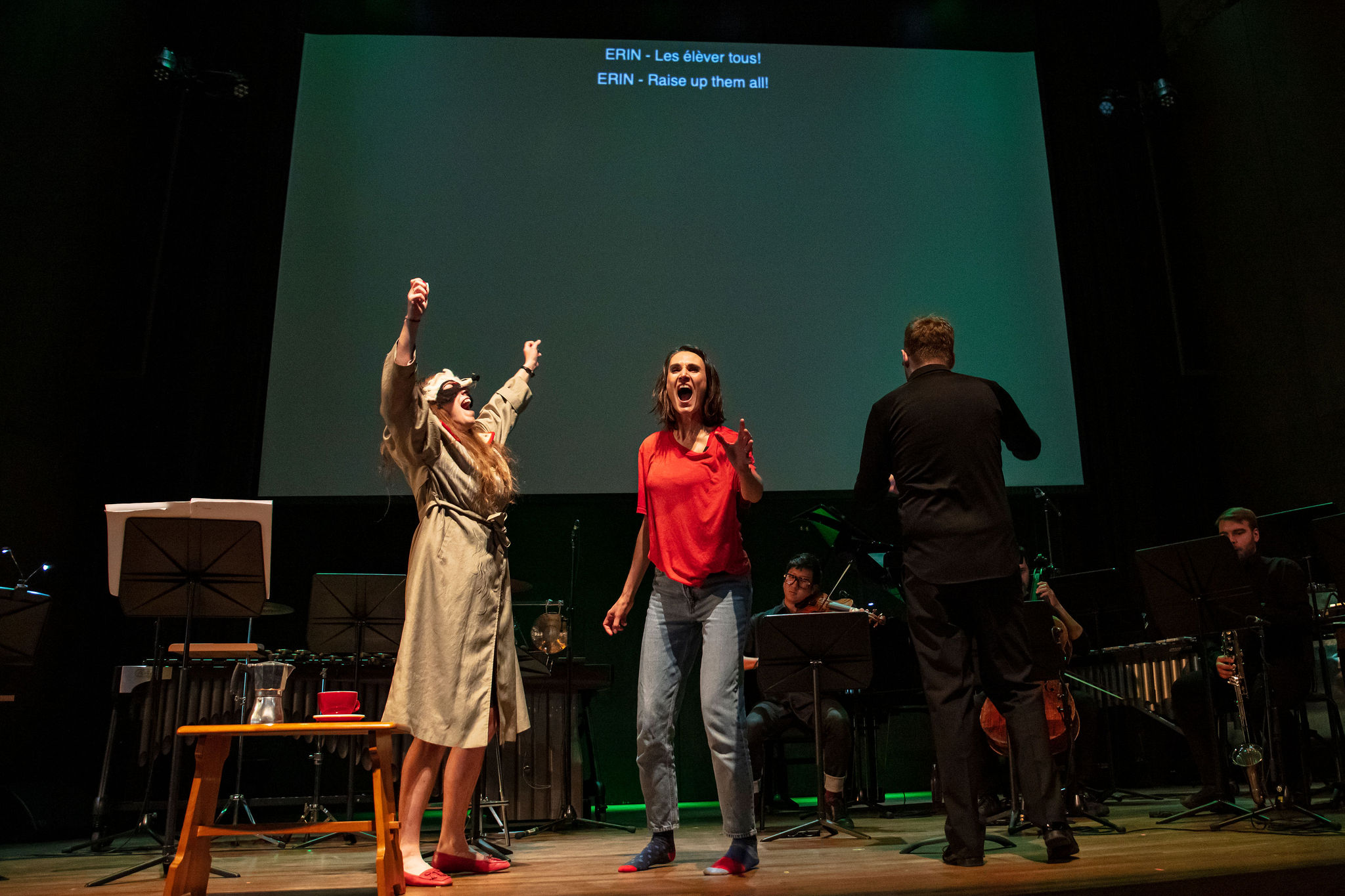
I’ll now move on to the second opera of the evening, a sort of symbolic fable that’s both zany and serious: Raccoon Opera, by sisters Rebecca and Rachel Gray. Yes, an opera featuring a… raccoon as one of the main characters. In truth, the animal seems more like a symbol, that of a force that draws us towards conformity, rather like Ionesco’s rhinoceros. But Rachel’s libretto (Rebecca is the composer) doesn’t levitate into the metaphysical for all that. It’s a rather plebeian tale of a millennial getting it on in a dingy Toronto apartment, and getting it on even harder with the landlord, obviously a viscerally insensitive person. The young woman, whose name is Erin, doesn’t hold a grudge. She despairs over the state of her life, but remains resigned, apathetic. Then the raccoon comes along and makes her rebel, and get angry! Yesterday’s excerpt stopped at the moment when Erin, pumped up by the animal, cringes and transforms emotionally.
Rebecca’s music oscillates between an assertive lyricism that contrasts sharply with the previous work. The orchestra, by far the largest of the evening’s three operas (six musicians and a conductor), often offers a gritty, pointillist counterpoint, but not only that. At certain moments, it takes on a warmer aspect. It’s Raccoon who stimulates this duality, as a character who is both reassuring for Erin, but also, one senses, dangerous and manipulative. To what end? We’ll find out if the work ever gets the chance to be created in its entirety. Video projections of coffee stains, spaghetti metamorphosed into faces with disheveled hair, and other incongruities provide a visual complement to the Spartan life of a young adult in a (far too expensive) apartment.
I loved the mix of topical social commentary (the housing crisis) and broader reflection on emotional repercussions, materialized by the absurdist symbolism of the raccoon, a raging conformist factor (again, very topical) and heir to a rich literary tradition.
The evening ended with the last of the three proposals, probably also the most eye/ear-catching and attractive work. Nanatasis, with music by Alejandra Odgers and libretto by Nicole O’Bomsawin, could even be described as an opera “for the whole family”. The program features three Abenaki legends, of which, understandably, only one was presented yesterday.
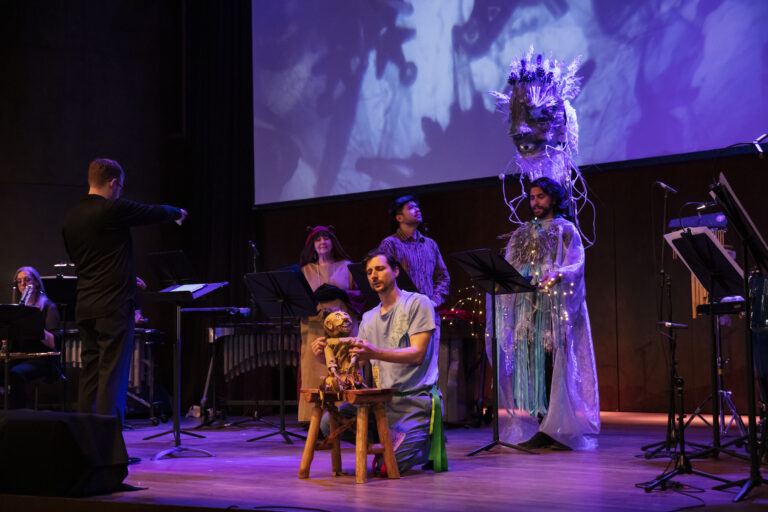
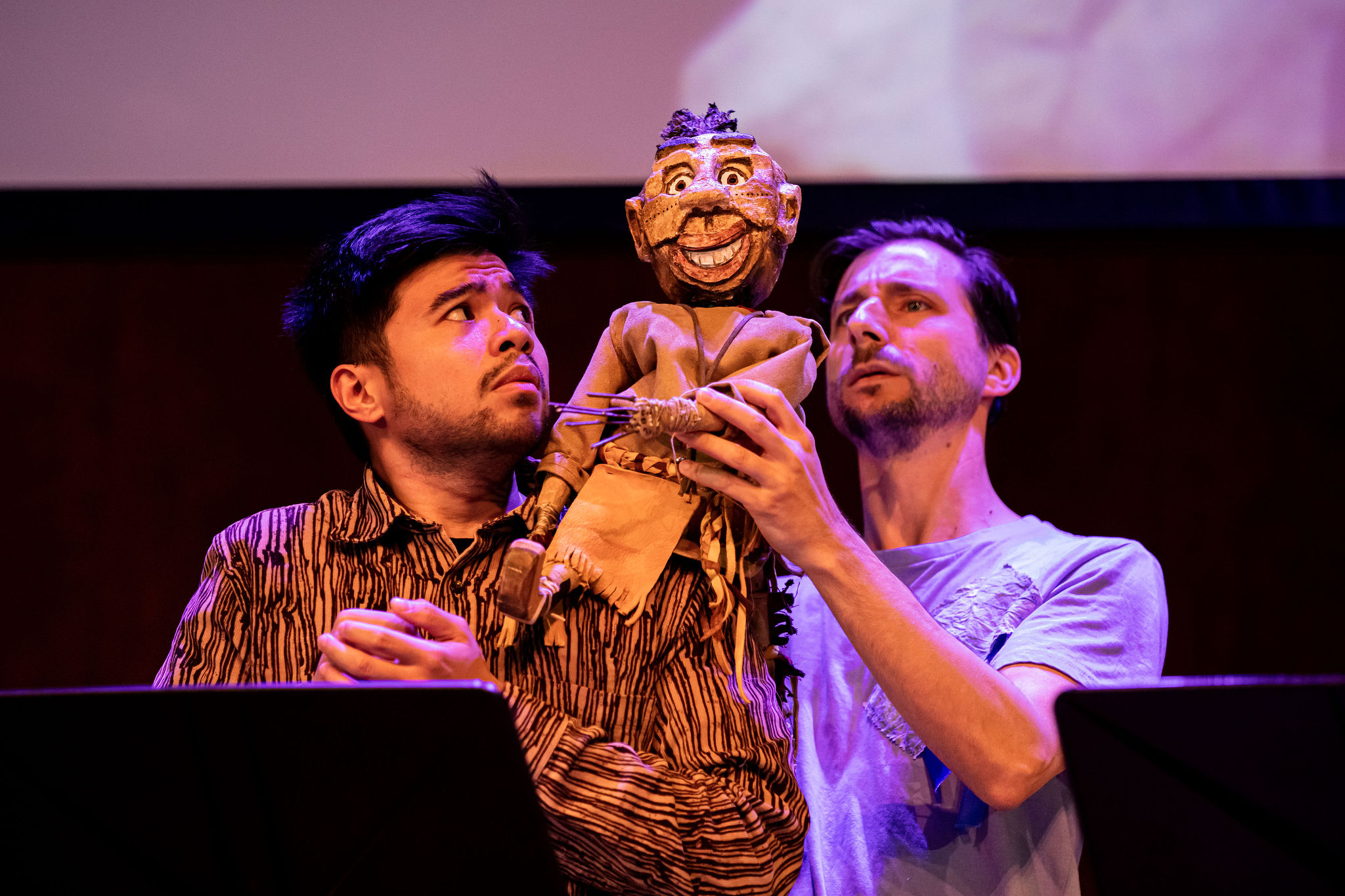
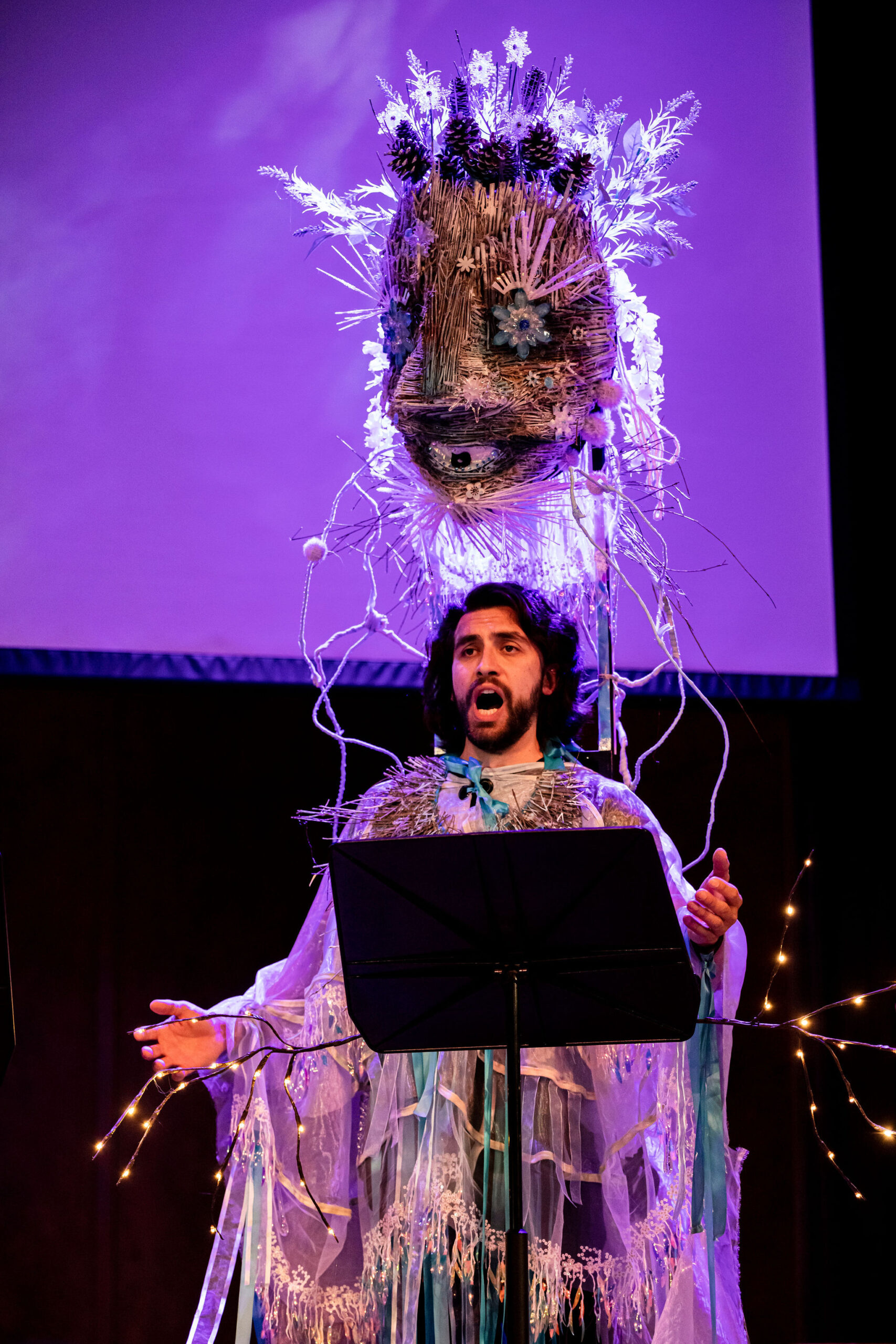
The story is that of an Abenaki warrior (Kl8sk8mba) who sets off for the Far North to solve the riddle of a never-ending winter that prevents his people from sowing and harvesting enough to survive. The character meets Pebon (Winter) and, with the help of Niben (Summer), convinces him to let go for part of the year, thus creating the cycle of the seasons.
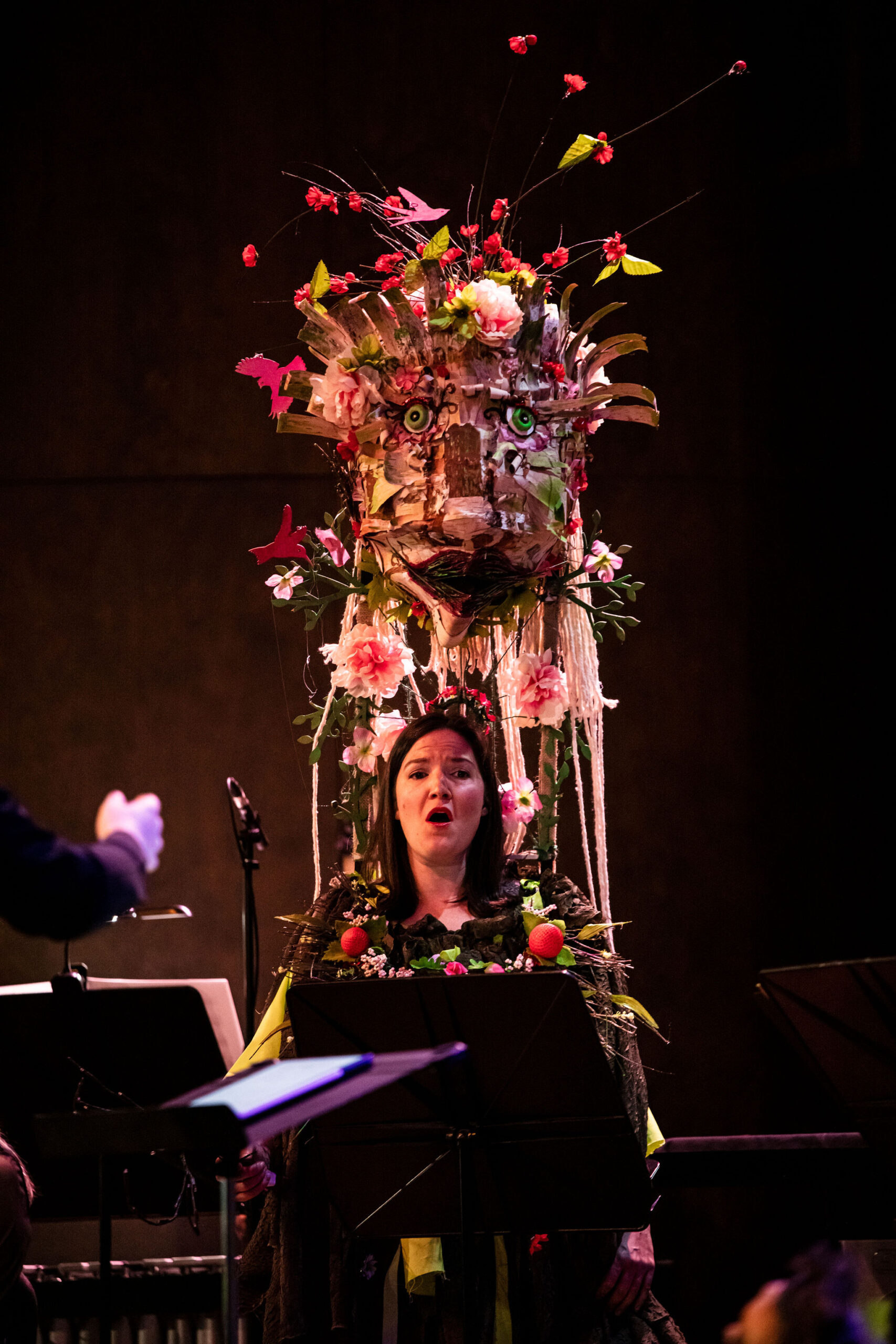
Of the three, Nanatasis is the opera that benefited from the most generous use of costumes. Pebon and Niben are very beautiful, characterized by huge faces made of colored paper, ribbons and other artifice, harnessed above the singers who interpret them. Pebon is sung by bass William Kraushaar, magnificent and perfectly cast, with his deep, rich timbre and irresistible roundness. Odéi Bilodeau is equally fine as Niben. Tenor Mishael Eusebio vocally embodies Kl8sk8mba, who is also doubled in his movements by a puppet.
Alejandra Odgers’ music is tonal, melodic and accessible. She draws, appropriately and even skilfully, on tropes associated with native music, but also with those of her native Mexico (the character of Niben allows her to do this). The orchestration is sparing (a flute and percussion), but colorful. It’s easy to imagine Nanatasis going on tour and appealing to a very wide audience. In fact, it’s the only one of the three operas to have a full premiere date, in 2025 in Montreal. I’m really looking forward to it, and from the comments I heard after the evening, so is the audience.
We owe a warm thank you to all the teams behind this important work of operatic renewal: Musique 3 femmes, the organization behind the project, Le Vivier and Sixtrum percussions.
Bravo, bravo, and kudos on a job well done.