Additional Information
Pasts and upcoming events
Recordings
Editor’s note: That was March 2, 2020. It was our first international interview on www.panm360.com and you know the rest… so far: the pandemic brings back the same topic, just as relevant 21 months later. The originally scheduled Caribou / Kaitlyn Aurelia Smith program has thus been postponed to this Monday, November 22, 2021 – note that the excellent producer, keyboardist and elecronic composer Kara Lis Coverdale is replacing K A Smith. That’s why we’re bringing you this text for the next 24 hours… which you may never have read.
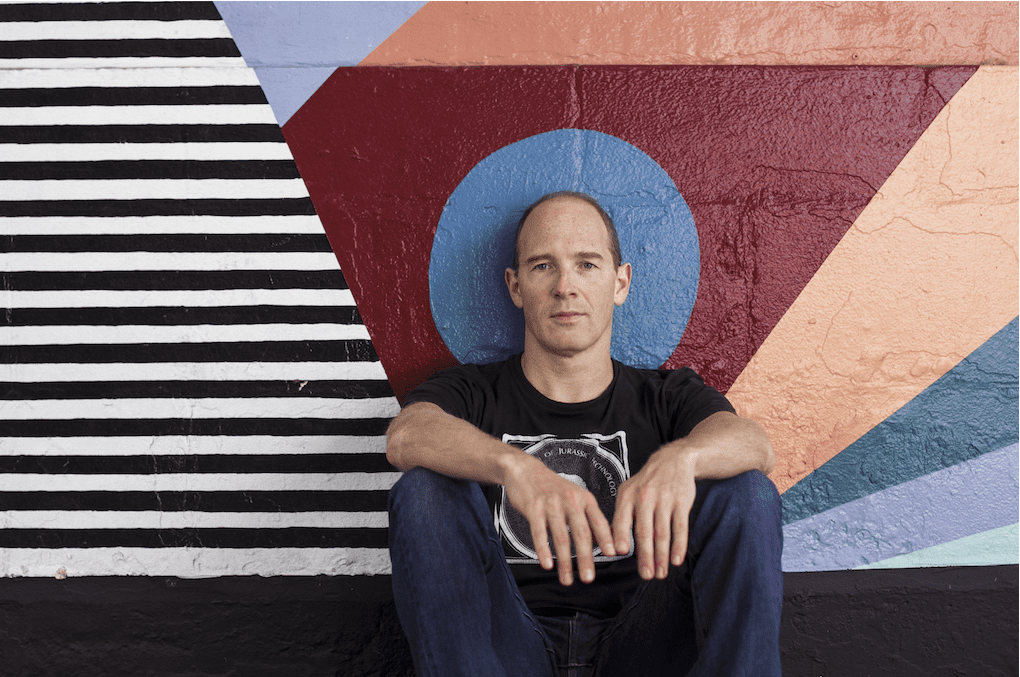
Contacted at his home in the United Kingdom prior to the start of this world tour, the Canadian artist talks about Suddenly in all generosity. First off, the context of its creation.
“In my partner’s family and in my own,” he explains, “we are the youngest children. Suddenly we became the strong, supportive members of our families, which we had never been before because we were the youngest. In the last few years, my wife’s brother died of a heart attack. I watched my mother-in-law cope with this loss and
suffer.
“During this same period, my wife’s sister divorced. Today, we have young children, three and eight years old, and elderly parents. I feel torn between the happiness of this growing family and the melancholy of the past that my loved ones trigger as they begin the last part of their lives.”
What’s the correlation between personal life and Caribou? A source of inspiration, for better or worse.
“When I listen to my new material again, I hear the sadness of these events and the reflections that follow. I also feel the effort to comfort the people involved. My music reinforces this idea of comfort, it also represents a kind of catharsis for me.”
For Caribou, then, modesty has gradually given way to emotional transparency.
“When you dive into the new songs and you listen back to the music,” he says, “you see my willingness to share very personal things and integrate them into the music and lyrics. Take ‘Cloud Song’. for example, a reflection on what my father went through. I recorded that song for myself because it felt good. At first I didn’t want to make this song public because it was too personal and I didn’t feel comfortable
sharing it. In the end, I felt I had to do it.
“Gradually, this intimacy that was unveiled took a certain amount of space on previous albums, but it increased dramatically on Suddenly. When I perform these newer songs, I do it with more emotion, precisely because they’re rawer, because they’re linked to my life experience, whereas most of my older songs are fiction.”
Transforming his own personal emotions into creative material, in short, represents the main step forward of Suddenly.
“That’s what I’m most proud of: confronting these difficult things personally, feeling comfortable and honest enough to write, sing and share them, overcoming the obstacle of modesty and hopefully resonating with my audience.”
Snaith is then invited to comment on his progress as a complete musician.
The recipient of the Polaris Prize (for Andorra, released in 2007), became known for his pop versatility, both in terms of “classical” instrumentation and electronic devices.
“To some degree,” he says, “very little change is observable in Suddenly, the methodology remains the same. For example, a lot of the guitar-like sounds actually come from software designed to evoke the guitar from a keyboard. We live in a world where we can confuse the listener.”
Though inclined towards digital production from the very beginning, Snaith has never abandoned the world of acoustic and electric instruments, and analog keyboards.
“I’ve always felt like I had one foot in both worlds. I grew up in a small town in rural Ontario. There was hardly any electronic music where I lived, so I got into psychedelic rock and other similar styles first. In my opinion, you had to try everything, in every way possible; grunge rock, school band, wedding music, DJing…. Anything I could do, I did.”
While any notion of stylistic purity is off the table, for both Caribou and Daphni, Snaith’s recent work is tamer than earlier material.
“I don’t really feel like I’m consciously thinking about what comes from the musical worlds I love. Everything seems to fit together without me worrying about it. For
Caribou, however, it’s important to me to create songs in a dance music context.
Writing songs with verses, choruses, bridges, and harmonic changes is not very common in dance music.”
Composition, he believes, far outweighs technical performance.
“I’m not a good guitar player, I’m an okay drummer, keyboards are my main area of expression. I don’t rehearse on my instruments like I used to do all the time as a teenager. I only really play when we’re touring. Being a guitar hero or a keyboard virtuoso is not the goal. The goal is to make good songs and good music.”
To that end, playing is essentially linked to the creative process, as well as to the live setting.
“I can play the same part over and over again until I find the right one. Then I never play my new songs again until I play them live. In rehearsal, I sometimes can’t remember what key these songs are in, and what chords are involved. I actually think more in terms of the sound and the mix rendered at that stage. Usually, you know, bands come into the studio after playing their songs on tour a few times. For
me, it’s the opposite process; I play them until they’re well put together in every aspect.”
From this perspective, Snaith confronts a paradox: to learn, or unlearn?
“At the same time, it’s important for me to master the creation of better songs and keep that feeling of never holding anything back, always starting from scratch, grasping things through trial and error. Not having a clear idea of what I’m doing makes it playful, fun, creative, exploratory. ”
A hermit during the creation of Suddenly, Snaith appreciates getting together with old friends when it comes to playing in front of an audience.
“Only one other musician besides me,” he says, “came into the studio to play guitar and saxophone: Colin Fisher. For the stage, I’ve been working with the same band since 2009: Ryan Smith, a childhood friend, joined by Brad Weber and John Schmersal. It’s very important for me to play with them after months of solitude, it becomes very collaborative when we learn to play with instruments these songs
originally imagined with synthesizers and machines. It’s incredible for me to see these songs come out of the studio and start a new life.”
It’s impossible to wrap up the interview without mentioning the possible link between music and advanced mathematics, knowing that Snaith holds a degree in the field.
“Many people associate me with engineering or something like that and… it’s not that at all! For me, mathematics and music are games involving abstract ideas or sounds. These games allow me to make connections, to put things together. Since childhood, I’ve liked to find myself in these mental universes, even today, I see the same connection between mathematicians and musicians. I don’t know why they go so well together, but there are two disciplines that I like to play with.”
And why is Snaith, a complex mind if ever there was one, content to toil in the pop- cultural milieu, however refined his efforts may be?
“I listen to a lot of complex and experimental music, much of which excludes melodic elements. But when it comes to me as a composer, I’m a sucker! I can’t resist a pop melody, it’s deeply rooted in who I am. It will always be there.”