Additional Information
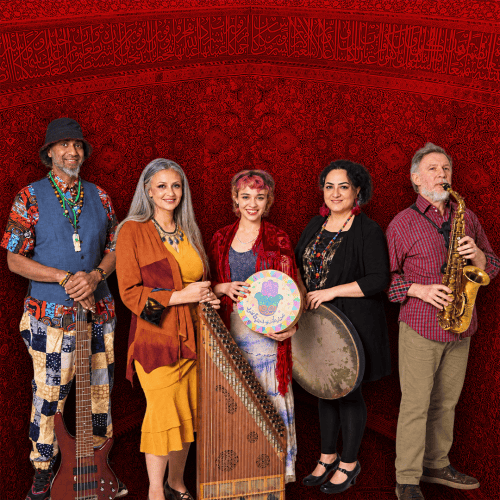
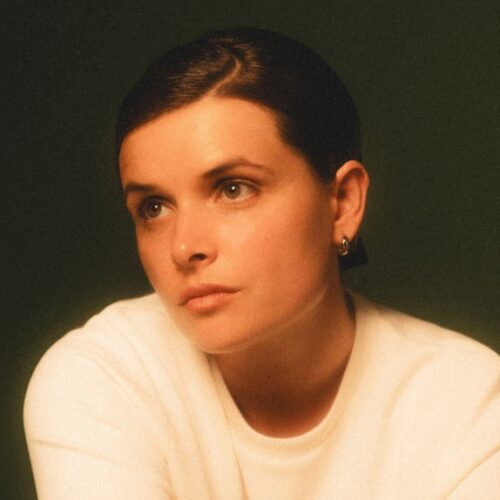
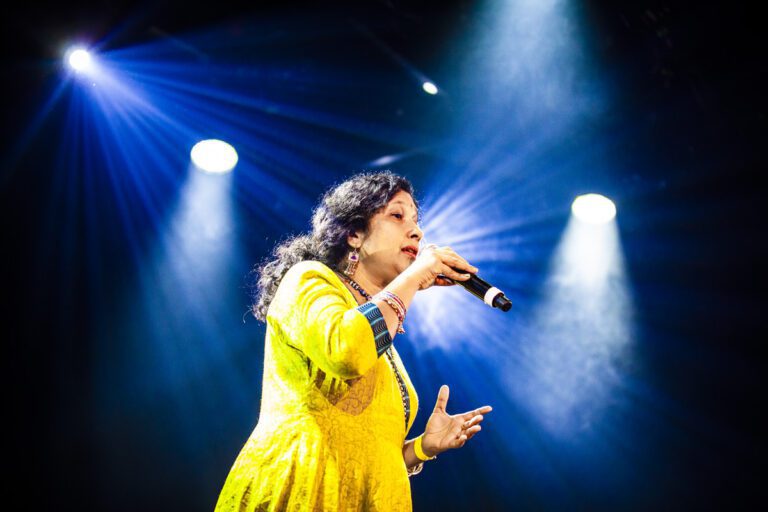
For this year’s Festival Nuits d’Afrique, vocalist and bandleader Lavanya Narasiah will be presenting an exciting and original showcase of music that goes beyond borders.
Lavanya will play Club Balattou on the 17th of July at 8:30 PM.
PAN M 360: Hey Lavanya, thanks for being here. Your show this year stands out for featuring so many different musical traditions. Can you tell us a little bit more about it?
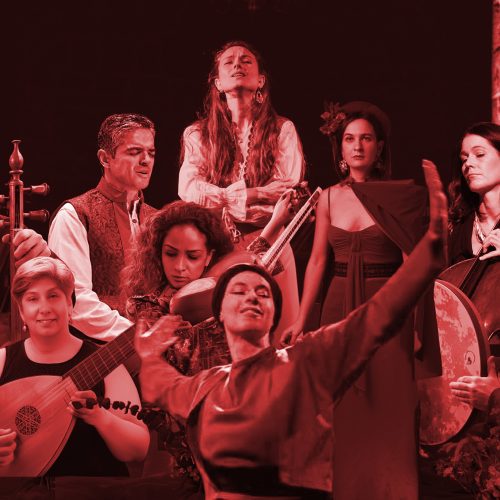
Lavanya: Of course. This show is really the culmination of a dream of mine where I wanted to create a space where many of my ‘world’ music colleagues, mostly from the Montreal area, but also a few from India, were able to collaborate. For each track on my first CD, Dharani, that I made 10 years ago now, there were many many musicians featured. Unfortunately I couldn’t launch that album the way I wanted to, life got in the way, my mom had fallen sick, but eventually I wanted to come back to this project and find a way to make it something we could actually perform, you know, with all these different musicians and styles. The question was what in a matter of essence could we take, and how could we move forward with it? We still perform that material but now with a more condensed group. We’ll have some special guests at this show though.
PAN M 360: Dharani is such an incredibly compelling project. I have my reservations about terms like fusion and world music, but what you’ve managed to achieve with this instrumentation is fascinating. It makes me curious about your musical journey. Do you have a strong basis in Carnatic vocal training?
Lavanya: Well since a young age I was learning about Carnatic music from my father. So yes, my base has always been in classical Carnatic music but then in my teens and all, I started really getting interested in other things, especially Brazilian music. When I first heard some of that music I just fell in love and I keep saying, I feel like I was Brazilian in a past life! Like most of my best friends are all from Brazil too.
Eventually I started working on this project. I called it Sertão, and that was back in Sherbrooke, and I had a band there for many years. And then we came to Montreal with that band, I changed the name to Chandra Lua. We were taking some of these Brazilian classics, you know, songs from the 1960s and 70s with a lot of social and revolutionary spirit behind them, and then I naturally added a sort of Indian touch and started playing around with a bit of konnakol and all that. So I had a strong affinity with Brazilian music for a long time and from there I was getting the chance to travel for work, and I was able to go to Mali and was really touched by the music I heard there, there were even some Indian melodies that I heard in it. I thought wow, it would be super cool to try to do something, something that’s not fusion, but like a new sound bringing all these instruments together. Like you said, I also have reservations about world music and all, but then again I don’t know how best to describe this music.
PAN M 360: Fair enough. While music is of course a universal language, technically it must present some challenges bringing all these sounds together, what was that process like?
Lavanya: Good question, but usually the compositions begin with a melody that I start to hum and once I feel like I have something, I bring it to the band. From there maybe the kora player will say that he can’t play something exactly like that but will play something that is the closest equivalent we have in our tradition. In that case maybe I might ask him to omit certain notes instead of having to add them, because I really like to respect the raga in the compositions. I like to concentrate on one raga per piece as much as I can. So there’s a lot of compromise and a lot of communication, and eventually we add a bass and a rhythmic structure that is sound with the percussionists finding their way to meld with the music best.
We do of course perform some of the songs from the first album but we’ve also been working on some new material, things that have yet to be released because of the COVID epidemic. I’m actually a healthcare worker, so that’s why there was another long pause in my music making.
PAN M 360: Yes, I know! It’s incredible to me that you manage to be an artist and a medical professional at same time.
Lavanya: It’s tough, it’s definitely tough. I’ve been working for 25 years as a family physician, and so there have been a lot of challenges, but also it’s because of music that I have been able to survive and stay in this profession as long as I have.
PAN M 360: Would you say music has genuine healing properties then, beyond spiritual and emotional relief.
Lavanya: Absolutely, right? We have yet to completely understand our bodies’ response to music. But it’s clear that something happens in our body when we hum, or even just think of music. Sometimes you don’t even have to be singing, but just the thought of music can have a real physiological effect on us, and even just our general wellbeing.
You know, with Indian music, when I don’t have time, I can put on the tanpura box and just sing my sa re ga ma’s, and sometimes that is all I can do between a meeting, but it aligns something in me, it grounds me, it completely grounds me.
PAN M 360: I’m excited to feel that for myself. Wishing you a great show Lavanya.
Lavanya: Thank you!