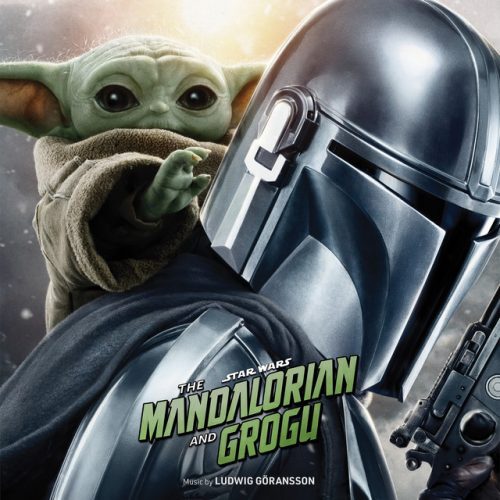
Big assignment for composer Ludwig Göransson: a Star Wars release, on the music side, is always scrutinized with attention. But of course, since the Swede had already delivered two nice musical seasons of The Mandalorian, with two striking and notable themes, we knew there was already great potential. It remained to be seen (and heard) if the young artist could make the transition to the big screen, for which a superior sound fabric is required compared to that of a TV series. The orchestra first. Used to the memorable frescoes of John Williams, the great instrumental liner that is a symphonic phalanx must be mastered and well-established for a journey to a distant galaxy to be at least somewhat credible.
But Göransson has the advantage of arriving with his own musical perspective, made up of electronic sounds and unconventional instrumentation. The fusion of the two results here, let’s say, in very good pieces to which we look forward to adding cinematic scenes.
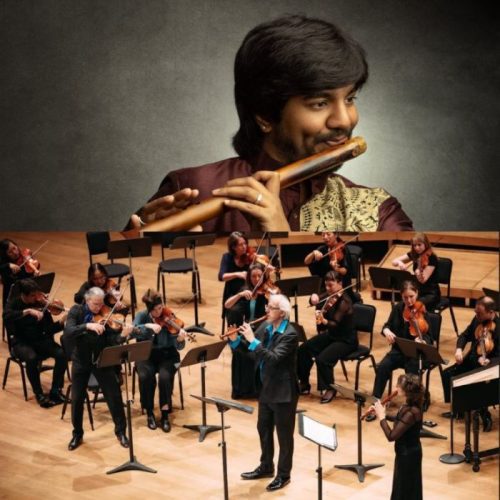
The rather famous theme of the Mandalorian kicks off the parade, as one would expect. The version with that typical low recorder sound (fascinating instrument) is expected, but it later adorns itself with orchestral aspirations with predictable electro beat accompaniments, before transforming elsewhere into a brass-supported anthem.
The electro beats sometimes have a déjà vu quality, like in a plethora of contemporary Hollywood productions. I keep saying that it is not necessary to resort to preprogrammed beatbox to create musical action. Go listen to what John Williams or Michael Giacchino can do with an entirely acoustic orchestra! It’s astonishing. But hey, Göransson is not from that school. Fortunately, that said, he knows how to vary the effects and not make them a crutch for composition. Moreover, his electronic sounds sometimes have flavour and zest, serving as effective colouring rather than an end in themselves.
It is in the blending of styles that Göransson transforms the usual sound of Star Wars music, as he did in the series, but here with more muscle.
After “This is the Way” and the official theme “The Mandalorian and Grogu,” it is the frantic “Pit Fight” (a combat between the Mandalorian and Rotta the Hutt, if I’m not mistaken) that gets tattooed in the minds the quickest. Göransson shatters the usual framework of these Star Wars scenes by disarticulating the sound fabric and distributing it between electro, improvised percussion (tablas?), a Rio Carnival atmosphere, and an orchestra that occasionally bursts into fits worthy of a James Bond score by John Barry. One of the most trippy tracks on the album. Just for that, I’m quite eager to see the movie, especially the fight scene between the big larva and the Mando.
In “Rotta Chase,” we have the opposite example of Göransson’s synthetic percussion: an ultra-banal pulse, like the ones heard in almost all contemporary American soundtracks. Fortunately, the orchestra is quite well-crafted. There is something to listen to. It is clear that Göransson is not lacking in good ideas; he has tonnes of them, but he has not yet managed to maintain the total cohesion of such an eclectic musical language, and he does not always avoid the trap of the flatness of digital beats that too often replace inspired writing. In the abundant fusion of musical genres with the orchestra as the center of gravity, Göransson has not yet reached the level of John Powell, Hans Zimmer, or even less so of Ennio Morricone.
Fortunately, the composer skilfully redeems himself elsewhere and offers us other beautiful moments of film music. A few examples: “Go Kid,” where the low flute, melancholic and distilled through synthetic, soaring expanses, even becomes touching. “Grogu’s World,” a typical construction of symphonic pastoralism, tinged with wonder, with lovely solos for cello, oboe, flute, guitar, etc. Does that mean we will finally see Grogu’s world (and incidentally Yoda’s)? Answer by seeing the movie…
“Do we run? Or Do We Fight?” is launched with electro house textures before the bass flute gently brings back Mando’s theme, then the Orchestra warms everything up with a choir (with the same theme). The electro accompanies the whole with striking colours rather than a simple automatic pulse. Further on, with a torn orchestra, an industrial Nine Inch Nails-like score appears and reminds us, for a brief minute, of everything the music of Tron Ares failed to be.
We regret that the orchestra sometimes lacks sound power compared to synthetic instruments. It seems that it was recorded in the background. We would have taken much more. I am thinking here, in terms of contemporary studio mixing, of the cyclopean sounds of Pirates of the Caribbean – At World’s End by Hans Zimmer.
If Göransson demonstrates great skills in this entertaining Mando, it is Christopher Nolan’s The Odyssey that will mark the true test for him. His music for the epic reinterpretation of the Homeric myth is eagerly awaited by film music enthusiasts, for whom this kind of fresco cannot afford anything less than great and inspiring musical accompaniment.