From Sunfruits, expression of uncritical affection for Australia’s popular soy-milk brand.
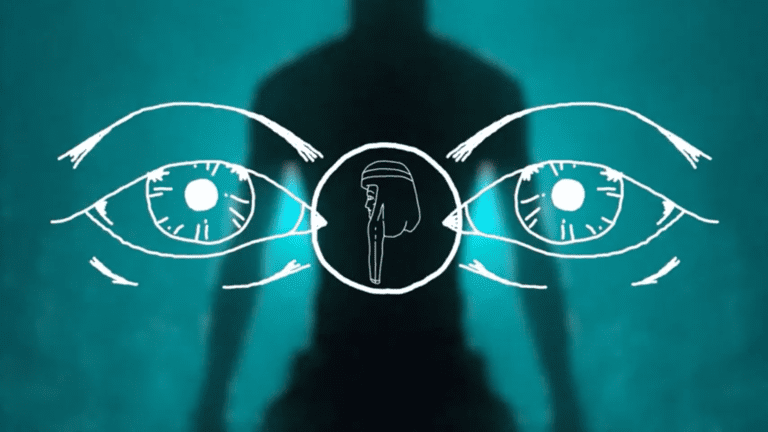
Healthy eating seems to be a major concern for Melbourne garage-pop bunch Sunfruits, who recently unveiled their Mushroom Kingdom EP, a co-release with French label Six Tonnes De Chair and Australia’s own Third Eye Stimuli imprint. The first and second eye need stimulation too, so here’s the video for the EP’s B-side track, “Bonsoy”. It’s an animated extension of the amazing sleeve artwork, care of Indonesian graphic artist Ardneks, alias Kendra Ahimsa, whose neatly assembled psychedelia is already familiar to fans of Khruangbin and Flamingods.
Three months after Resurrectedinblack, Bestial Mouths presents an aquatic and cathartic clip for the track “The Loss”.
Made of superimposed images and kaleidoscopic effects, this experimental microfilm is a perfect accompaniment to the atmospheric impulses of the song. Shot underwater, it shows Cerezo, a Gothic mermaid, sometimes struggling with the ropes and chains around her, sometimes sinking. This near-death experience, supported by a dragging melody with martial rhythms, nevertheless lets a certain light shine through. One comes out of it haunted, not knowing whether death or redemption has resulted.
San Diego’s Prayers bring their chologoth sound to the underworld of their ancestors.
“Life is a dream”, Leafar Seyer repeats insistently on “La Vida Es Un Sueño”, the first single off Chologoth, the latest album from Prayers, the San Diego electro-rock duo singer Seyer forms with musician Dave Parley. It’s a dark dream, with death in presence, but not one without beauty and even a sense of destiny. The title of the album defines the vibe of Prayers, as they express the morbid romanticism of the goth scene, in the vernacular of the cholo – meant both in the sense of the Chicano street culture and gang life of California, and even moreso, that of the mestizo, reaching back to their indigenous roots. The video sees them ferried to Mictlan, the underworld, in a classy Rolls Royce, under the guidance of the Mexica fire god Xolotl.
Belgium’s Bandler Ching rises to the surface with their forthcoming EP’s first single.
Led by saxophonist Ambroos De Schepper, a veteran of Belgian jazz acts like Kosmo Sound, Boogie Belgique and Mos Ensemble, the Brussels-based quartet Bandler Ching have just released the first single from their debut EP Sub Surface, due our October 23 on the Sdban Ultra label. Cool, uncluttered, but amply invested with clarity and conviction, “Pousmousse” (named after a local laundromat, rather randomly) indicates that great things await from De Schepper and his bandmates, keyboardist Alan Van Rompuy, bassist Federico Pecoraro, and drummer Olivier Penu.
Minouche, extrait de l’album posthume Je suis africain, résume bien l’esprit Taha.
It’s now two years since rock ‘n’ raï rebel Rachid Taha took his place in the great amphitheatre of the Beyond, alongside his forebears Dahmane El Harrachi, Sheikha Remitti, Oum Kalthoum, Nina Simone, and Elvis Presley, as well as his buddies Alain Bashung and Joe Strummer. The album Je suis africain was released posthumously a year after his passing. “Minouche” is an extract from it, Rachid had written the lyrics with Jean Fauque and Erwan Seguillon, alias R.Wan, and the music with Toma Ferterman. For the clip, Laurie-Anne Patrikovna created sober and magnificent illustrations, Agathe Nazarenko animated them, and Ali Guessoum directed the whole thing. “T’es ma kahloucha, Frenchwoman – I’m your Apache, the rest doesn’t matter” – this sums up the spirit of Rachid Taha quite well.
A dreamy ode to teatime, from Dim Mak En Fuego’s new Venezuelan star.
Already highly regarded as a visual artist, creative director, and songwriter in her native Venezuela, Andrekza has recently signed to Steve Aoki’s Latin imprint, Dim Mak En Fuego, and makes her debut in that department with the alluring yet mischievous slice of Latin pop R&B, “TÉ”, produced by Grammy-winner Orlando Vitto. An equatorial twist on a certain Asian pop sensibility, “TÉ” arrives with a video that’s a goofy kind of glamorous, though one might want to think twice about taking a sip at Andrekza’s house, if averse to hypnosis or unpaid housework.
Keyboard Fantasies: The Beverley Glenn-Copeland Story
by Frédéric Cardin
A cassette released in 1986 is now the focus of a cult following… and of a documentary film showcased at Pop Montreal.
It took a Japanese collector who contacted Beverly Glenn-Copeland in 2015 for him to realize the cult status of his Keyboard Fantasies album, which was released in 1986 in cassette format, in a run of 150 copies (only half of which was sold to kind “mothers of friends”). The album has recently been digitized and now serves as the cornerstone of the explosion of popularity that the American-Canadian musician, born in Philadelphia in 1944, is experiencing.
Keyboard Fantasies is a masterpiece written for and performed on Yamaha’s DX-7 and Roland’s TR-707 synthesizers. Glenn-Copeland geeks often refer to Keyboard Fantasies as a new age gem. If it’s new age, though, it’s in the genre’s experimental fringe that this album is situated.
It’s light years away from the vaporous chords stretched over entire minutes, for which the term adagio would still seem too frenetic. And forget the sound of waves! Keyboard Fantasies is the baby of a gifted creator, well grounded in scholarly, classical, and contemporary music, but also in the sounds of jazz, pioneering electro pop (Kraftwerk, Can, the Detroit sound of the ’70s) and a particular kind of synthetic film music (Tron, Labyrinth, The Never Ending Story).
Be prepared to be seduced, astonished, and bewitched by this light, zen universe, and even shocked that this degree of imagination, created on ’80s synthesizers, has remained in the shadows for so long! Everything is resolutely melodic, pop, and catchy in an assertive way, but never raucous. Each piece is brimming with subtle details that propel it far beyond any form of innocuous muzak, a label stuck on so many new age albums of that era (and rightly so, in most cases!). Glenn-Copeland sings on a few pieces, delightful with his beautiful, well-balanced mezzo voice, nicely worked out, very elastic, with easy peaks in the treble.
Is Beverly Glenn-Copeland experiencing a renaissance at the moment? No, because, in truth, he was never “born” as he should have been, as an important musician. That said, he’s finally being discovered, and the trans artist (he was one of the first black music students at McGill in the 1960s, before transitioning later) is now experiencing a surge in popularity he never expected at all!
There’s so much to say about this inspiring and colourful character! If you’re under the spell, or even just intrigued by his music, you should definitely check out the documentary Keyboard Fantasies: The Beverly Glenn-Copeland Story on Wednesday, September 23, as part of the Pop Montreal festival.
His Bandcamp page offers not only Keyboard Fantasies, but all the other albums he’s produced, including a masterpiece to melt your heart, a 1970 self-titled folk album that Joni Mitchell and Tim Buckley would have been proud of! Remember the name. It won’t go unnoticed any longer.
Shortparis: “KoKoKo/Struktury Ne Vyhodyat Na Ulitsy”
by Geneviève Gendreau
A new politico-musical punch from the Russian quintet
If you don’t already know them, here is a very muscular introduction for the Russian group Shortparis with “Structures don’t go down in the streets”. This new clip does not depart from their habits: linking aesthetics and social criticism against a background of experimental music. We follow the group and a plethora of workers, young and old, in abandoned buildings, where a metaphor between working class and animality is staged. The one to which the authorities wants to reduce the weak, claimed here as a source of resistance.
The song is, as always, carried by the sulfurous and theatrical presence of the singer Nikolai Komyagin, blowing on the embers of a growing protest (no doubt in reference to the uprisings of the Belarusian people). The song follows the escalation and closes with a liberation, made possible by the solidarity of the oppressed. We cross our fingers that this single will be the first of an upcoming album.
A surrealist debut for the Toronto synthrock project.
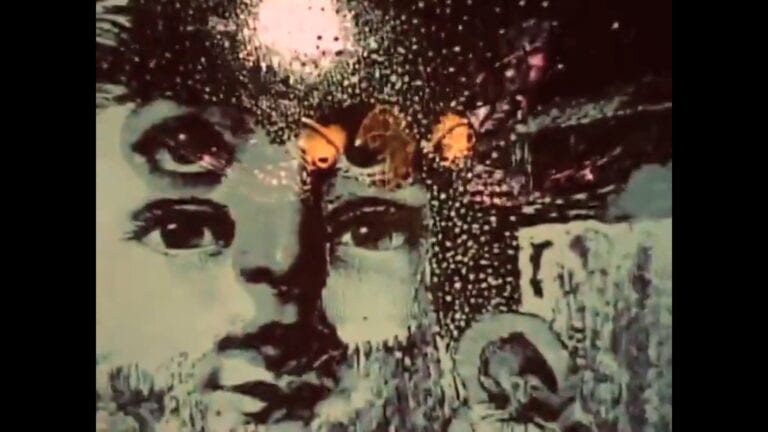
Toronto’s David Bertrand is deeply involved with the independent cinema scene there, so it’s no surprise that his foray into music, The Great Octopus, should recall the great synthrock sci-fi soundtracks of the ’70s and ’80s. Cryptid, the first EP by The Great Octopus, arrive November 5. The first single is “Zenith”, out now, and the video is Bertrand’s own edit of the obscure 1972 short film The Cosmic Bicycle, director Les Goldman’s animated adaptation of Wilfred Satty’s book of surrealist collage.
There’s certainly something to the daegeum loops of South Korea’s Dasom Baek.
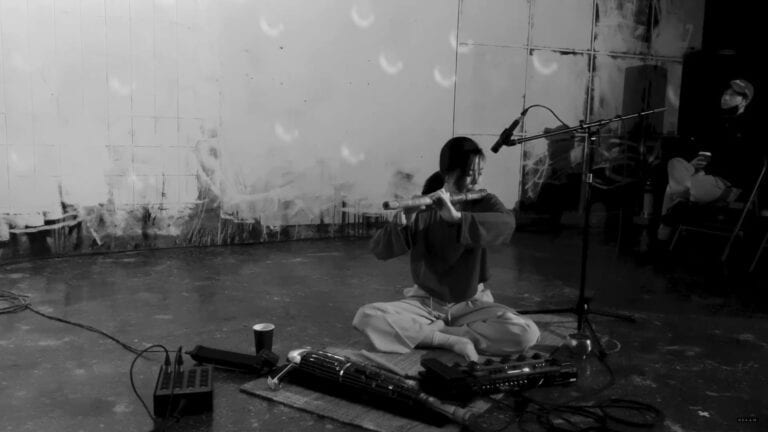
Leader of the avant-traditional ensemble Geori, Baek released her first solo album in August. Dedicated to discovering new paths for antiquated Korean music, the Seoul-based composer and performer is a specialist in woodwind instruments. Among them is the daegeum, a large transversal flute, which she breathes life into in this performance of the title track from Nothingness. Her contemporary approach to the instrument, looping fleeting phrases into a sort of storytelling without words, has a haunting, moonlit character that’s hard to shake.
Shanghai-based Scintii offers an elegant moodiness with her new track.
Echoing the velvety vibes of pre-millennial trip-hop and synth-soaked atmospherics, and her own early classical training, singer and producer Scintii (alias Stella Chung, born in Taipei, schooled in London, and now based in Shanghai) updates that elegant moodiness for the decade ahead with her new track, “Times New Roman”. Soft, sensuous, with a hint of the sinister, the track (now out, with an EP including four remixes out at the beginning of October, on Houndstooth) is accompanied by a video directed by Kynan Puru Watt, who’s done likewise for Arca and others.
Diplo offers only his new album MMXX for 2020 – and it’s more than enough to be grateful for, as uncharacteristic as it is.
L.A.’s legendary Diplo has found the pandemic shutdown as oppressive as anyone. Perpetually productive in normal times, the producer behind Major Lazer and many other crazy club sounds offers only his new album MMXX for 2020 – and it’s more than enough to grateful for, as uncharacteristic as it is.
“It’s all I had inside me,” he says. “I didn’t want to have Zoom sessions, I didn’t want to write pop songs. I was just stuck in my house with keyboards and a guitar I barely ever used. I would walk outside in Los Angeles and see empty streets and see nervous people and this is what I heard…”
What we hear is a patient, nourishing immersion into emotive ambient, an extended expression of hope and a need to heal. Give it a listen, and enjoy the luxuriant visuals.
Subscribe to our newsletter
Gérez votre confidentialité
Nous utilisons des technologies telles que les cookies pour stocker et/ou accéder aux informations des appareils. Nous le faisons pour améliorer l’expérience de navigation et pour afficher des publicités (non-) personnalisées. Consentir à ces technologies nous permettra de traiter des données telles que le comportement de navigation ou les ID uniques sur ce site. Le fait de ne pas consentir ou de retirer son consentement peut avoir un effet négatif sur certaines fonctionnalités et fonctions.
Functional
Always active
The technical storage or access is strictly necessary for the legitimate purpose of enabling the use of a specific service explicitly requested by the subscriber or user, or for the sole purpose of carrying out the transmission of a communication over an electronic communications network.
Preferences
The technical storage or access is necessary for the legitimate purpose of storing preferences that are not requested by the subscriber or user.
Statistics
The technical storage or access that is used exclusively for statistical purposes.The technical storage or access that is used exclusively for anonymous statistical purposes. Without a subpoena, voluntary compliance on the part of your Internet Service Provider, or additional records from a third party, information stored or retrieved for this purpose alone cannot usually be used to identify you.
Marketing
The technical storage or access is required to create user profiles to send advertising, or to track the user on a website or across several websites for similar marketing purposes.