Additional Information
The saxophone quartet Quasar continues its international collaborations by joining forces with the Zukan Trio, originally from the Spanish Basque Country. This Thursday, September 18 at 7:30 p.m., in the Espace Orange at the Wilder. Quasar thus launches its Montreal season for the 2025-2026 season, co-broadcast with Le Vivier. After a successful first meeting held in 2021 (Quebec-Basque Country), Quasar reunites with the Zukan Trio (percussion, accordion and txistu) as part of the Chambre d’écoute program. This program offers “an in-depth encounter of new Quebec and Basque music in a unique and immersive concert.” Marie-Chantal Leclair, soprano saxophonist and artistic director of Quasar, tells us more.
PAN M 360: Tell us about your relationship with the Zukan Trio:
Marie-Chantal Leclair: I met Trio Zukan during a mission organized by CALQ in 2019 in the Spanish Basque Country. Trio Zukan established itself as our natural interlocutor. Like us, this ensemble is completely dedicated to contemporary music and more specifically to the development of the repertoire and sound exploration. Our first concert brought us together in the fall of 2022. We had to stick to this project to welcome international guests and to travel abroad in a time full of constraints and uncertainties where the borders had just reopened. But it was worth it. The chemistry worked and the mayonnaise took between the two ensembles and we wanted it to continue! Trio Zukan has a very strong stage presence and an intensity of playing that combines perfectly with that of Quasar.
PAN M 360: Can we identify the Spanish Basque identity of this trio through the works they perform on stage or in the studio?
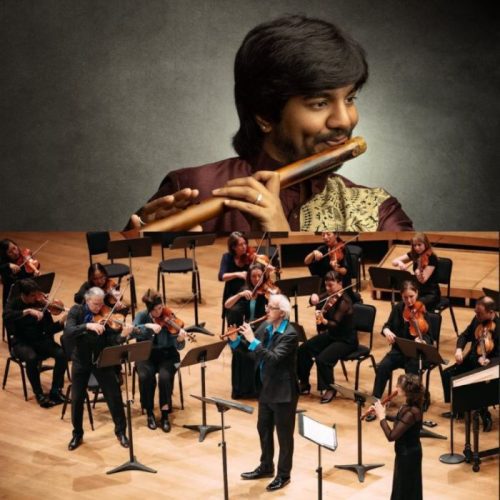
Marie-Chantal Leclair: The instrumentation of the Zukan Trio is deeply linked to Basque identity, as it includes a txistu. This is a traditional instrument that is a flute played with one hand, the other hand being used to strike a small drum. This instrument is a symbol of Basque cultural identity. It is of course used for traditional music, but also now in contemporary music, particularly under the leadership of Zukan. So Basque cultural identity is at the heart of the trio but completely transcended in its music.
PAN M 360: More specifically, how is this identity manifested in the works on the program, by Miguel Matamoro and Ramon Lazkano?
Marie-Chantal Leclair: Identity in music is very difficult to define and we can quickly fall into clichés. I would simply say that in parallel with this desire to assert the identity of the Spanish Basque Country, there is in the field of music an artistic freedom that transcends identity. If we return to txistu, it is a beautiful image, because, yes, there is a reminder of the roots, but one that unfolds in modernity and that dialogues with the rest of the world.
PAN M 360: The opening concert will feature the work Chambre d’écoute 2 by Quebec composer Chantale Laplante, which lends its title to the concert, as an international premiere. What justifies the choice of this work by Chantale Laplante and how does it fit into this program?
Marie-Chantal Leclair: I’ve been wanting to work with Chantale for a long time and have been following her work. I admire her listening skills, the refinement of her materials, and how she sculpts sound in space and time. The work she’s presenting is a concert-installation type. This work has profoundly influenced my perception and approach to the other works in the program. And I think it will be the same for the audience. In Chantal’s words, she has imagined “an all-encompassing and dynamic listening device for our listening bodies.” I can’t wait!
PAN M 360: The same goes for the works of Émilie Girard-Charest, whose instrumentation also includes the accordion and the txistu, “traditional” instruments?
Marie-Chantal Leclair: Émilie is a close composer who has been close to Quasar for several years. We have presented her quartet, Bestiaire, around the world. During our first collaboration with Zukan in 2021, we commissioned a work from her for our two ensembles. The members of Zukan were thrilled by Émilie’s work and decided to commission a trio from her, which we will have the opportunity to discover at the concert. You mention the accordion as a traditional instrument, and yes, it is. However, in Europe it is also a “classical” instrument that is very common in contemporary music.
PAN M 360: Several orchestral configurations are planned. Explain them to us!
Marie-Chantal Leclair: The audience will be treated to a wide range of configurations and therefore a great variety of colors and through the play of combinations and orchestration. Works will be presented in quintet (4 saxophones and accordion) with electronics, saxophone quartet, trio (percussion, txistu, accordion) and septet (Quasar-Zukan).
PAN M 360: Roughly speaking, what will be the next steps in your 2025-26 season, which we will be specifically looking at throughout the season?
Marie-Chantal Leclair: The major projects for the season revolve around a music-dance production in partnership with Mexico and the 10th edition of the Electro Series. In both cases, creative residencies bringing together composers and performers will take place in the fall. We are talking about nine new works written by composers from Quebec, Canada, and abroad. We will also have the opportunity to perform our concert “Cinq pièces liquide, Hommage à Vivier” as part of the Conseil des arts de Montréal en tour. Finally, we will be touring various Canadian provinces in the winter of 2026.
Program
- Chantale Laplante: Chambre d’écoute 2 , 2025 pour quatuor de saxophones SATB, accordéon et électronique – création
- Miguel Matamoro: Concerto Grosso , 2021 (**Commande par Trio Zukan) pour quatuor de saxophones (SATB), percussions, accordéon, txistu
- Émilie Girard-Charest: Artefaktuak , 2024 (Création canadienne) pour percussions, accordéon et txistu
- Ramon Lazkano: Jalkin , 2012 (Création canadienne) pour quatuor de saxophones SATB
- Émilie Girard-Charest: Quantum Statistical Zero-Knowledge , 2021 (**Commande de Quasar) pour quatuor de saxophones (SATB), percussions, accordéon, txistu
Artists
- QuasarJean-Marc Bouchard (saxophone baryton)André Leroux (saxophone ténor)Mathieu Leclair (saxophone alto)Marie-Chantal Leclair (saxophone soprano)
- Trio ZukanJon Ansorena (txistu)Maria Zubimendi (accordéon)Gorka Catediano (percussion)
- Jon Cleveland (conception lumière)