Additional Information
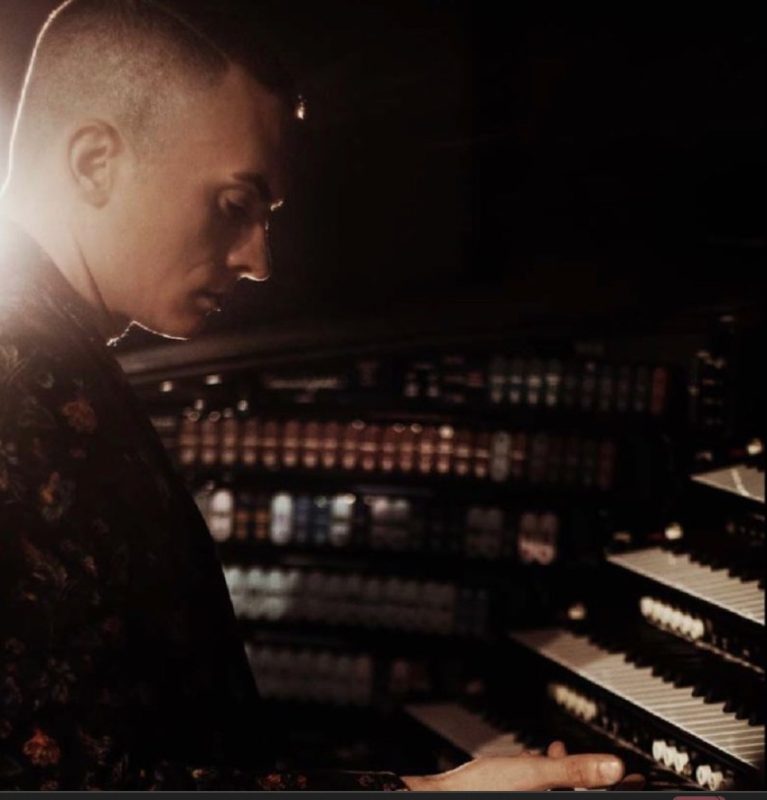
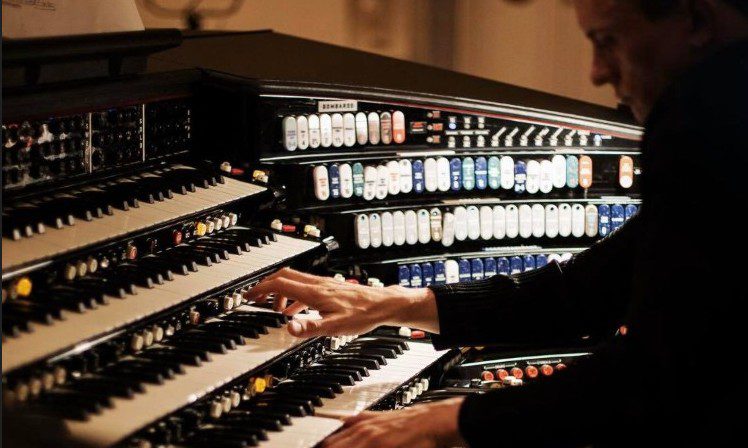
Organ American virtuoso Cameron Carpenter is back at the Palais Montcalm! In 2024, he performed for the 10th anniversary of its grand organ, featuring a memorable program including the JS Bach’s Goldberg Variations and Mussorgsky’s Pictures at an Exhibition. This April 25th, he will perform his own soundtrack for the legendary silent film The Phantom of the Opera, inspired by Gaston Leroux’s novel. In Quebec City, he will play while the movie will be screened in its restored version with French subtitles. Cameron Carpenter is a very special artist, he developed not only dazzling mastery and virtuosity on the instrument, but also undeniable skill as a composer and arranger. His approach includes classical repertoire but also great music from other styles, from Astor Piazzolla to Burt Bacharach. And his rock attitude, his unconventional look or his iconoclastic way of presenting himself add the finishing touch. While on tour, he answered PAN M 360 questions and provided great answers!
PAN M 360 : When this movie was presented in1925, some music was played. Over one century, I suppose that many pieces have been played live and I also suppose that you did some research and maybe some of those researches had an impact on your own composition.
Cameron Carpenter : Live music was always part of silent film since its inception, in more or less sophisticated ways depending on the time and place. In smaller theaters, a piano – or, sometimes, the bizarre “Photoplayer”, a primitive combination of organ, piano and percussion instruments which emerged before the development of the theatre organ – was used. In larger venues, orchestral music was first used, until largely replaced by the more effective (and cheaper) theatre organ, primarily as developed by Wurlitzer.
PAN M 360 : Can you give us some elements of understanding for your own score? How was that built, roughly speaking ? Is there some room for improvisation?
Cameron Carpenter : The score includes both composed and improvised elements.
PAN M 360 : Anyone who follows your career knows that you are an authentic game changer in organ playing and also composing for this instrument. In that particular program presented at Palais Montcalm, what are the different or unexpected elements brought to the table?
Cameron Carpenter : That would depend on the varying expectations of the individual. In general, silent film is interesting partly because it represents a juxtaposition of the familiar (film) with the unfamiliar, or new (live music, and new music, live to screen). Even though more or less everyone is aware of the existence of silent film in some remote way, comparatively few people have any contemporary experience of it.
PAN M 360 : Organ fits perfectly with Le Fantôme de l’opéra. It has been also used for many horror, vampire movies, fantastic movies, it became a sort of cliché. I’m sure that you want to avoid any cliché, so can we expect a totally different approach from you?
Cameron Carpenter : Not necessarily. Cliche can be very useful, and is after all just another aesthetic device. Anyway, it’s notoriously hard to get anyone to agree on what cliche in music really is. We are, after all, living in a time when the music of Florence Price, Ludovico Einaudi and Hans Zimmer commands puzzlingly huge audiences.
PAN M 360 : From the ultimate genius JS Bach to Astor Piazzolla to Mussorgsky or even Burt Bacharach, your musical spectrum is quite wide ! Your background and education are classical, but you sit somewhere else, in this place where any kind of music inspires you. Can you describe the key moments (or periods) in your artistic life that made you different from the classical players, what you are today as a player, as an arranger and a composer ?
Cameron Carpenter : It may not always seem like it from outside, but I’m a thoroughly classical musician and in many ways a rather conservative person at heart. All of my training has been rigorously classical. I’m more influenced by having had to make a nontraditional path with a traditional instrument, since unlike most organists, I have no church, teaching or orchestral position.
PAN M 360 : Regarding the perception of your work, did you suffer from the « fundamentalist » point of view in classical music criticism or did you always ignored it?
Cameron Carpenter : Neither, but not from any huge personal strength or conviction. It just turns out that past a certain point of professional accomplishment – or, at least, activity – it doesn’t greatly matter. The need to express a negative, usually condescending opinion is usually related only to personal insecurity, and music criticism last played a role in career development in the 1920’s and 30’s.
PAN M 360 : Nowadays, organ is undergoing a renaissance, and you’re one of the key players of this renaissance – we also think about Anna Lapwood, Olivier Latry, Ben Bloor, Thierry Escaich, Paul Jacobs, etc. How do you explain this comeback?
Cameron Carpenter : It is not a comeback, since the organ is not now revisiting any earlier era of its existence. This is a new period, largely due to the proliferation of the digital organ, which has made the instrument more accessible to more people. There are also, statistically, more people studying classical music in general, and playing it at a higher level, than ever before – just as there are more people on the planet than ever before. It’s really not that complicated.
PAN M 360 : Among other things, the organ was built originally to reproduce the sound of small or big ensembles. Now in 2026, digital or analog keyboards or even music softwares can also evoke orchestral works. What is the new role (or identity) for the organ?
Cameron Carpenter : One has to balance the idea of the organ “renaissance” with the joint reality that everything, now, is niche – one either plays primarily popular music for a large audience, to the damnation of the organ community (Anna Lapwood) or classical organ music for the classical organ community, to the profound disinterest of everyone else. The world has become a strangely pigeonholed place. I’m not sure it’s possible to predict anything in such an environment.
As for the organ, it has existed for more than 2600 years and remains impassive, aloof, and as always, merely a machine. It requires no loose talk about “the soul of the organ”, the “King of Instruments”, etc. – all this is marketing. The organ’s future existence was already assured in digital form long before the advent of digital computing, as the organ is itself an information system operating in binary. Notes are on or off – stops are on or off – the key is played fully, or not at all. Binary. It foretells the digital organ.
PAN M 360 : Organ is not a static instrument, and you are a vibrant illustration of its evolution. In 2014, you created the International Touring Organ (ITO), a custom-built digital organ. Can you explain to your audience how this instrument is different and how it has been renovated (or not) since a decade?
Cameron Carpenter : That organ hasn’t existed since 2021. If it did, I would still be playing it. Covid destroyed the organ, first financially and then – as failed attempts were made to house and save it – physically. I’m currently at the cusp of announcing a new organ.
PAN M 360: What are the next steps for your instrument? For you as a player? As a composer? Next projects after this tour?
Cameron Carpenter : I hope to develop myself more as a person, not only as a musician.