Additional Information
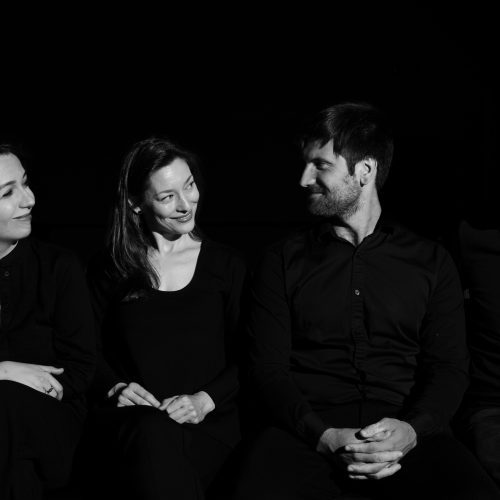
After nearly a decade’s absence from French-speaking America, Thomas Fersen is finally coming to the Palais Montcalm on June 11th as part of a short Quebec tour. Last year, the Parisian artist released Le choix de la Reine, an ambitious reinterpretation of 19 of his own songs, arranged by Clément Ducol and performed with the percussionists of the SR9 trio.
Thus, the entire menagerie of his songs comes alive in a new stage performance: Les malheurs du lion, le chat botté, La chauve-souris, Les Papillons or Mon chien will share the stage with Louise, New Year’s Day, Dugenou, and others like Blasé. His repertoire of classics is interspersed with monologues, a theatrical technique he has employed in recent years.
PAN M 360: Hello Thomas, you don’t see me in this communication, but I want to let you know that we’ve spoken several times, though a long time ago. The first time I did an interview with you was at the FrancoFolies festival in La Rochelle, in 1993.
Thomas Fersen : What is your name ?
PAN M 360 : Alain Brunet.
Thomas Fersen : Ah, Alain, of course! What a shame I haven’t seen you. What’s become of you?
PAN M 360: I’ve always continued to write music reviews, but I’ve branched out. Some younger colleagues had expressed a desire to interview you, so I stepped aside so other writers could discover you… and cover you, haha! And we only live once, with so much music to listen to, without denying our past. And here I am again, talking to you, which I’m delighted about.
Thomas Fersen : Me too! Like you, I haven’t stopped since.
PAN M 360: You came to Quebec a lot until the early 2010s, less afterwards.
Thomas Fersen : It’s been nine years since I last came, actually. I think it faded over time because, little by little, my work generated less interest among you, I think. The audience changed, and above all, the music industry changed. At one point, I was offered the chance to come alone and rehearse with other musicians. It was also partly my fault for not coming anymore, because I didn’t like that offer. Also, the gaps between album releases have lengthened considerably. In fact, the last album of original songs came out in 2019.
PAN M 360: Le choix de la Reine, an album of reinterpretations with a particular orchestration, was released in 2025. Why such a long delay?
Thomas Fersen : Because I’ve been involved in other projects, including two plays. And yes, I made an album, but no original songs, except for one, a piece rearranged by Clément Bucol, released last year, which led to a show featuring only percussionists, since it’s an album recorded with a percussion trio. It’s with this trio that I’m going to Quebec in June.
PAN M 360: I listened to SR9, a trio from Lyon if I understood correctly.
Thomas Fersen : Yes, well, they all attended the Lyon National Conservatory of Music and Dance (CNSM), but they’re not all originally from Lyon. So, they live in Lyon now, I think. And Clément Ducol, composer and arranger, did the arrangements. He’s Camille’s partner.
PAN M 360: Oh really?! She composed the excellent soundtrack for Jacques Audiard’s film Emilia Perez. Very talented! But let’s get back to her partner.
Thomas Fersen : He’s a very good musician! Clément himself graduated from the Lyon Conservatory (CNSM), where he studied percussion before turning to composition. He’s a bit older than the SR9 trio, but that’s where he met the performers. Two years ago, he suggested we record an album together, and I was immediately drawn to the idea, especially since this album was, in a way, the anniversary of my first album, released 32 years earlier. I was two years late for the 30th anniversary, but that didn’t matter, and I thought it was a good idea.
And above all, I felt completely at home, I mean, in this environment of harmonic percussion, composed mainly of keyboards, vibraphone, glockenspiel, marimba, and xylophone. I immediately sensed that the vibrations would amplify the dreamlike dimension of my songs, as well as their realism. And that seemed perfectly conducive to a collaborative project.
I immediately felt that the vibrations would amplify the fantastical and unreal quality of my songs. It was perfectly conducive to a project together, that’s all. And then, in the meantime, I had these experiences with monologues and theater, so I blended these monologues with songs from my repertoire for this new show. These monologues are therefore accompanied by music from my repertoire; all of this constitutes a panorama of what I’ve accomplished since the release of my first album in July 1993, when we first met.
PAN M 360: It’s true that the arrangements fit your repertoire perfectly. Quite a retrospective, with 19 songs on this album!
Thomas Fersen : Clément Ducol made the choice, actually. Because I didn’t want to impose anything on him. I wanted him to follow his own path, and I didn’t want to force him into anything. I think that was the right thing to do; to get the best out of someone, you have to let them do what they want to do. As it happens, he was familiar with my repertoire; he was a student when he discovered my songs, which he listened to a lot. For this project, he undertook to find all those songs from the beginning of my career. Which I found relevant, because there were some I no longer sang, like “Les tours d’horloge” or “Au Café de la Paix.” He composed others that aren’t on the album, but which are performed live.
With Vincent Frèrebeau (from the label Tôt ou tard), who had produced my first album and with whom I wanted to celebrate this anniversary, we realized it was more relevant to delve into the beginning of my repertoire rather than the recent material. Re-recording the old songs would give this project more character.
PAN M 360: This is a form of classicization of Thomas Fersen.
Thomas Fersen : I was recently told I was very classical, and I wasn’t sure if that was a pejorative term or not. Ultimately, it wasn’t. Classicization isn’t understood as a long-term consecration that occurs three, four, or five years after an album’s release. From the moment you start reinterpreting your own repertoire, you can speak of a form of classicization, not in a pejorative sense, but in the sense of enduring quality. And that’s why I really enjoyed this orchestration: for me, it wasn’t about looking back at the past and being nostalgic, but rather towards the future. It was therefore important to me that this project involve a significant amount of original creation.
PAN M 360: Musical tastes evolve, songs can also carry what we like now and not what we liked in the past.
Thomas Fersen : Yes. I’m increasingly drawn to this kind of writing, rigorous and classical, less close to the rock I loved in my youth. You have to explore other horizons, which is what I intended to do with Clément, so I was very enthusiastic about this project.
PAN M 360: It’s a success! There haven’t been any harmonic extensions, but at the same time, all the percussive effects and the harmonics of the notes themselves create a new atmosphere, and you’re absolutely right to believe that this reinterpretation is creative and contemporary. It’s definitely not a nostalgic or outdated project.
Thomas Fersen : It’s not a boring job! The worst thing for me would be to be a museum guard at my age (63), a job for old people…
PAN M 360: Absolutely! There’s always a risk in managing your assets in a bland way when you reach your sixties. So I’m talking to someone who’s very much alive creatively, who’s also interested in greater musical complexity.
Thomas Fersen : Clément Ducol, incidentally, had a completely different path than mine. He was fascinated by self-taught people who created things, which was my case. And I, for my part, have always looked with complete objectivity, without any condescension, at people who, unlike me, had received more classical training. I had a lot of respect for that, and I still do today. My wife, incidentally, is a classical violinist; she introduced me to a great many things. She’s also the one who helps me move in this direction. It was she who told me about Clément, whom I knew by reputation. As a violinist, she was familiar with his repertoire and had already had the opportunity to appreciate his writing. She introduced me to him and encouraged me to explore his music. And I was quickly captivated.
PAN M 360: So, your tastes have diversified. You’ve discovered new things not only through your partner but also through other interests. It’s true that when you’re over forty or fifty, you can’t always listen to the same thing.
Thomas Fersen : Yes, it also corresponds to my age. Rock music doesn’t surprise me anymore… As you get older, you tend towards more refinement, less instinct, less brutality. You become more delicate, I think. And since I still have my childlike curiosity, I’m naturally drawn to other things.
PAN M 360: What happened on the theatre side?
Thomas Fersen : Actually, I haven’t written music for the theater, but it so happens that over the last twenty years of my shows, I’ve started speaking songs rather than singing them, like little three- or four-minute sketches recited in verse. I did this more and more, to the point that I’ve done about 300 solo shows, accompanying myself on the piano for the songs I could speak rather than sing, embodying them in a different way… Basically, it was a single character speaking and singing, a kind of one-person musical. Gradually, people started asking me if the monologues from these shows would ever be published.
During the pandemic, I collected these monologues to see if they formed a cohesive whole. I then wanted to write a biography of my character to create a link between all these texts, which seemed rather disparate. Writing the biography of my song character, drawing heavily on my own life story, was a lot of fun.
So, I wrote a verse biography of my song character, which led to the show “God on Earth.” From there, I adapted it for the stage. I worked with the director, Benjamin Lazar. So, there were these texts, and then some songs from my repertoire that fit into the narrative, and then music from my repertoire that also accompanied these monologues recited in verse. That’s what you hear, by the way, in the album “Le choix de la Reine”—all the spoken parts come from this show and the book—the character’s biography.
I continued after that, I wrote a second book which will be published by Seuil, entitled Like Taking Off a Raincoat. It’s still my song character, but this time he’s going on a journey of initiation to Mexico, he’s going to undergo, against his will, rites of passage, encountering death, danger, the unknown, and so on. But that’s another project, another project I’m working on right now, and it’s to say that this was the kind of theater I’m talking about, a sort of narrative concert. And now, I’m doing it again, working on another one.
PAN M 360: An extension of your expression, if we understand correctly.
Thomas Fersen : Exactly. And so, it’s interesting for me because it’s also a circuit that’s expanding, an audience that’s expanding, moving towards a different taste, a different desire, and it also corresponds to what I want, since I’m increasingly drawn to language, storytelling, precision in storytelling—tastes of my generation. Yes, but at the same time, we can maintain an interest in everything that’s new. Right now, I’m with the trio SR9. For the next show, there will also be three musicians. But there’s less and less of that pop element that used to color my albums in the 2000s.
PAN M 360: And will the next songs be recorded in the same context with the same trio? Or will it be completely different?
Thomas Fersen : I don’t know. Actually, for now, I’ve written original songs for my next show (not the one in Quebec), but I don’t know if they’ll be recorded on the album. This next show will premiere in Avignon this summer. But the one you’re going to see is still songs. It’s still narrative, but it’s not theatre, whereas what I’m going to do after that will be completely different.
The most important difference is that when you perform a song, you address the audience directly. Whereas when you do theater, you face the audience, but in theater, it’s the opposite: the audience (mentally) comes onto the stage. This reversal is fundamental. I find it very amusing. For me, it was a truly fresh and enriching experience that taught me a great deal.
PAN M 360: And what’s next? If you’re doing more theatre than songs, are you planning an audiovisual project?
Thomas Fersen : This is both the problem and the virtue of theatre. It’s live performance; you have to come and see it; it’s a moment of communion. You’re not alone. That’s what’s fundamental, that’s the role of theatre and live performance. You’re not the same person when you’re alone at home as when another person enters the room. You’re transformed, and you don’t perceive things in the same way. That’s the whole point of live performance.