Ensemble Obiora: Afro-classical music in the parks

Interview by Frédéric Cardin
Genres and styles : Classical

Additional Information

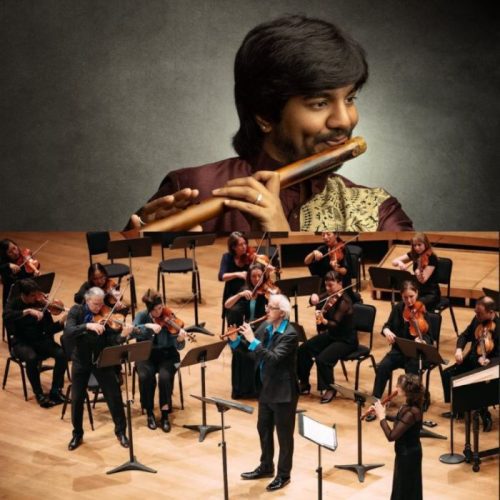
The Obiora Ensemble of Montreal is a classical orchestra whose mission is to introduce European-style scholarly music written by racialised artists. In the case of classical music, that means pretty much anyone who isn’t white and male. The orchestra is also made up of musicians from multicultural backgrounds, which is not very often seen in well-established orchestras. Of course, the ensemble also plays the pillars of the “White” repertoire, but in programs where these are alongside pieces by female composers, white or not, by “old” (baroque, classical, romantic) black composers, or of course by contemporary artists from all backgrounds. In short, it is an ensemble that ultimately reflects a more accurate image of the possibilities for listening to and interpreting classical music, an image that also corresponds much more precisely to the population of an ultra-cosmopolitan city like Montreal. On August 2 and 3, 2025, the Obiora Ensemble will give two free concerts in as many Montreal parks, Notre-Dame-de-Grâce Park at 7 p.m. (August 2) and Ahuntsic Park at 2 p.m. (August 3). These concerts are made possible by being part of the Campbell Concerts series. The program, for the occasion, will consist of works by artists of African descent: Valerie Coleman (Tzigane for quintet), Samuel Coleridge-Taylor (Nonet in F minor op.2), and William Grant-Still (Danzas De Panama). I spoke with the orchestra’s co-founder and executive director, Allison Migeon, about these concerts.
Latest 360 Content

Mundial MTL 2026 | Orbital Ensemble : steeped into vintage, but with an ear in the present

Mundial MTL 2026 | Orbital Ensemble : steeped into vintage, but with an ear in the present

FMA 2026 | Al Qahwa: The Coffee of Cultures, The Rhythm of Encounters

FMA 2026 | Al Qahwa: The Coffee of Cultures, The Rhythm of Encounters

Mundial MTL 2026 | Where We Come From, Who We Become: An Interview with Tara Moneka

Mundial MTL 2026 | Where We Come From, Who We Become: An Interview with Tara Moneka

Caprice Ensemble at the 9th Floor : Hallelujah or the Jewish Colours of Baroque Music

Caprice Ensemble at the 9th Floor : Hallelujah or the Jewish Colours of Baroque Music

FMA 2026 | Le Livre des Reines : Dialogues between Inspiring Women from Europe and Persia, from Yesterday till Today

FMA 2026 | Le Livre des Reines : Dialogues between Inspiring Women from Europe and Persia, from Yesterday till Today

Salle Bourgie | Mike Bruzzese, inspired by his grandfather’s poetry

Salle Bourgie | Mike Bruzzese, inspired by his grandfather’s poetry

Salle Bourgie | Jordan Bak : ”I wish to be excited on stage and with the audience”

Salle Bourgie | Jordan Bak : ”I wish to be excited on stage and with the audience”

FMA 2026 | Walaa Al Jundi’s Beautiful Voice, Craft And Refinement… Despite Deep Suffering In Her Region

FMA 2026 | Walaa Al Jundi’s Beautiful Voice, Craft And Refinement… Despite Deep Suffering In Her Region

Palais Montcalm | Harry Manx about “Falling Upwards”, contemplation, humility, wisdom

Palais Montcalm | Harry Manx about “Falling Upwards”, contemplation, humility, wisdom

Voces Boreales | Tempus Fugit, “to experience time differently”

Voces Boreales | Tempus Fugit, “to experience time differently”

Trio Helios and the aesthetics of ugliness

Trio Helios and the aesthetics of ugliness

Festival du Monde Arabe 2026 | MaqaMorphose, or the dream of an oriental chamber music

Festival du Monde Arabe 2026 | MaqaMorphose, or the dream of an oriental chamber music

FMA 2026 | Amin Reihani: Making Music a Language of Peace

FMA 2026 | Amin Reihani: Making Music a Language of Peace

Can You Hear the Birds ? The art of the trio according to Gentiane MG

Can You Hear the Birds ? The art of the trio according to Gentiane MG

Judith Fliedl, invited by Le Vivier: I love producing sounds that are not “normal.”

Judith Fliedl, invited by Le Vivier: I love producing sounds that are not “normal.”

Guillaume Côté’s A Midsummer Night’s Dreams: the choreographer talks about his intimate relationship with music

Guillaume Côté’s A Midsummer Night’s Dreams: the choreographer talks about his intimate relationship with music

Akousma| Felix Deufel introduces us to the uncharted sonic richness of the Arctic

Akousma| Felix Deufel introduces us to the uncharted sonic richness of the Arctic

Akousma | Les Artefacts sonores de Roxanne Turcotte

Akousma | Les Artefacts sonores de Roxanne Turcotte

Akousma | The Audréanne Filion and Myriam Bleau Duo: Where Reality and the Virtual Merge

Akousma | The Audréanne Filion and Myriam Bleau Duo: Where Reality and the Virtual Merge

Akousma | Exzald S, la violence du calme

Akousma | Exzald S, la violence du calme

Akousma | Melanie Zhou: Shaping Sound, Expressing Emotion

Akousma | Melanie Zhou: Shaping Sound, Expressing Emotion

Akousma | Alex Brisson et l’exploration musicale du feedback

Akousma | Alex Brisson et l’exploration musicale du feedback

Mois du Créole 2026 | David Bontemps: Between the Piano and Dessalines’ Legacy

Mois du Créole 2026 | David Bontemps: Between the Piano and Dessalines’ Legacy

Ensemble Caprice at the 9th: Dialogue with Carnatic India

Ensemble Caprice at the 9th: Dialogue with Carnatic India

Subscribe to our newsletter

Inscription
Infolettre

"*" indicates required fields

Type of Suscribers