Additional Information
Three nights in a row this week, Chants Libres presents Fantôme de Roy, a musical theatre inspired by a medieval confrontation between the King of England, Henry II Plantagenet, and his chancellor, Thomas Becket, Archbishop of Canterbury.
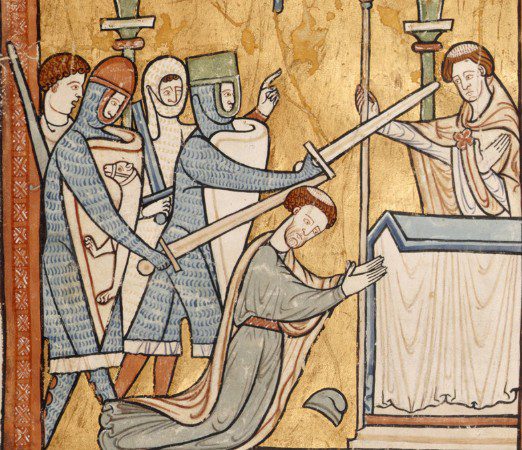
Nearly a millennium ago, this confrontation culminated in the assassination of the archbishop in 1170: four knights who supported the king executed Thomas Becket near the altar of the famous English cathedral. The “turbulent priest,” to use the term used by the king, who was exasperated by his former friend’s ambitions, was eliminated while attempting to strengthen Catholic power in England, something Henry II strongly opposed.
An artistic evocation of this mythical conflict between royal power and clerical power, Fantôme de Roy raises the intrinsic fury and violence of human power, “in a dramatic fresco woven from medieval and contemporary texts”.
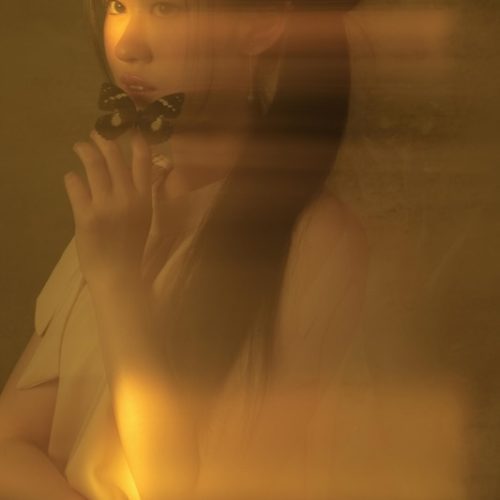
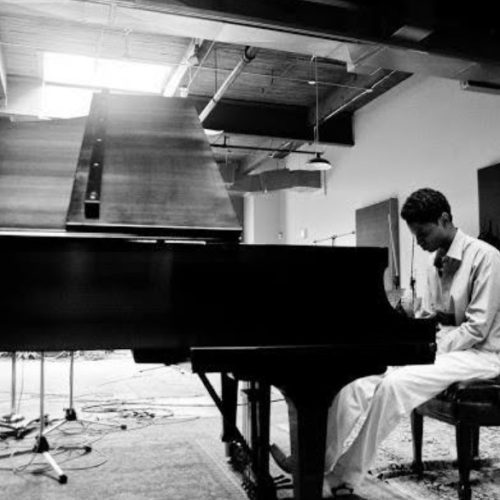
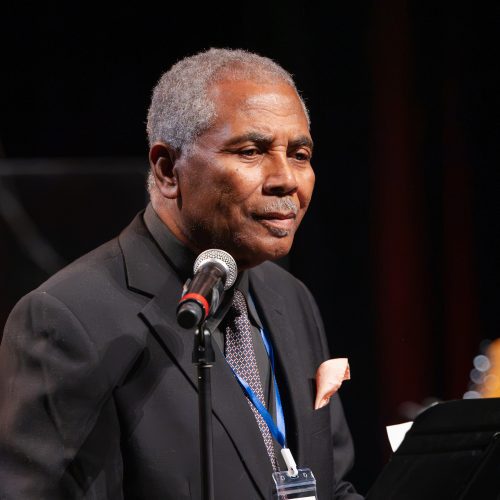
Grand organ, electric guitar, electroacoustic score, choir and solo voices, this is the musical configuration of this Fantôme de Roy, to which is juxtaposed a libretto made up of texts from the 12th and 13th centuries. The texts of the medieval author Guernes de Pont-Sainte-Maxence have been taken, adapted and rewritten by the Austrian author Thomas Ballhausen and the composer Thomas Cornelius Desi. The performers of this musical theater will be the guitarist Jonathan Barriault, the organist Olivier Saint-Pierre as well as the mezzo-soprano Marie-Annick Béliveau.
The latter being the artistic director of Chants libres which presents this production with the support of Vivier, she is the perfect interlocutor for this interview.
PAN M 360: How, roughly speaking, is the plot of this “dramatic fresco woven from medieval and contemporary texts” drawn?
Marie-Annick Béliveau: We tried to keep a formula that could refer a little to average French, to the French of that time, because the essential text of the booklet is written in French from the 12th and 13th centuries. So, we tried to make a compromise so that it would still be readable and speak to today’s audience. But it’s an expression that we took directly from the langue d’oïl.
PAN M 360: What was the primary motivation?
Marie-Annick Béliveau: For me, it’s mainly this interest I had for this language, also because it tells the story of the assassination of Saint Thomas Becket which took place at the end of the 12th century. And we take texts that tell, that relate the events. These texts were written shortly after his murder.
And what I found fascinating was to see that Thomas Becket was completely bilingual. When he was in his circle, he spoke English, but when he was at court, he spoke in French. And I found that it was very similar to my reality today: in one day, I will have as many activities in English as in French, I have French-speaking and English-speaking collaborators, I work and I live in both languages. Like Thomas Becket! In almost 1000 years, in fact, it has changed very little. We were already in the Bonjour, hi! at the time.
PAN M 360: Haha! Compared to the Montreal reality, it’s indeed comparable. And where does your own participation come from?
Marie-Annick Béliveau: This show premiered in Vienna in 2023. Composer Thomas Desi asked me to create this show here, which was originally given on the occasion of an anniversary of the Chapel of the Imperial Palace in Vienna. And so, it was in the context of these festivities that the show premiered in Vienna and that composer Thomas Desi composed this score.
What I found quite sweet was that Thomas contacted me and said, “I thought of you to create the role of the narrator – who sings a little bit – because it’s in 12th-century French and it’s quite close to the language you speak in Quebec. I laughed at this observation, then I said to myself, “Well, still, we have to do it!” I wouldn’t say I was insulted, but…
And when I started working on this old French with a professor of medieval literature at the University of Montreal, with whom I studied the texts in question and their pronunciation, I had to admit that, in fact, this language is surprisingly familiar to us. You listen to La Sagouine again, then you read the text as we can imagine it was pronounced at the time, and frankly, the similarities are astonishing.
PAN M 360: So yes, there is a part of truth in this medieval component of American French.
Marie-Annick Béliveau: And that means that Thomas Desi wasn’t entirely wrong. But what’s also very surprising is that in the French we speak here, the way we use anglicisms is actually not like in France where we say “parking” and “week-end”; anglicisms here are more diverted, intrinsically linked to our vocabulary. In fact, we share that with the langue d’oïl, which is very particular and really very amusing.
And so, the show includes this whole aspect that is sung or narrated, recited in the langue d’oïl. But there is also modern English, there is also modern French and then there are even little bits in German because, all the same, I wanted to preserve a little bit of the color of the original creation in Vienna.
PAN M 360: Tell us about the text, first that of Guerne de Pont-Saint-Maxence.
Marie-Annick Béliveau: It was a monk who wrote this immense work in the 13th century, the biography of Saint Thomas Becket. And this text is also used a lot. The entire play is based on the illuminations of Matthew Paris, illustrated about a century after the murder of Thomas Becket.
PAN M 360: And Thomas Ballhausen?
Marie-Annick Béliveau: He’s an author and professor at the Mozarteum University in Salzburg. He collaborates with Thomas, which he’s also done on other projects. So everything in modern English and German in the show is written by him.
PAN M 360: And where does Thomas Cornelius Desi come from? Who is he?
Marie-Annick Béliveau: Actually, he’s a composer I met a long time ago at the Abbaye de Royaumont, when we were both participating in the Voix Nouvelles Academy workshop. He’s based in Vienna, and he’s very active on the European scene of what they call Musiktheater there. It’s a form, I would say, in the making here in Canada, in America, that we’re starting to see emerge a little more. So, it’s not a musical, it has nothing to do with Broadway, it could also be related to musical theater. We’re moving away a little from opera to move into more theatrical forms, which are also something that’s a little more performative. Initially, Thomas is a composer of contemporary music, very well-versed and particularly in the lyrical repertoire. I am thinking of one of the creations he made last year, based on Puccini’s operas, based on the composer’s correspondence.
In addition, Thomas worked extensively with musicologist Eric Salzman, and together they wrote a book that is very important for the history of the development of opera in the 20th and 21st centuries, called Seeing the Voice, Hearing the Body. Yes, a reference work, very important for the development of opera in the late 20th and early 21st centuries. And as a little anecdote, the cover of the opera is a photo of Pauline Vaillancourt!
PAN M 360: Let’s talk about the musical performance. First, Jonathan Barriault is the guitarist who accompanies the singing and narration.
Marie-Annick Béliveau: Yes, electric guitar. I’ve been collaborating with Jonathan for years, both as an electric guitarist and a classical guitarist. And then Olivier Saint-Pierre plays the great organ at the Sacré-Cœur Church. Because the Church is a crucial element here. While the Imperial Chapel in Vienna was the starting point for the project, we really wanted to adapt the piece to the Sacré-Cœur Church on Ontario Street.
It’s a very interesting church because, first of all, it has retained its community character. In addition, (choirmaster) André Pappathomas has taken over the artistic direction and encourages creativity. In this church, creative artists coexist with the local community. The parishioners, we can also call them that, feel very involved in these creative projects.
PAN M 360: Living paintings are also part of the production, but what else?
Marie-Annick Béliveau: It’s a very important part of the show. In Vienna, we worked with children who embodied all the living paintings, those who personify the historical figures, and were also the choristers. Here in Montreal, I chose to play on proximity and on the anchoring in the Centre-Sud neighborhood to make it a community project. So we have amateur and volunteer choristers, some of whom come from the Grand Chœur du Centre-Sud, others from the neighborhood or elsewhere in Montreal. It’s the same for the actors who embody the living paintings.
PAN M 360: How did you create these tableaux vivants?
Marie-Annick Béliveau: We chose eight medieval illuminations by the English monk Matthew Paris that tell this story. These illuminations are literally a comic strip, because at the time, people were illiterate. Since the monks addressed the people, and since it was the life of a saint, we wanted everyone to have access to it. These illuminations are a real comic strip that tells the different episodes of this dispute, this anger. Thus, the show is built around this succession of illuminations, actors personify these living paintings. I narrate while they mime the actions described in the text.
PAN M 360: All we have to do is go to the church!
CREATORS
Thomas Cornelius Desi
Thomas Ballhausen
Guernes de Pont-Sainte-Maxence
INTERPRETERS
Marie-Annick Béliveau
Jonathan Barriault, guitar
Olivier Saint-Pierre, organ