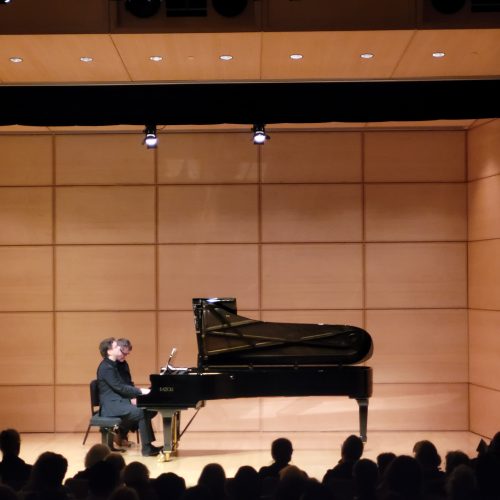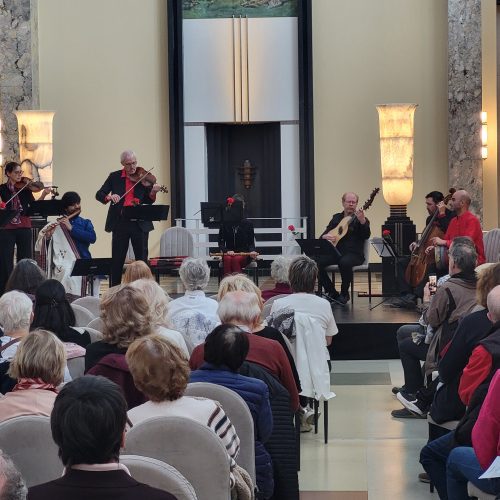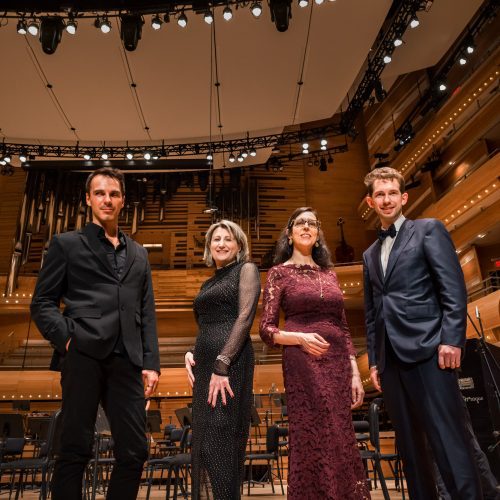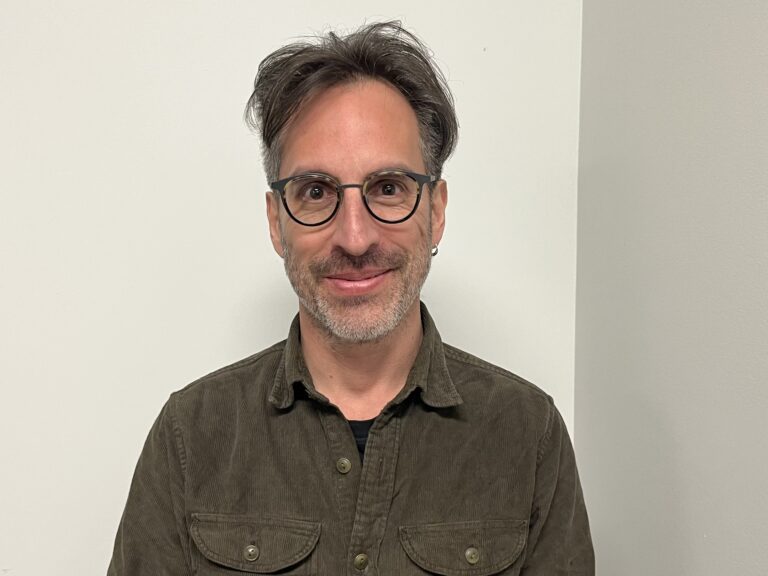
From October 16th to 18th, the Faculty of Music at the University of Montreal held a conference entitled Music, Diplomacy, Propaganda. Curious by nature and a journalist by profession, our collaborator Michel Labrecque attended. He met Luis Velasco-Pufleau, a musicologist and experimental musician who runs a blog on the links between music and politics and conducts extensive research on this topic.
Luis Velasco-Pufleau grew up in Guadalajara, Mexico, received a doctorate in musicology from the Sorbonne University in Paris, and taught at McGill University. He lives in Fribourg, Switzerland, and is an associate professor at the University of Montreal.
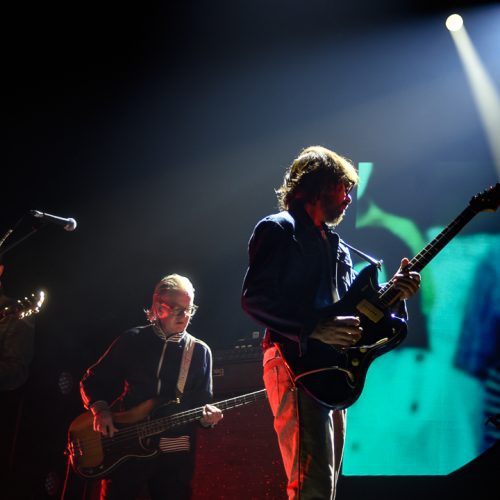
This citizen of the world is also a musician in the experimental rock band Mad Song. A musicologist who makes music is not so rare. Several of them were present at this conference organized by the University of Montreal.
Luis Velasco-Pufleau is interested in all forms of music and its connection to politics. For example, he dissected the album Le Trésor de la Langue (1989) by Quebec guitarist René Lussier, which transformed Quebecois sound archives into music, to share it with the world and understand his political approach.
He explored the use of music during wars and the role of music during the recent pandemic. He questions how the government produced a star-studded song called “Love Will Prevail” (the English title of a Mandarin song) to glorify and demonize the role of the Chinese people in the country where the pandemic began. It was a song approved by the communist government’s politburo. A song of solidarity and encouragement, but one that lacks any criticism.
One of his recent interests is the war in Ukraine. “It’s a very sensitive subject,” he says. Many Ukrainian orchestras have toured Europe and elsewhere to raise awareness about the Russian invasion. “But suddenly, orchestras that used to play a lot of Russian works stopped playing them, even though it’s part of their history over the last century. It’s an understandable reaction; it was imperial music, but there are paradoxes: Dmitri Sostakovich, a composer who had a lot of trouble with the Soviet regime and who wrote a symphony dedicated to the fight against the Nazis, is being banned.”
Luis Velasco-Pufleau never makes judgments. He analyzes the facts, compares them, and analyzes them. “I try never to generalize or condemn anything; I observe music in specific political contexts.”
Another bizarre example: Islamist extremists like ISIS in Syria and the Taliban in Afghanistan ban music when they take power. “But at the same time, in their propaganda videos, they use songs that resemble music; it’s very contradictory. They ban all music except that of the ISIS war.”
Luis Velasco-Pufleau has written several texts on the so-called “humanitarian” pop of the 80s, such as the Live Aid festival or the songs We Are The World or Do They Know It’s Christmas?, which brought together dozens of American and British rock stars, which helped raise tens of millions of dollars to fight famine in Ethiopia in 1984.
“It was a somewhat naive discourse of solidarity that said, we can’t change the world, but we can help. However, it didn’t address the root causes of the problem, which was a civil war in a particular context.” So, this solidarity certainly saved lives, but in a depoliticized context. It was also the beginning of the music video and international continuous news networks.
On the other hand, these humanitarian musical interventions are much more complicated when Westerners are more familiar with the political context, notes Luis. “For Gaza and Ukraine, it’s impossible to do it in such a depoliticized way, because it’s much more politically charged in our countries.”
With the rise of populism all over the world, our French-Swiss-Mexican and somewhat Montreal friend is unlikely to run out of places for research and observation.
“I think that musicology and the humanities can help us better understand the situation in the world. What does music tell us about a conflict or a political situation?”
« La musique est un outil formidable pour comprendre les identités, comment les gens pensent, forment une société avec ses conflits », conclut notre musicien musicologue. Nous sommes plutôt d’accord.
To learn more about Luis Velasco-Pufleau’s research, click on this link: https://msc.hypotheses.org