Additional Information
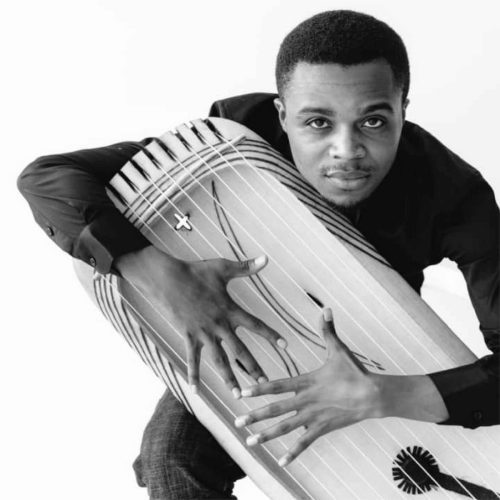
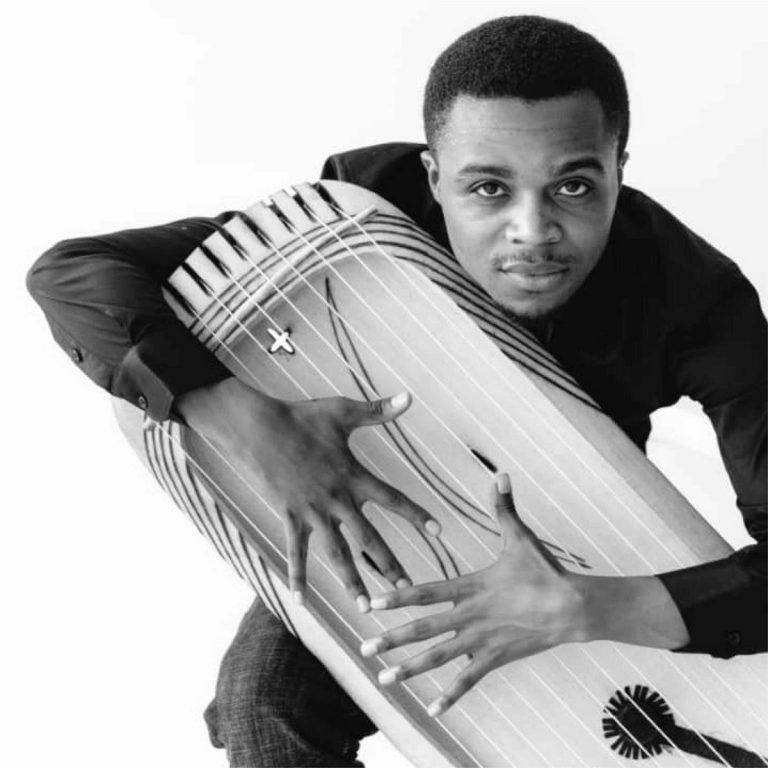
The VoixMonde series, which unfolds on the 9th floor of the Eaton Center in Montreal, will kick off its 26-27 season with a fascinating encounter: the musical traditions of Rwanda, carried by song and an instrument that is still little known, the inanga. It is the musician, storyteller, composer Deogratias “Deo” Munyakazi who will present this rich culture, of which we know almost nothing in the West. The region of the African Great Lakes, as it is also called, which includes Burundi and the eastern part of the Democratic Republic of Congo in this cultural family, as well as Uganda, cannot be reduced to just the Rwandan genocide and the conflicts that followed and continue to this day. I met with the artist based in Montreal.
PanM360 : Can you introduce yourself?
Deo Munyakazi : I am Deo Munyakazi, I play inanga, which is a Rwandan traditional musical instrument. I chose to play inanga just to be part of the progress of bringing back the sound of inanga as it was disappearing because my generation was not interested in playing this instrument. So I just took my time and went to do training about the instrument from the maestro Mushabizi (Jean-Marie Vianney Mushabizi).
PanM360 : Do you come from a musical family?
Deo Munyakazi : Yes, many of my family members are musicians too, like my brother, Esther, and also my great-grandfather. They told me that he used to be a singer.
PanM360 : What is the importance of the inanga in Rwandan culture?
Deo Munyakazi : We have many different instruments, traditional instruments, but inanga, I can say that it’s the first instrument which represents Rwandan culture. Back in the days, it was used to be played in different ceremonies, celebrations, and also in the king’s palace. There used to be someone who played inanga to wake the king up in the early morning and also to help him to sleep when he was about to go to sleep.
So inanga plays a very big role in Rwandan culture because it’s an instrument which was used to spread different messages like peace, humanity, well-being, culture. Inanga holds the transmission of the message in Rwandan culture. It is actually not only played in Rwanda but also in Burundi.
But inangas from Rwanda and from Burundi are a little bit different because when we play inanga and sing, we sing a little bit louder so that everybody can listen to what we’re singing. In Burundi, when they play, they whisper. I’ve heard that they don’t want anybody from outside to listen to what they are saying.
Inanga is being played in Rwanda and Burundi and also a little bit part of Uganda. But mostly Rwanda and Burundi are most known for the inanga. Because of my generation, I used to be interested in different styles.
PanM360 : What brought you to Montreal?
Deo Munyakazi : I came to Montreal four years ago. I just came to play music and do networkings, discover new things and put my inanga on the next level and make the instrument more known. Because inanga is not well known like other African instruments, like the kora. I am here to introduce my music, to introduce inanga and to make Canadians discover the diversity of our culture through music.
PanM360 : How do you feel about playing at this venue, the 9th Floor of Eaton Center, which is prestigious and looks a lot like a Ballroom on the Titanic..?
Deo Munyakazi : Playing at this venue, I’m really, really excited because I’m with a great musician (Ziya Tabassian). We are having a nice group. So I’m so happy to meet new people and to meet their audience and play some good music.
I’m sure they will enjoy it. We’ve been practising a lot, putting everything in order and everything is fine. What I can say is to tell everybody to come.
PanM360 : Do you have other projects coming up?
Deo Munyakazi : I’m still collaborating with different musicians but I’m thinking about recording an EP and attending different music festival concerts, solo concerts, duo, trio and any kind of music where there’s any kind of music. I’m here with my instrument. So people from Canada, they are going to see me in many different festivals.
I can say that I have released a first album in 2020, before arriving in Montreal. The album is called Isoko Dusangiye, which means our common source. I just wanted to tell people to be back to their roots and don’t forget where they are coming from. You can find my music on Amazon, Spotify, everywhere and stream my music.
PanM360 : Thank you and all the best