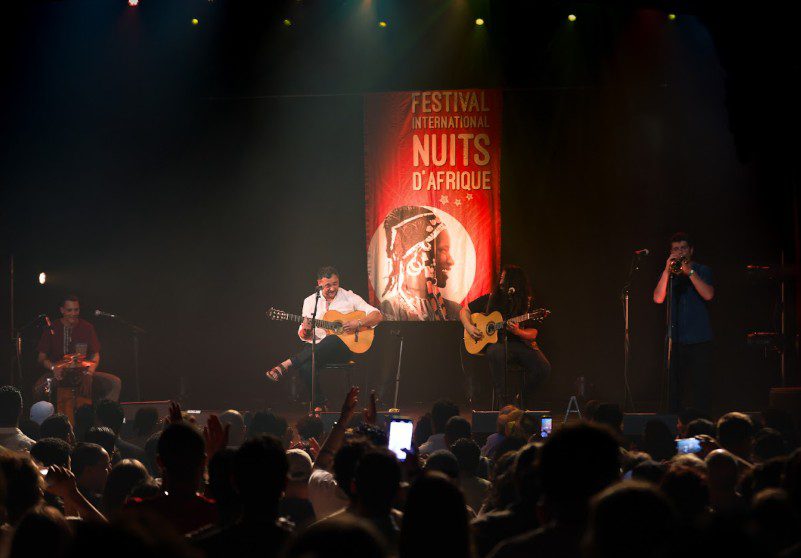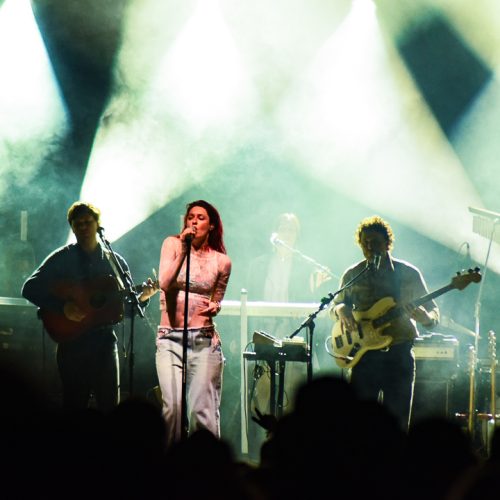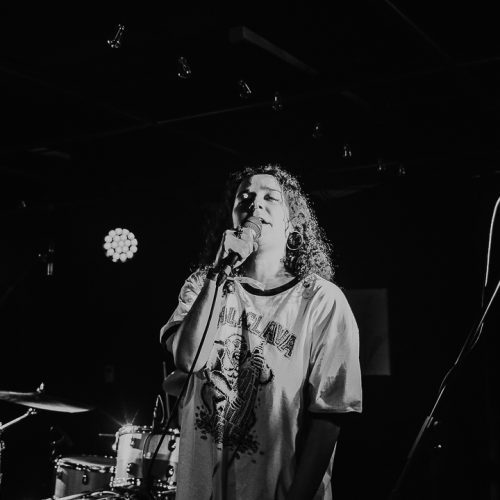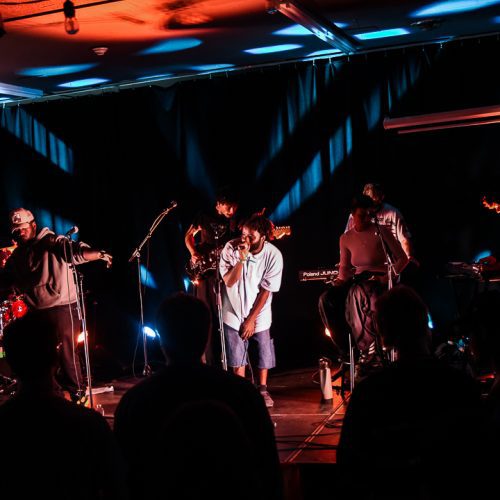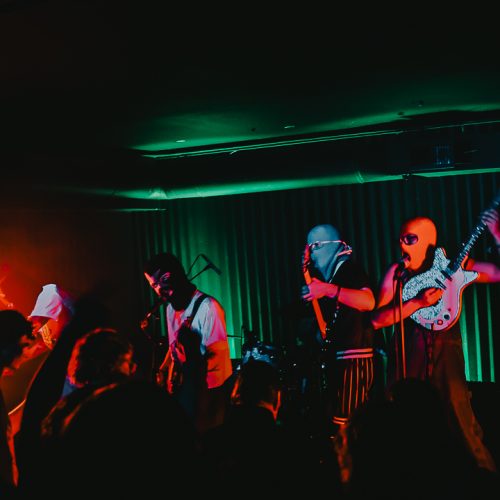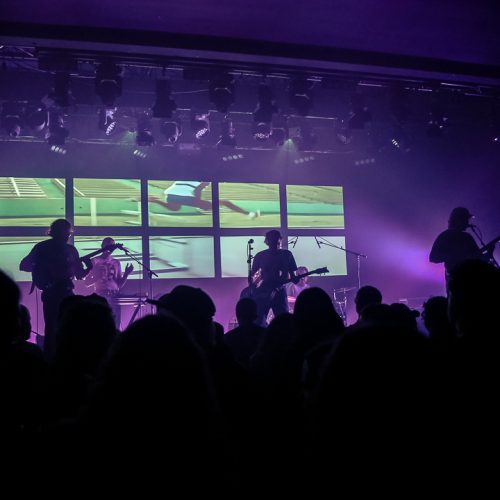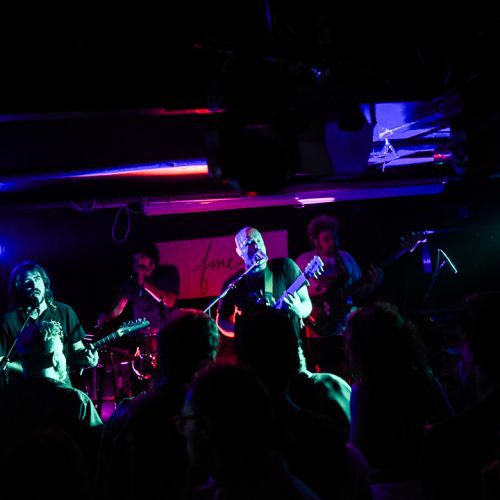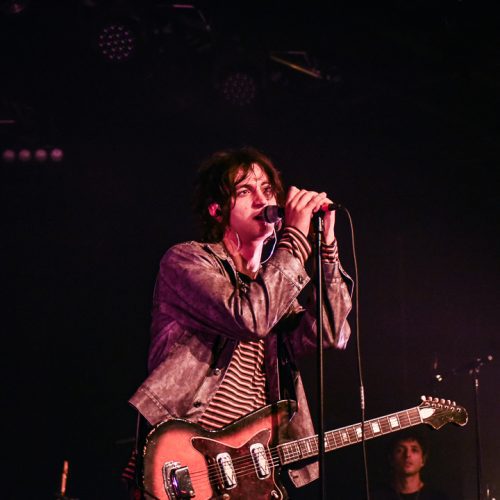
In the 2010s, I saw a few Labess performances when Nedjim Bouizzoul, the band’s young frontman, was living in Montreal… then the band moved to France and went on to enjoy tremendous success on stages around the world, including those in Quebec, where they return regularly. And since Labess was headlining Nuits d’Afrique on Sunday, I got my act together and went to witness yet another triumph for the band in the city where it was formed.
I have to admit that I hadn’t fully realized it. Because Labess has some die-hard fans. Lots of them! They all packed the National on July 12, and they all sang along to every single one of Labess’s choruses—not to mention the countless ad-libs that kept the fun going. It was way bigger than I thought.
Labess hits the nail on the head, because Nedjim Bouizzoul fully embraces his multiple identities: he comes across above all as Algerian; he feels more like a Quebecer than a Frenchman; well… Above all, he comes across as free from all these considerations, while embracing the paradox of this freedom enjoyed by migrant artists.
Labess is, nonetheless, a platform for free men because their very real success has allowed them to establish an independent structure that enables them to do what they want, express what they want, sing what they want, and blend elements as they see fit.
Labess unabashedly expresses its North African culture—with Algerian chaâbi serving as one of the foundations of its art—but it also draws inspiration from Catalan rumba, Andalusian flamenco, Colombian and Afro-Caribbean grooves, the music of the Roma people of Eastern Europe, and Francophone music in general. A fan of Richard Desjardins, Nedjim Bouizzoul also offers a Gypsy rumba version of the classic “Les Yankees,” from the album Les derniers humains (1988).
In addition to covers of Desjardins and Celia Cruz’s “La vida es un carnaval,” Labess has sung, among others, “Ma Liberté,” “Babour El Leuh,” “Insomnie,” “Ya Denya,” “El kess ydour,” “Mariama,” “No te vayas,” “Rosa (Rosa Que Linda Eres),” “Et si le mal,” and “Chalmazel.”
Labess displays profound sensitivity, awareness, and social lucidity; he is unequivocally anti-imperialist and unequivocally progressive on all pressing issues—from human migration, which has come under suspicion in the West, to the tragic plight of Palestine, as well as the war imposed on disadvantaged nations and other themes of widespread injustice on this Earth.
Nedjim Bouizzoul writes in French when the occasion calls for it; I can’t evaluate his dialectal Arabic, but I’ve picked up enough clues from his words to be firmly convinced that his ideas are expressed with clarity, intelligence, and a beautiful, no-nonsense irreverence—all carried along by powerful musical currents.
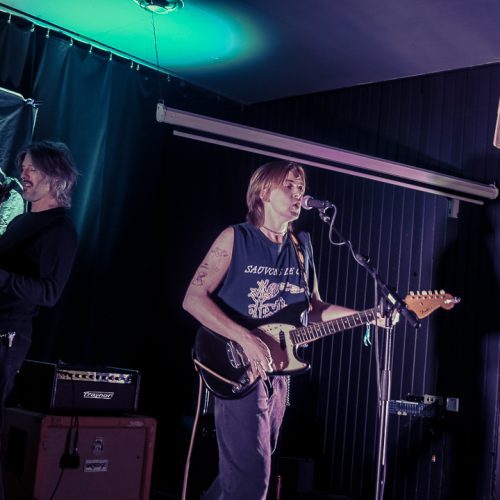
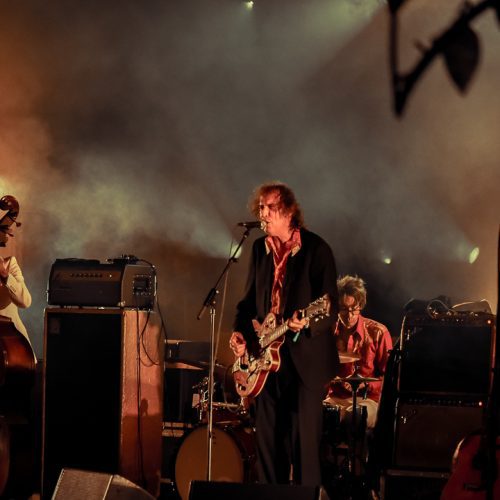
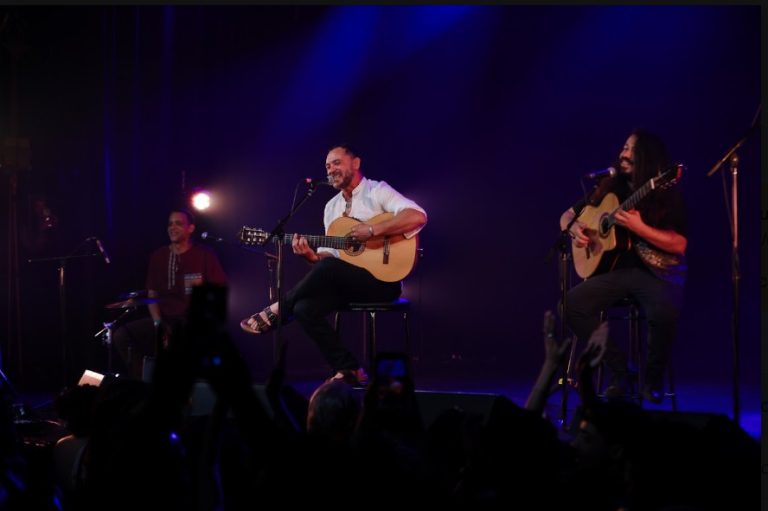
As a quartet, Labess takes the stage from left to right: Tarek Maaroufi on percussion, Nedjim Bouizzoul on lead vocals and guitar, Antero “Tito” Sono-Synnott on virtuoso lead guitar, and Florent Hinschberger on trumpet. The ensemble knows exactly how to capitalize on the momentum generated by the frenetic rhythms and strumming of the guitars, all topped off by the trumpet’s well-judged lines. The groove takes hold, and the energy levels rise a notch. Musicians and audience alike are having a blast, laughing, connecting, letting go, and rejoicing despite the overall gravity of the subject matter, which is etched into our cloud-based consciousness.
Crédit photos : Julia Cieri