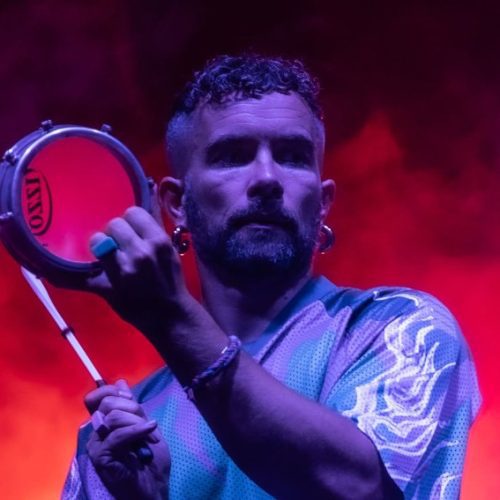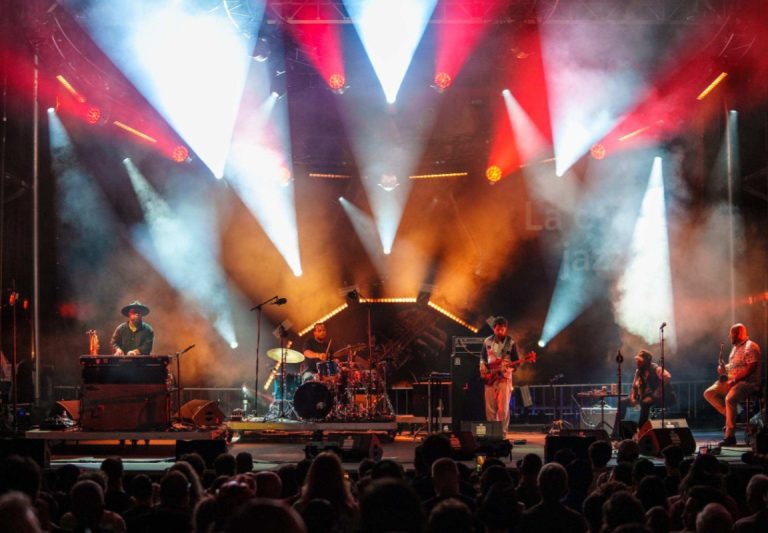
Among the programs commemorating the centennial anniversaries of Miles Davis and John Coltrane was the mashup Supreme Blue, presented late in the evening on Monday, June 29—a combined reinterpretation of the iconic albums Kind of Blue (Miles) and A Love Supreme (Coltrane) by trumpeter Nicholas Payton and the Virginia-based groove jazz group Butcher Brown — Marcus Tenney (saxophone), Morgan Burrs (guitar), Corey Fonville (percussion), and Andrew Randazzo (bass).
Butcher Brown hasn’t really given us this kind of repertoire before, so it was easy to imagine that funk grooves or even Afrobeats would be part of these arrangements, conceived in collaboration with Louisiana trumpeter Nicholas Payton, who regularly explores this repertoire himself.
In this way, tracks from Kind of Blue (“So What,” “Freddie Freeloader,” “Blue in Green,” “All Blues,” “Flamenco Sketches”) are interwoven with those from A Love Supreme (“Acknowledgement,” “Pursuance,” “Psalm”). For example, “Freddie Freeloader” can blend into “Acknowledgement” and express two states of mind that are, all things considered, quite different.
Kind of Blue was one of the first albums of modal music in modern jazz, performed by one of Davis’ finest ensembles (Coltrane, Cannonball, Bill Evans, Wynton Kelly, Paul Chambers, Jimmy Cobb), and it became one of the greatest commercial successes of modern jazz in the late 1950s (1959). This was a far cry from the massive success of A Love Supreme, released in January 1965, which was a true mystical incantation—a profession of faith in divine love—performed by Coltrane’s famous quartet (with Elvin Jones, McCoy Tyner, and Jimmy Garrison).
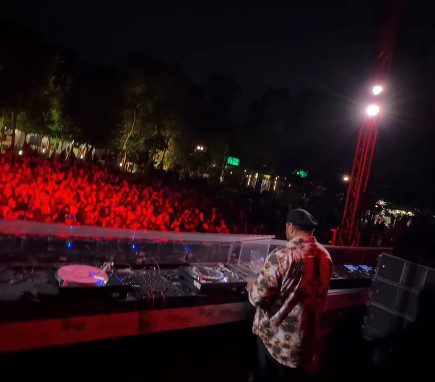
Positioned on the left side of the Rogers Stage, Nicholas Payton regularly provides harmonies throughout the set, complementing guitarist Morgan Burrs, while also delivering a few high-quality, powerful solos. Marcus Tenney’s tenor sax will also be put to good use, with substantial solos drawn from this musical colossus.
The fusion of these two albums into a single program is justified here by the centennial of these two musical giants, and the aim is to adapt this almost sacred repertoire to Southern and African-American jazz, deeply rooted in soul, R&B, and the blues. Payton is from Louisiana, Butcher Brown is from Virginia; this Black culture has its own distinct characteristics, and we see this here in the adaptation of the works, which are magnified through an approach closer to contemporary African American popular music. I remain, however, perplexed by the aesthetic connections between Kind of Blue and A Love Supreme, whose intentions and atmospheres are extremely different… and which have now been filtered through the lens of Southern jazz.
crédit photo: Benoît Rousseau